Table of Contents
The situation in the Middle East has ceased to be a distant conflict and has become a direct threat to households in Tokyo and Osaka. Takafumi Yanagisawa, an expert at the Institute of Energy Economics, Japan (IEEJ), has warned that the disruption to liquefied natural gas (LNG) supply coincides critically with increased air-conditioning use.
The impact of the closure of the Strait of Hormuz on LNG supply
Japan receives nearly 4 million metric tons of LNG annually through the Strait of Hormuz. This flow represents 6% of its total overseas purchases and is vital to maintaining the electricity reserve margin.
Likewise, the operational paralysis in Qatar and the United Arab Emirates compromises approximately 3.5% of national power generation. Although it may seem like a small percentage, during months of extreme heat, this shortfall can mean the difference between stability and rolling blackouts.
Given this scenario, utility companies are activating emergency protocols. Additional volumes are currently being purchased on the spot market, and the upward quantity tolerance (UQT) in contracts with Australia and the United States is being used.
These agreements allow supply to be increased by an additional 10%, provided there is mutual consent between the parties. However, structural damage to the Qatar facilities from recent attacks suggests that repairs could take up to five years, which affects long-term energy security.
The current crisis forces a reassessment of projections for a global gas surplus by the end of the decade. Expansion projects in the Persian Gulf, which Japan had eagerly anticipated for 2028, will face significant delays.
Consequently, the government has begun to ease restrictions on coal plants to offset the lack of gas. This measure aims to save at least half a million tons of LNG per year, seeking to shield the system against uncertainty that appears far from dissipating.
Source: Reuters
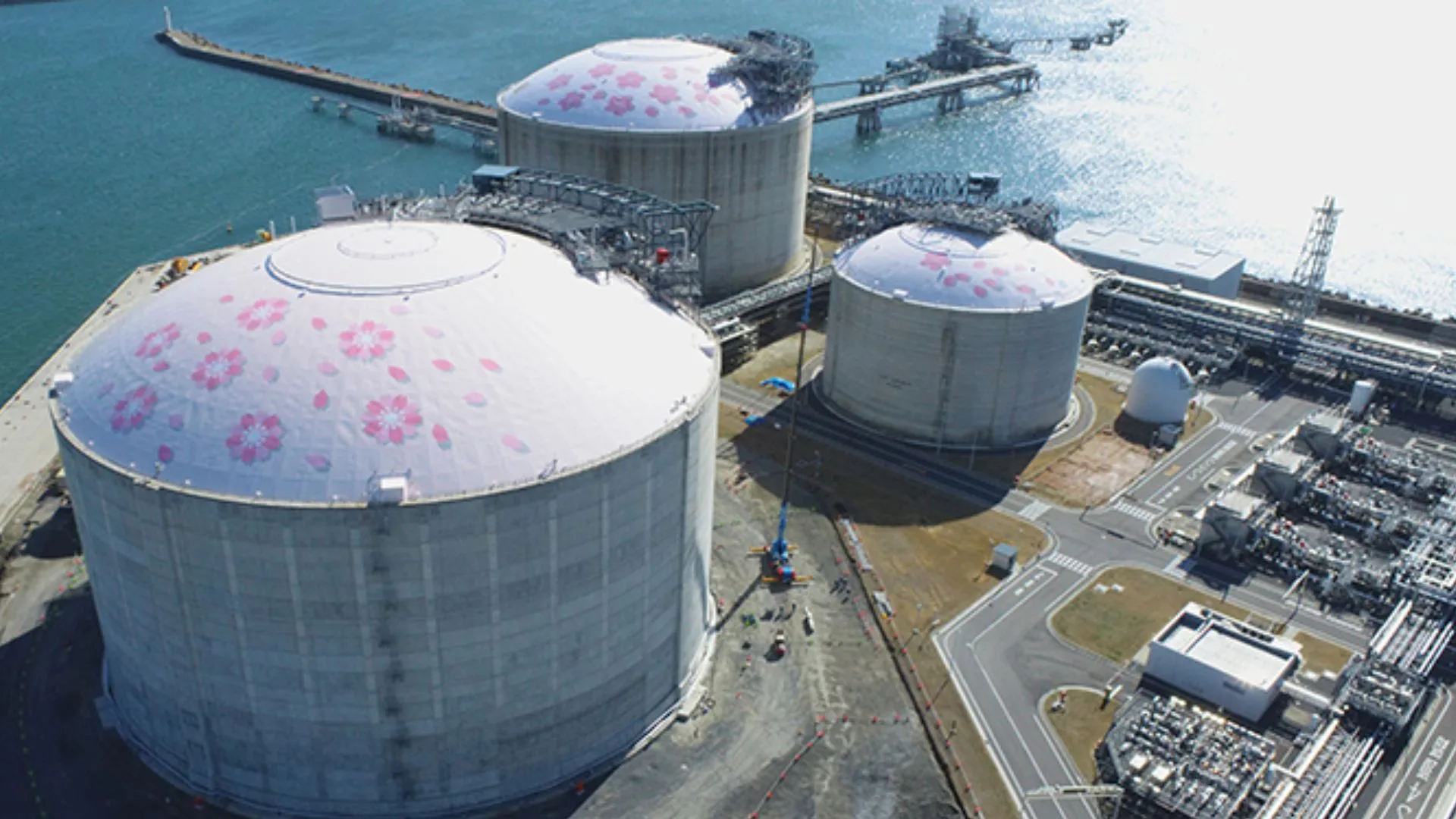
Photo: Tokyo Gas LNG