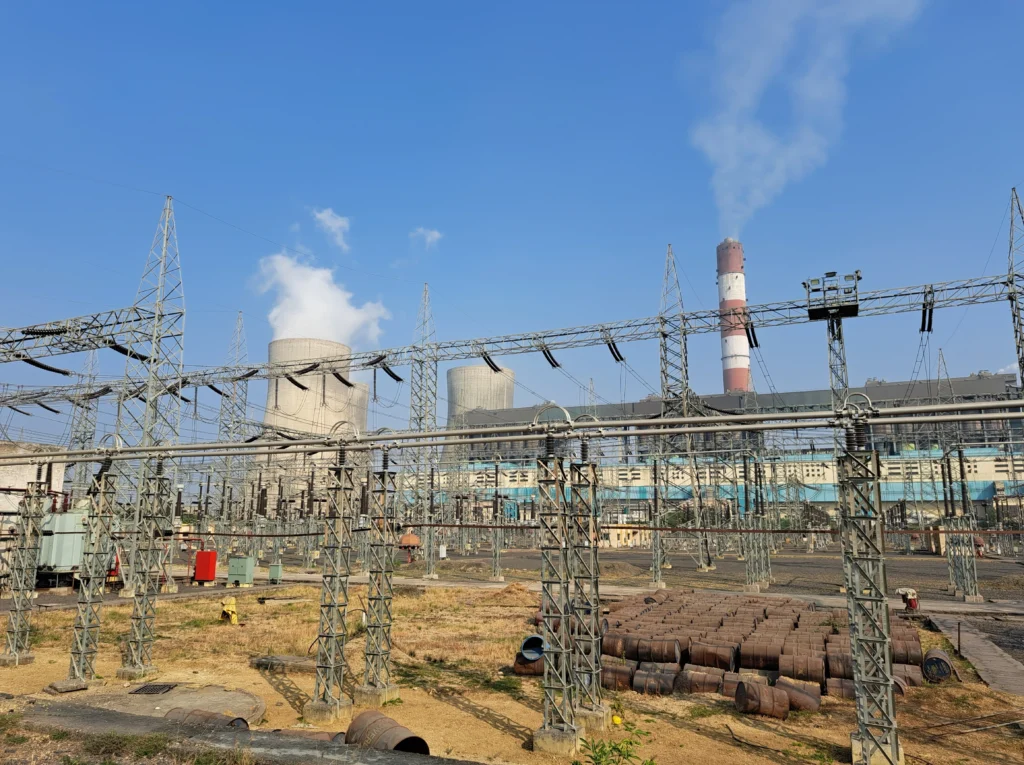
India it plans to keep coal as a central part of its electricity system until 2035-36, a period in which this fuel would still provide about half of the country’s electricity generation.
Currently, coal-fired power generation capacity is around 224 GW but authorities plan to raise it to approximately 315 GW over the next decade. The expansion responds to the sustained growth in electricity demand and the need to ensure sufficient generation capacity while the share of renewable energy continues to increase.
India is preparing more coal-fired power capacity to meet electricity demand
The country currently has close to 50 GW of coal-fired capacity under construction according to Praveen Gupta, a senior official at the Central Electricity Authority, approximately of that total 31 GW were awarded during the last two years.
In addition to that capacity, there are others 15 GW already awarded, but whose construction has not yet begun furthermore, among 10 y 11 GW they remain pending award, while other potential projects are progressing through different stages of approval.
If the official projection is correct, India would incorporate around 91 GW additional compared to its current installed capacity. The magnitude of this growth reflects the role that thermal generation will continue to play in meeting the country’s increasing electricity consumption.
Coal would provide about half of the electricity in 2035-36
The Ministry of Energy believes that thermal power generation will continue to be part of India’s electricity mix for several years. Aadhar Raj, assistant secretary of the Ministry of Energy, explained during a meeting organized by the Federation of Indian Chambers of Commerce and Industry that the country’s first priority is to ensure sufficient energy electricity supply then factors such as affordability, sustainability, and reliability come into play.
In this context, the energy security India occupies a central position, as it must respond to rapid demand growth while simultaneously developing new renewable capacity. This combination explains why coal and clean energy sources will continue to advance in parallel within the electricity system.
Renewable energy expansion will coexist with thermal power generation
The growth of coal-fired capacity poses one of the main challenges of the energy transition in the country, thus accelerating the incorporation of cleaner sources, but the increase in consumption requires maintaining sufficient thermal generation available to guarantee continuity of supply.
According to forecasts from the Central Electricity Authority, coal will still account for around 50% of India electricity generation in 2035-36.
The strategy for the next decade will therefore combine the construction of new thermal infrastructure with a sustained expansion of the renewable energies.
India is studying coal gasification
In addition to using coal to generate electricity, authorities are also studying expanding its use through processes of coal gasification.
This technology would allow the resource to be transformed into products used to produce hydrocarbons and, according to Raj, could help replace certain imports.
In this way, Indian energy policy links coal to two main objectives, one is to sustain the growth of electricity supply and the other is to take advantage of domestic resources to reduce some of the energy dependence on foreign sources.
The progress of projects currently under construction, in the bidding process, and in the planning stages will be crucial in determining the pace at which India is approaching the 315 GW of coal-fired capacity planned for 2035-36.
Source: Reuters
Photo: Shutterstock