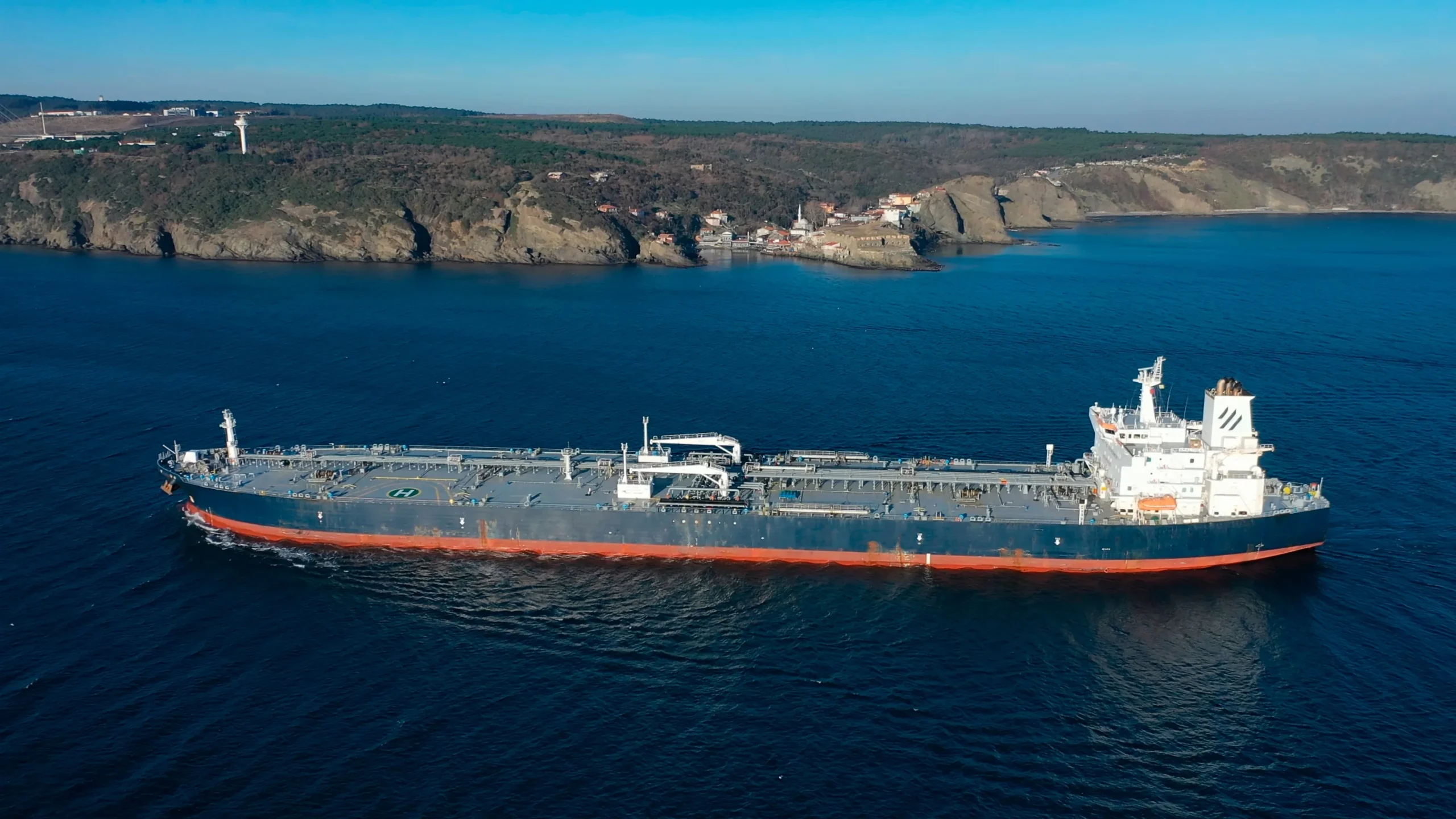
India’s maritime authority ordered that no new assignments of national crew members be made to ships that must cross this strategic route.
India has instructed shipowners, vessel managers and recruitment agencies to stop assigning Indian sailors to vessels with planned voyages through the Strait of Hormuz.
The measure will remain in place until further notice and is a response to the increase in attacks against merchant ships in the Persian Gulf and its surrounding waters.
India strengthens the protection of its sailors
Specifically, the Indian Directorate General of Maritime Administration requested a suspension of the deployment of the country’s seafarers on ships scheduled to cross the Strait of Hormuz.
The provision affects new allocations managed by shipping companies, ship managers and recruitment agencies under Indian regulation.
In addition, the authority requested increased surveillance in the Persian Gulf, the Strait of Hormuz, and adjacent waters. It also ordered continuous monitoring of navigational alerts and safety advisories.
Likewise, companies must strictly apply the measures provided for in the International Ship and Port Facility Security Code.
The attacks increase the risk to merchant ships
Furthermore, the tightening of precautions comes after several attacks against commercial vessels in the region. These incidents have increased the risk to cargo ships, tankers and their crews; the situation directly affects workers on board ships of different flags.
The International Maritime Organization has warned of the danger faced by merchant ships in this area, this situation necessitates a review of routes, security protocols, and emergency response plans.
At the same time, the Indian authority considers it necessary to permanently monitor navigation messages and safety communications issued for the area.
Implementing the order presents difficulties
However, union representatives have questioned whether the restriction can be fully implemented, a significant proportion of Indian seafarers work on foreign-owned vessels or ships registered under other countries’ flags. This limits New Delhi’s ability to intervene directly in the operations of each ship.
Furthermore, thousands of crew members are already on board in conflict zones; their immediate disembarkation would depend on the ship’s position, available ports, and the decisions of each operator.
For this reason, the instruction seems to focus primarily on avoiding new assignments to routes that include passage through Hormuz.
India has a crucial role in the merchant marine
India is one of the largest suppliers of seafarers to the international merchant fleet, with an estimated 310,000 Indian sailors working aboard commercial vessels. This presence makes any recruitment restrictions a significant issue for shipowners and shipping managers.
Meanwhile, a reduction in available crew members could increase pressure on shipping companies operating in the Persian Gulf. The Philippines, another major supplier of maritime personnel, had already adopted restrictions related to the region.
The combination of both measures may affect crew planning, shift changes, and the availability of qualified personnel.
The Strait of Hormuz maintains its energy importance
Finally, the Strait of Hormuz connects the Persian Gulf with the Gulf of Oman and international markets, a significant portion of seaborne oil and gas transits this waterway; any disruption to navigation can affect tanker routes, insurance costs, and the stability of energy supplies.
India’s decision adds a new labor and operational dimension to the crisis; the safety of sailors now takes center stage alongside the continuity of commercial and energy traffic.
Source: Rigzone
Photo: Shutterstock