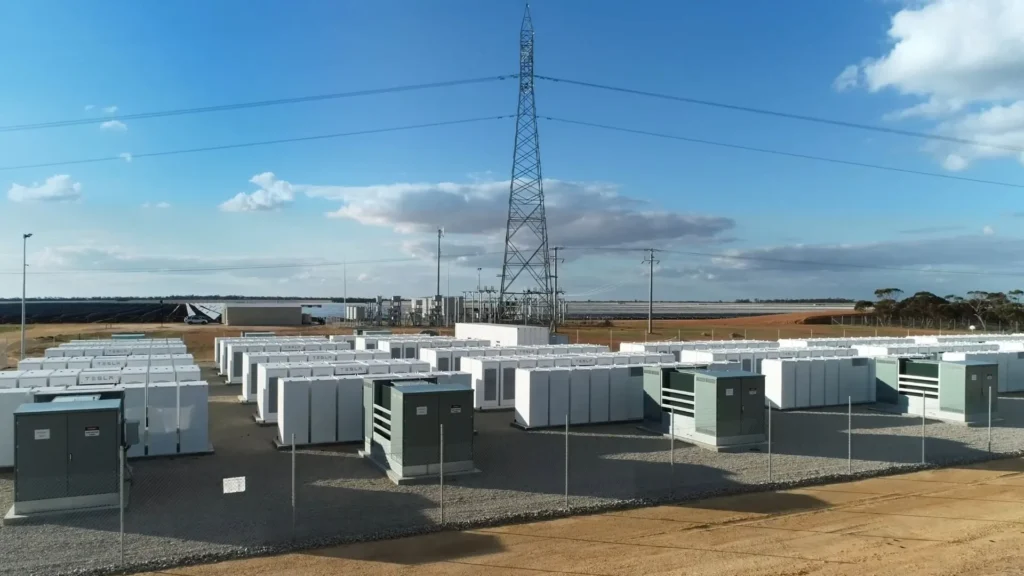
Hanworth Battery 4.8 GWh this is the energy storage project that Octopus Australia is seeking to develop near the Bannaby substation, with a planned capacity of 1.2 GW and four hours of autonomy. The facility is progressing through the environmental approval and planning processes and, in its current configuration, is shaping up to be the largest battery in the country.
Australia is evaluating a 1.2 GW storage system
The Hanworth Battery 4.8 GWh is the project of energy storage with which Australia could incorporate one of the largest facilities of its kind into its electricity grid, the system, with a planned capacity of 1.2 GW, has begun the process to obtain the necessary environmental and planning approvals.
The system would have a four-hour autonomy and is being promoted by Octopus Australia, a subsidiary of the British clean energy investment group Octopus Group, the installation is planned near the Bannaby substations, west of Bowral, in the Southern Highlands.
Based on its projected capacity, Hanworth could become Australia’s largest battery if built in its current configuration, however, other developments with six and eight hours of storage could surpass its energy capacity in the future.
Hanworth 4.8 GWh battery will use LFP technology
On the technical side, the project includes the use of lithium iron phosphate batteries (LFP), these units will be distributed in 708 containers, each with approximately 56 battery modules. The infrastructure will also include a 33 kV/500 kV substation and associated switching equipment, as well as a planned underground connection to the Bannaby substation. The scale of the system makes battery storage the central element of the project. Its 4.8 GWh capacity would allow for four hours of electricity storage at the planned nominal power of 1.2 GW.
Octopus Australia moves forward with approvals
Meanwhile, the Hanworth project has been placed on the federal government’s EPBC environmental assessment list, while the process of obtaining state permits continues, this development comes seven months after Octopus Australia acquired Hanworth from developer Enervest, which is still working on planning approvals. The transaction also included another smaller asset, the Dunmore hybrid project in Queensland, acquired from the Korean group Samsung, this facility will combine a 300 MW solar plant with a 150 MW and 300 MWh battery storage system.
Bannaby connects the project with strategic infrastructure
The location of the Hanworth battery is also significant due to its proximity to the Bannaby substation, this facility will also receive the new 500 kV HumeLink transmission line. The infrastructure is designed to connect Snowy 2.0 and the southwest renewable energy zone to major electricity consumption centers around Sydney.
The federal application states that the battery will be installed on low-value agricultural land suitable for low-density livestock farming, Octopus Australia envisions this type of storage as part of a portfolio based on solar, wind, and battery energy. Sam Reynolds, the company’s CEO, has linked this strategy to the need to replace aging coal-fired power plants and maintain a reliable year-round electricity supply.
Source: Renew Economy
Photo: Shutterstock