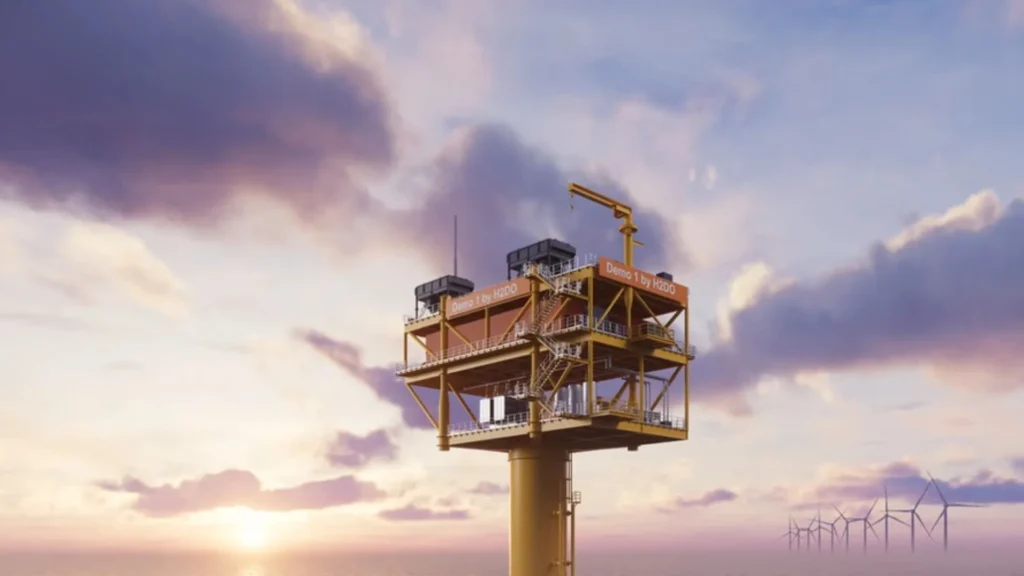
The organization Hydrogen of Dutch Origin (H2DO) has formalized the start of a comprehensive concept and technical feasibility study. This initiative, backed by funding from the Topsector Energie (TSE) program, seeks to determine the profitability of medium-scale offshore green hydrogen production plants in the Dutch North Sea. The project contemplates the deployment of a capacity between 30 and 50 megawatts (MW) to directly transform wind energy captured offshore, in full alignment with the goals set in the Hamburg Declaration.
Power grid optimization and green hydrogen production
Regarding current logistical challenges, the rapid expansion of offshore wind farms has generated a severe increase in congestion within the Netherlands’ electrical infrastructure. In view of this situation, the direct conversion of electrons into green hydrogen molecules near the generation source considerably reduces the overload on terrestrial grids. This technological alternative allows the use of existing gas pipelines to transport the resource to the coast, representing substantial financial savings for the general energy system by avoiding complex high-voltage direct current lines.
Additionally, the development of offshore infrastructure mitigates the demand for physical space on the land surface, considering that a conventional one-gigawatt (GW) facility requires an area equivalent to 29 football fields. The implemented process reduces pressure on the terrestrial freshwater supply required by standard electrolysis methods by utilizing marine resources for the chemical process.
Furthermore, the local production of this energy vector addresses a critical need to strengthen the security of the European continent. Indigenous supply derived from offshore wind reduces direct dependence on imported fuels and stabilizes vulnerable distribution chains. Likewise, the strategy aligns with the energy security principles promoted by the Hague Centre for Strategic Studies to ensure long-term regional supply.
Strategic autonomy and commercial objectives for 2031
Consequently, the TSE-funded study aims to design a robust concept suitable for entering directly into the Front-End Engineering Design (FEED) phase. The primary objectives of this consortium include system optimization through validated technologies and increasing the regulatory, commercial, and operational maturity of the proposal. Accordingly, planners project that the demonstration plant will be fully operational by the year 2031.
To ensure the fulfillment of the stated goals, H2DO has consolidated a strategic consortium composed of the firms H2sea, Haskoning, TCI Risk Management, and ECHT Regie in Transitie. This technical team has the industrial support of Smulders HSM and various key players from the European industrial and energy sectors. The collaboration covers the analysis of the Dutch regulatory environment, compliance with Renewable Fuels of Non-Biological Origin (RFNBO) standards under the RED III directive, and the design of long-term commercialization models.
Finally, the entity’s executive management highlighted the importance of coordinating this group of specialists to lay the operational foundations for offshore green hydrogen. The central purpose lies in transforming current power transmission grid challenges into tangible opportunities to consolidate the resilience of the European energy system. The funding granted by the Netherlands Enterprise Agency (RVO) and GroenvermogenNL confirms the institutional support for this decentralized production model.
Source and photo: H2DO