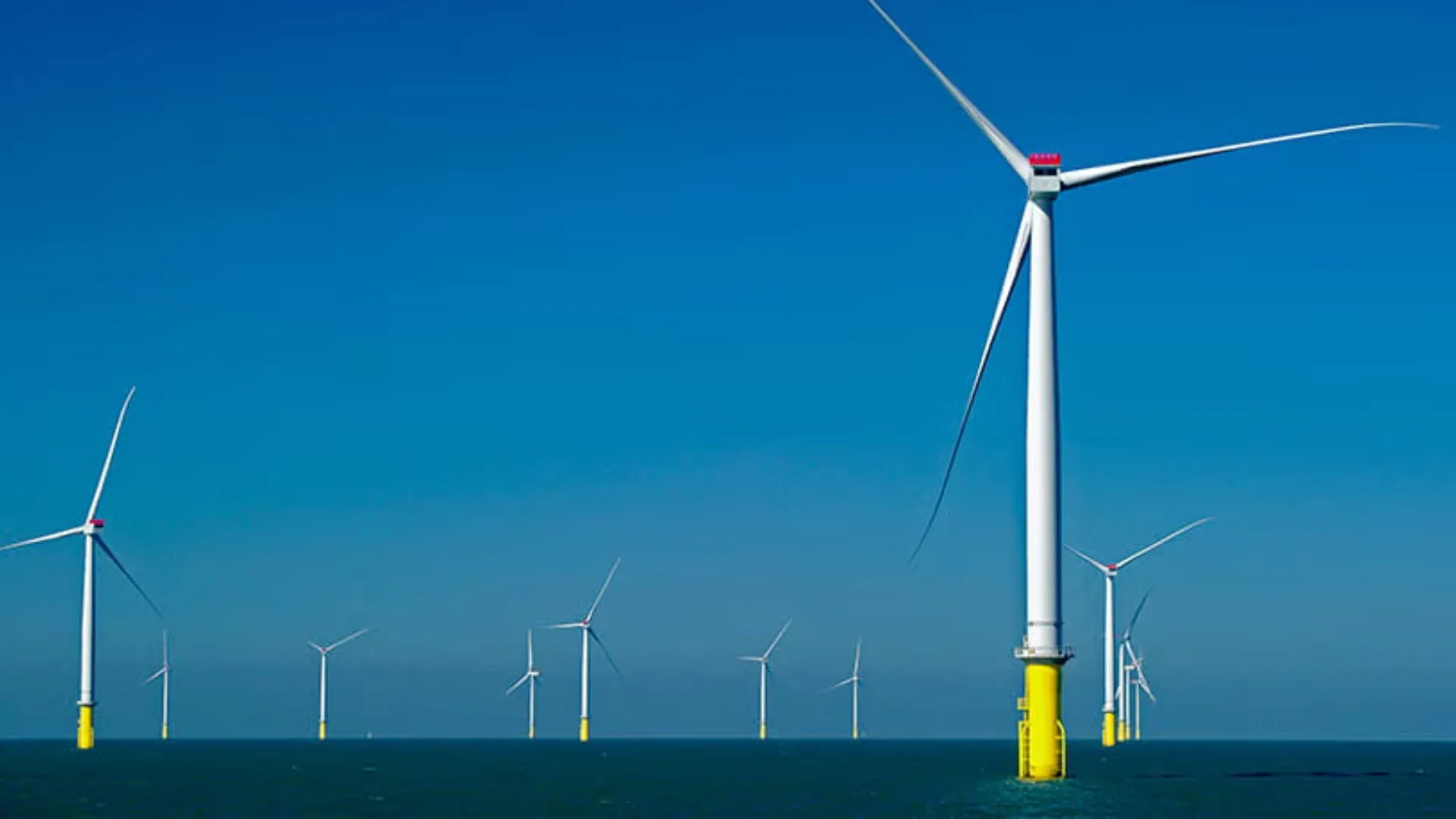
The United Kingdom has given the green light to the development of the Dogger Bank South West and Dogger Bank South East offshore wind farms, two projects promoted by RWE and Abu Dhabi Future Energy Company PJSC – Masdar that will add up to a combined installed capacity of 3 gigawatts (GW).
The authorization was issued by means of a Development Consent Order approved by Lord Whitehead, acting on behalf of the UK Secretary of State for Energy. This decision allows developers to move into the final engineering and investment readiness phase of one of the largest offshore wind farms projected in Europe.
Supply for three million households
The Dogger Bank South projects will be located more than 100 kilometers off the northeast coast of England in the North Sea, one of the regions with the greatest potential for offshore wind power generation in Europe. Each facility will comprise approximately 100 offshore turbines, with Dogger Bank South West expected to become operational in 2031 and Dogger Bank South East in 2032.
According to estimates presented by RWE and Masdar, offshore wind farms will have enough capacity to generate electricity equivalent to the annual consumption of approximately three million UK homes.
RWE and Masdar are moving towards a final investment decision
Following regulatory approval, both companies will begin detailed design work and acquisition decisions before reaching the final investment decision (FID) expected in 2027. The project is being developed under a joint venture led by RWE with a 51% stake, while Masdar owns the remaining 49%.
For Masdar, the initiative expands its presence in the European offshore market and reinforces its international energy transition strategy. For RWE, the project consolidates its position as one of the largest developers of offshore wind energy of the continent.
In addition, both projects secured Contracts for Difference (CfDs) during the UK Government’s Allocation Round 7 held in January 2026, a mechanism that guarantees income stability and improves the financial viability of renewable energy facilities.
Industrial and energy impact on the United Kingdom
The construction of offshore wind farms could also generate new opportunities for supply chains in Yorkshire, Humber, and other industrial regions of the UK. Companies expect to boost contracts related to offshore manufacturing, maritime logistics, port infrastructure, and specialized technical services linked to the energy sector.
Similarly, the development of Dogger Bank South aligns with British objectives of decarbonization and energy security in a context of growing electricity demand and transformation of the European energy system.
The expansion of large-scale offshore projects continues to position the North Sea as one of the world’s leading hubs for clean energy investment.
Source: Masdar