Germany is advancing in the consolidation of its energy infrastructure with the upcoming commissioning of the Stade floating liquefied natural gas (LNG) terminal, which is scheduled to begin operations in September 2026.
The project, promoted by the state-owned company Deutsche Energy Terminal GmbH (DET), represents a strategic step to strengthen energy supply security and diversify the country’s gas import sources.
After several months of technical evaluations, safety reviews, and preparatory work, authorities and operators have defined a roadmap to begin LNG reception, storage, and regasification operations at the facility located in the industrial port of Stade-Bützfleth, Lower Saxony.
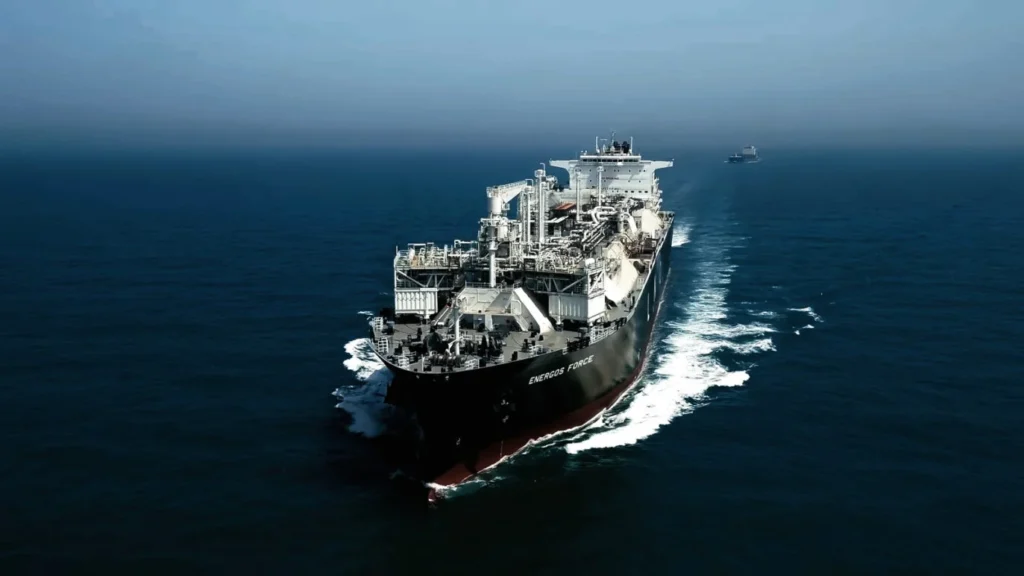
The FSRU Energos Force will return for the final phase
As part of the project, the floating storage and regasification unit (FSRU) Energos Force will return to Germany to participate in the terminal’s commissioning phase.
The vessel had been temporarily deployed in Jordan after being chartered by Deutsche Energy Terminal GmbH, a decision that allowed for optimizing asset utilization while infrastructure work continued in Stade.
According to the operating company, the current contract guarantees the vessel’s return with sufficient anticipation to complete operational tests and the planned September commissioning.
The FSRU will play an essential role in receiving LNG cargoes, storing them, and converting them back into a gaseous state for integration into the German energy grid.
Stade completes the federal network of LNG terminals
With the incorporation of Stade, Germany will conclude the federal program for floating LNG import terminals developed after the energy crisis caused by the reduction of Russian gas supplies in Europe.
The new facility will join the already operational terminals in Wilhelmshaven and Brunsbüttel, strengthening the country’s capacity to receive liquefied natural gas from international markets and reducing dependence on traditional supply routes.
This set of infrastructures has been considered a fundamental part of Germany’s energy strategy to ensure supply stability and increase the system’s resilience against potential market disruptions.
A strategic asset for the energy transition
In addition to strengthening energy security, the Stade terminal is poised to play a significant role in the transformation of the German energy system. Its location in one of the main industrial hubs in the north of the country will allow it to supply energy-intensive industrial sectors while transition solutions towards lower-carbon fuels are developed.
German authorities believe that the infrastructure will help ensure energy availability during the energy transition process, providing flexibility to the system and supporting the growing integration of renewable sources.
With Stade’s commissioning scheduled for September, Germany will complete one of the most important energy infrastructure initiatives developed in Europe in recent years to address supply security and energy diversification challenges.
Source and photo: https://energy-terminal.de/