The connection between the West Natuna basin and the Indonesian energy market took a decisive step after the completion of the link between the Pemping gas pipeline project and the West Natuna Transportation System (WNTS), an infrastructure that will receive gas from the Mako field developed by Conrad Asia Energy in the coming years.
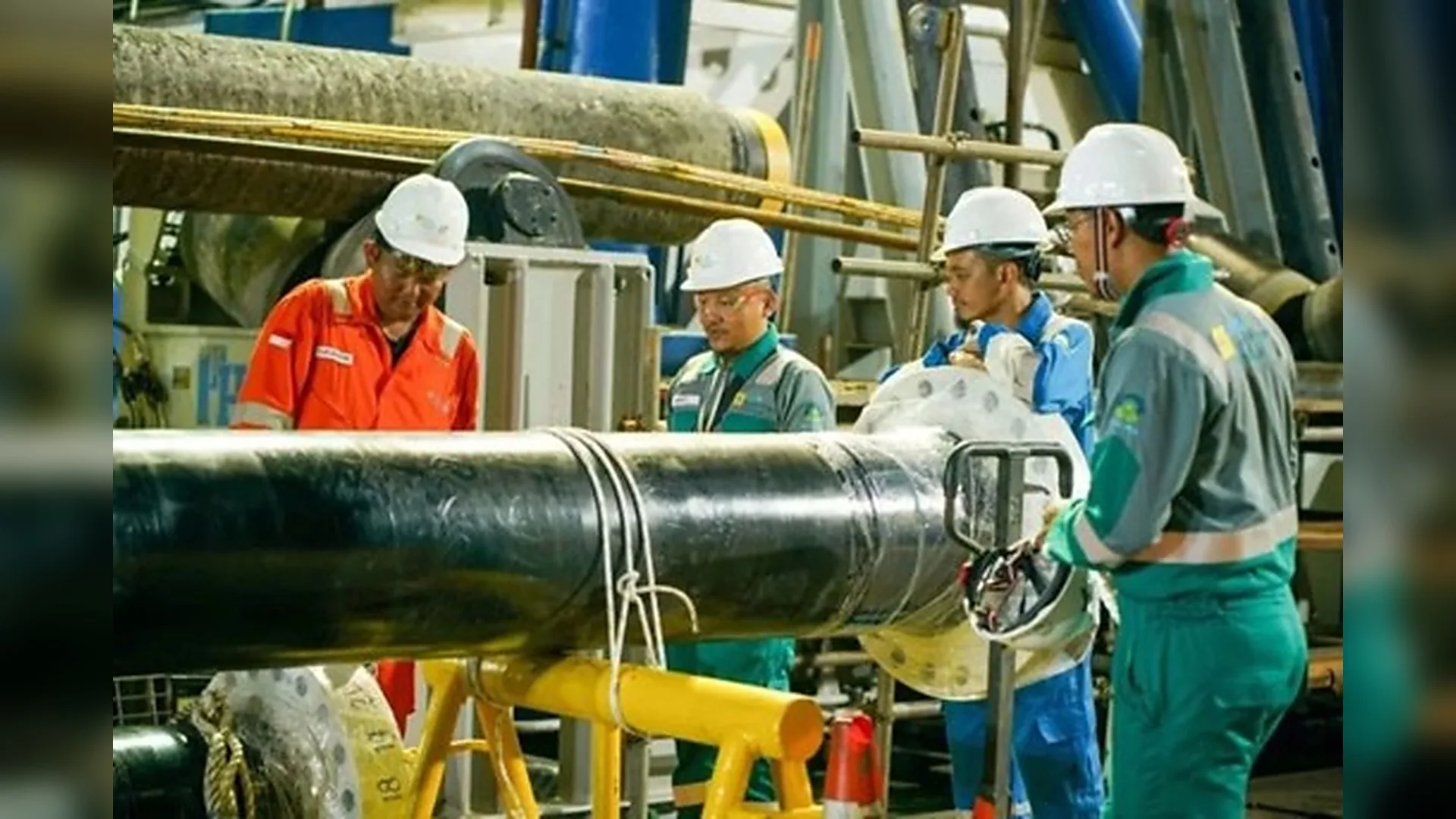
The company reported that PT PLN Energi Primer Indonesia (PLN EPI) successfully completed the connection operation using the “hot tap” technique, a specialized procedure that allows a new pipeline to be added to an existing system without interrupting the flow of gas.
A crucial technical operation for energy supply
The work was carried out on a gas pipeline that currently transports around 300 million cubic feet of gas per day and operates at a pressure of approximately 1,096 psi. Furthermore, the work was performed at a depth of approximately 29 meters below sea level.
Due to these operating conditions, the connection is considered one of the most complex stages in the construction and integration of new underwater gas transport infrastructure.
According to PLN EPI, the new pipeline will enter the commissioning phase in the coming days, after which initial deliveries of about 25 million cubic feet per day of gas from existing producers in the Natuna Sea will begin to support Batam’s electrical system.
The Mako field is aiming to start production in 2027
The newly connected infrastructure will be the delivery point for gas from the Mako field, considered one of the largest undeveloped gas resources in the West Natuna Basin.
Conrad anticipates that commercial production from the project will begin during the fourth quarter of 2027. Once operational, the gas will be transported via the WNTS to Indonesia’s domestic markets.
The company already has a gas sales agreement signed between PLN EPI and its subsidiary West Natuna Exploration Limited to supply up to approximately 111 million standard cubic feet per day of marketable gas between 2027 and 2037.
Likewise, the project’s processing facilities were designed to handle up to 172 million standard cubic feet per day, which could allow for future production increases based on field performance and regional demand.
Energy security for Batam and Sumatra
Conrad Asia Energy’s CEO, Miltos Xynogalas, highlighted the strategic importance of the new connection for Indonesia and for gas producers in the Natuna Sea.
According to the executive, the start of production at the Mako field will contribute significantly to the energy supply of Batam and Sumatra, regions where demand continues to grow.
Furthermore, he noted that the increased supply of natural gas will reduce dependence on liquid fuels used for electricity generation, contributing to a decrease in emissions associated with the energy sector.
A project that promotes Indonesia’s gas development
Conrad discovered the Mako field in 2017 and has since made progress in its assessment and planning to bring it into commercial production.
The company believes the project represents the first step in a broader portfolio of gas resources in Asia. According to its plans, the infrastructure currently under construction will allow for the incorporation of future discoveries and strengthen the role of natural gas in Indonesia’s energy mix over the next decade.
The completion of the connection between West Natuna and Batam thus marks a significant step forward for the country’s energy development and brings closer the start of operations for one of Indonesia’s most important offshore gas projects.
Source and photo: Conradasia