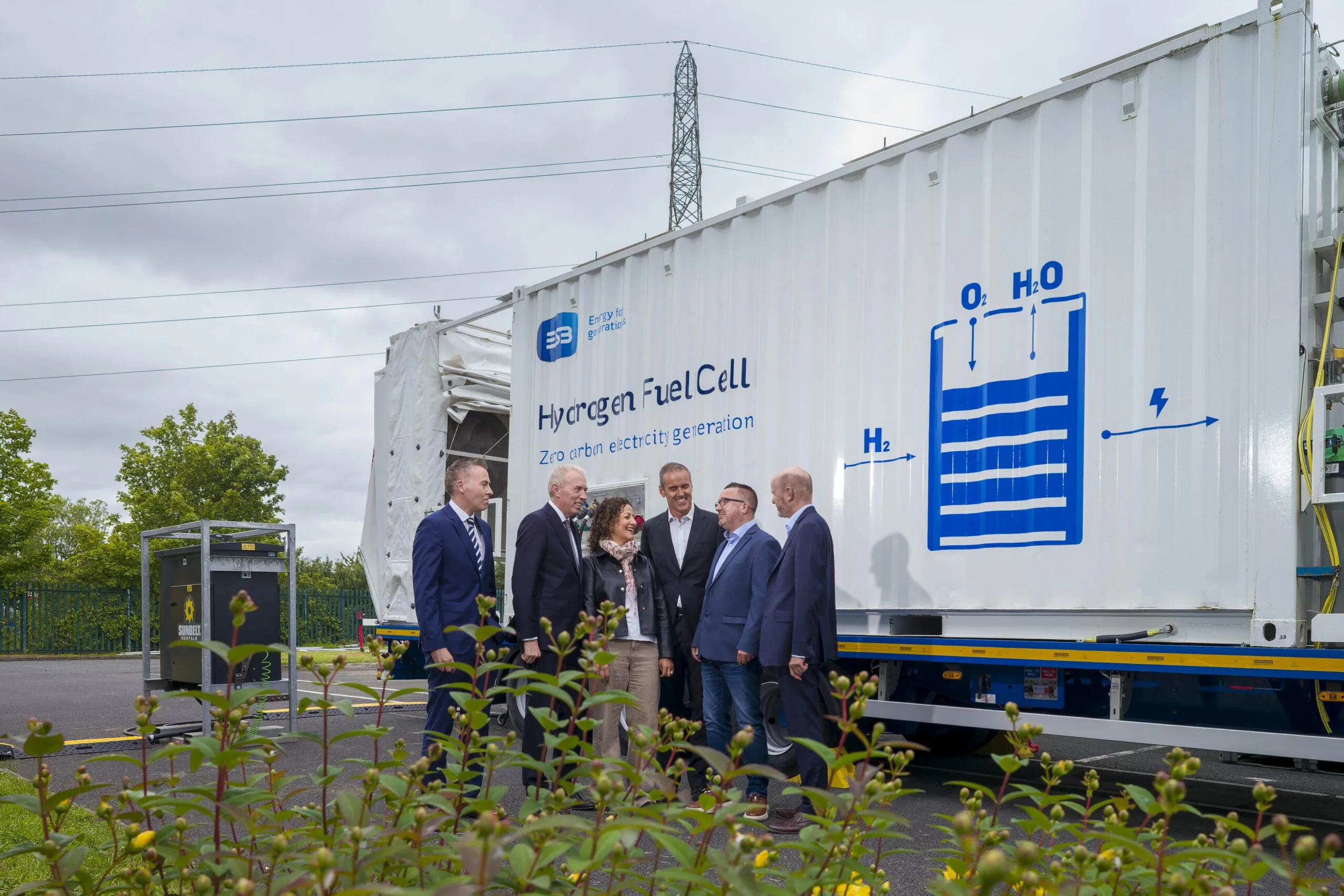
Equinix has taken another step in the search for energy alternatives for digital infrastructure by launching a pilot project using hydrogen energy at one of its Dublin data centers. The project, developed in partnership with ESB and GeoPura, aims to assess the potential of green hydrogen as a backup power source for critical facilities.
Currently, the initiative is being implemented at Equinix’s DB3 data center in Blanchardstown. During a 12-week pilot program, two hydrogen power units will supply electricity to cooling systems essential to the facility’s operation.
Green hydrogen enters the digital infrastructure
The growing demand for computing power and data storage is increasing the energy consumption of data centers. In Ireland, this challenge has been exacerbated by grid capacity limitations in some areas of Greater Dublin.
Faced with this scenario, Equinix decided to explore technologies capable of providing reliable energy backup with lower emissions. The units developed by GeoPura run on hydrogen from renewable sources and use PEM fuel cells to generate electricity with zero direct emissions at the point of use.
In addition, the systems operate in conjunction with an uninterruptible power supply (UPS) infrastructure, which allows for an immediate response to variations in the electrical grid and provides up to half a megawatt of continuous power.
An alternative to diesel generators
Traditionally, data centers rely on diesel or gas generators to ensure operational continuity during power outages. However, these technologies represent a significant source of emissions.
The hydrogen units installed in Dublin were designed to offer a low-emission alternative that contributes to the decarbonization of critical operations. According to project managers, the technology could also help reduce pressure on the electricity grid during periods of high demand.
Likewise, the test will allow the collection of information on operational, commercial and safety aspects associated with the use of hydrogen in large-scale energy backup applications.
Potential beyond data centers
The project partners believe this technology could be extended to other sectors requiring temporary power supplies. These include construction sites, industrial facilities, and operations located in areas with limited access to the electricity grid.
The units used in the pilot can be expanded to reach capacities of 50 MW, opening up the possibility of using them both as backup power and as the main source of supply in certain environments.
Another important aspect is the utilization of byproducts generated by the fuel cells. The system produces water and heat that could be reused in future district heating applications and industrial cooling processes.
Ireland seeks new solutions for the energy transition
For Irish authorities, initiatives like this allow for the evaluation of emerging technologies under real-world operating conditions. The data obtained could contribute to the development of future energy strategies focused on reducing emissions and integrating new sources of clean energy.
If the results are positive, the project could become a benchmark for the adoption of hydrogen energy in data centers and other critical infrastructure seeking to reduce their dependence on fossil fuels without compromising the reliability of the electricity supply.
Source and photo: Geopura