Amazon reported that its data centers achieved water efficiency in 2025 that is more than seven times the global industry average, a result that reinforces its efforts to reduce the environmental impact of the infrastructure that supports cloud services and the growing development of artificial intelligence.
According to data shared by the company, its global operations recorded a consumption of just 0.12 liters of water per kilowatt-hour (L/kWh), compared to the industry average of 0.84 L/kWh. This improvement is part of a sustained resource optimization strategy that has increased water efficiency by 52% since 2021.
Cooling, crucial for water efficiency
Data centers require controlled thermal conditions to ensure the continuous operation of thousands of servers. To achieve this, Amazon uses thermal management systems designed to minimize water usage for most of the year.
Currently, about 90% of its facilities use outdoor air cooling; this method takes advantage of favorable weather conditions to dissipate the heat generated by the equipment without resorting to water consumption.
However, during periods of extreme temperatures, the company implements evaporative cooling systems. This technology uses small amounts of water to reduce the air temperature before it enters the servers, allowing for operational stability with lower energy consumption than other conventional cooling methods.
Operate at higher temperatures to consume less water
Another advancement implemented by Amazon involves gradually raising the operating temperature thresholds of its data centers. Thanks to improvements in the design of servers and computing components, the facilities can operate safely at higher temperatures.
As a result, the need to use water for cooling is significantly reduced. The company says that studies conducted over thousands of hours of operation showed that the temperature increase did not generate increases in equipment failure rates.
The benefits are already visible in strategic regions such as Northern Virginia, where water consumption fell 42% year-over-year despite continued growth in demand for cloud computing services.
Amazon is moving towards a positive water balance
In addition to improving operational efficiency, Amazon maintains its goal of achieving a positive water balance by 2030. This involves giving back to communities more water than it uses in its global operations.
The company reported that it has already achieved approximately 75% of that goal through projects aimed at restoring watersheds, improving water storage systems, and promoting water resource reuse initiatives.
Among the highlighted actions are programs developed in the United States, Spain, and Mexico, aimed at increasing the availability of water for agricultural and community use. These initiatives are part of a portfolio of more than 50 water projects distributed across different regions of the world.
Recycled water and new solutions for the sustainable cloud
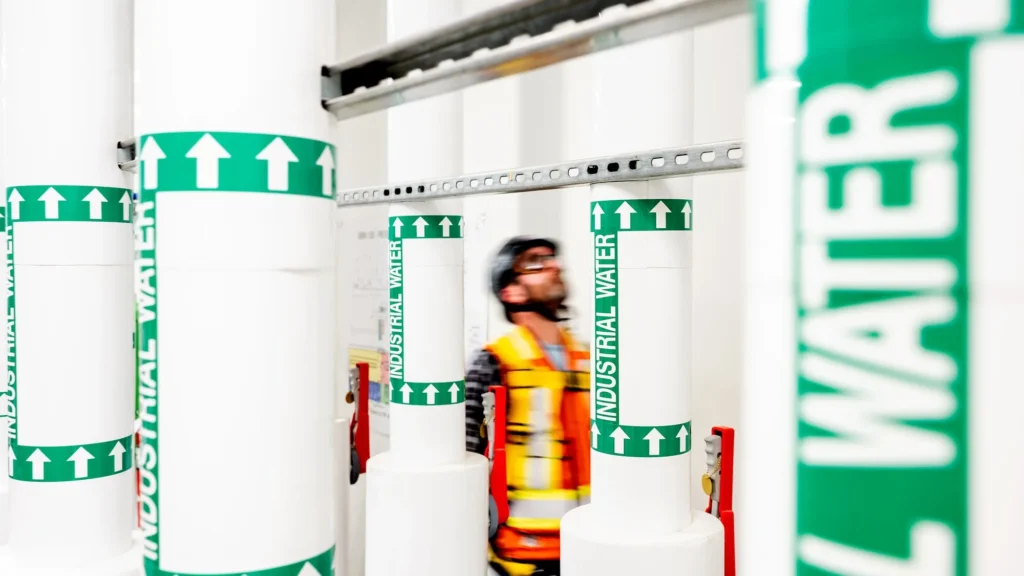
Likewise, Amazon continues to expand the use of recycled water in its facilities, currently operating dozens of centers that run exclusively on reclaimed water from treatment plants, reducing dependence on potable water sources.
The company believes that these measures will become increasingly relevant as demand for digital infrastructure grows, driven by the expansion of artificial intelligence, cloud services, and high-performance applications.
With increasing pressure on natural resources and the growing computing capacity required by businesses and users, efficient water management has become one of the main indicators of sustainability for the global data center industry.
Source and photo: Aboutamazon