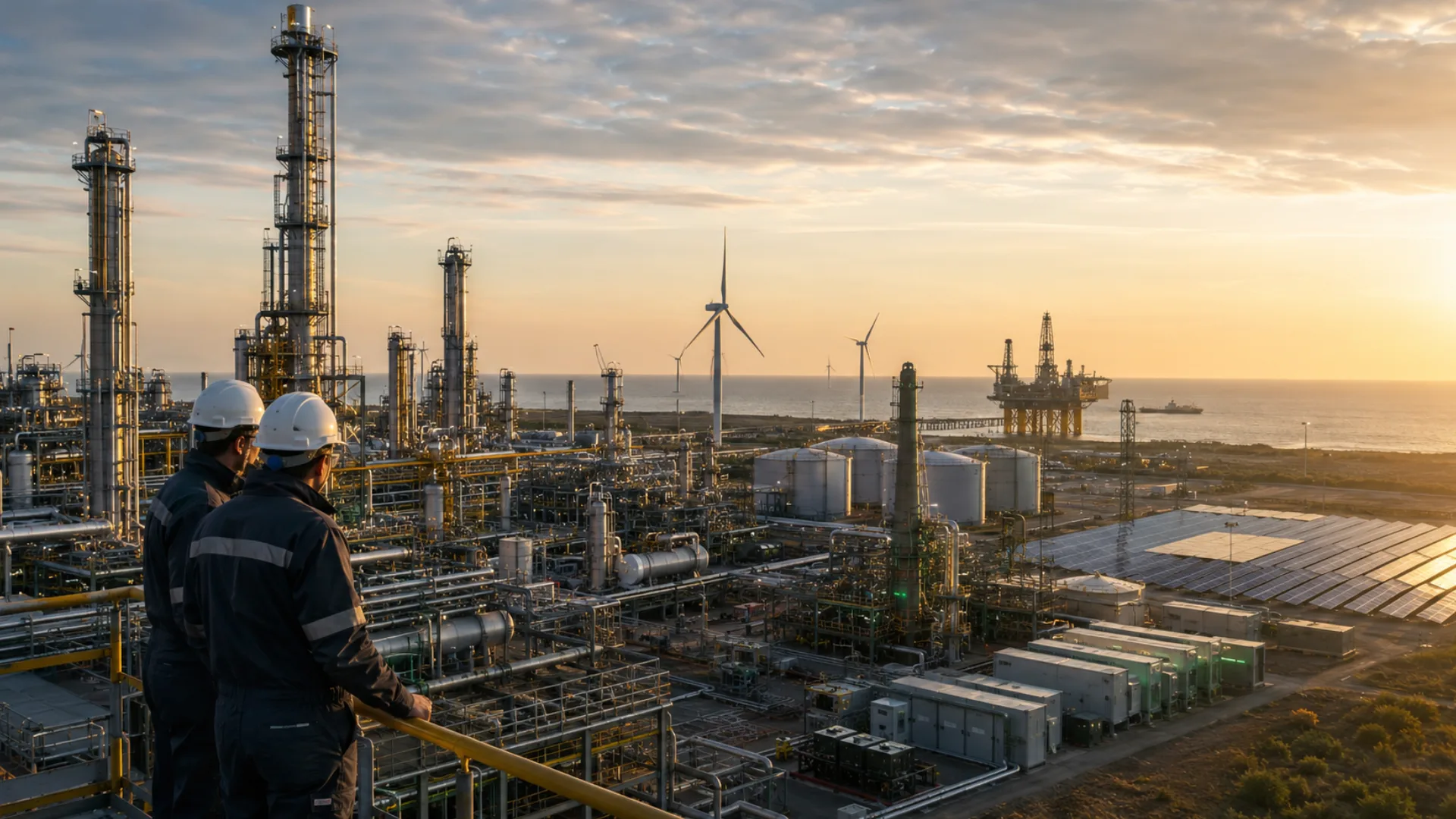
Eni’s underlying oil and gas production rose 11% year-over-year, reaching 1.79 million barrels of oil equivalent per day during the second quarter.
Growth was driven by the launch and expansion of projects in West Africa, the Gulf of Mexico, Norway, and Indonesia. In light of this performance, the company raised its production growth forecast for all of 2026 to approximately 5%, up from the previous range of 3% to 4%.
This increase in production puts additional pressure on the processing, compression, transportation, and export systems associated with the new volumes. The availability of these facilities will be critical to converting operational growth into sustained cash generation.
Oil and gas: New projects expand the offshore portfolio
Eni confirmed final investment decisions for Phase 3 of the Baleine field, off the coast of Ivory Coast; the Greater PAJ development, off the coast of Angola; and the Cronos gas project, in the deep waters off Cyprus.
The company also established the Searah joint venture with Petronas, aimed at developing gas discoveries in the Kutei Basin and building a growth platform between Indonesia and Malaysia. In addition, it agreed to acquire stakes in upstream assets in Argentina linked to future floating liquefied natural gas developments.
The simultaneous execution of these projects will require coordination among drilling, subsea installations, processing plants, gas pipelines, and floating units. Integrity monitoring during construction and commissioning will be essential to minimize delays and maintain the reliability of the assets.
Profits and Cash Flow Drive Expansion
The group’s pro forma adjusted EBIT reached 5.38 billion euros in the second quarter, double the figure recorded a year earlier. Adjusted net income also doubled, reaching 2.3 billion euros.
Among the key indicators reported by Eni, the following stand out:
- 4,770 million euros in pro forma adjusted EBIT from exploration and production.
- 4,470 million euros in adjusted operating cash flow before working capital.
- 1,840 million euros allocated to organic investments.
- 11,300 million euros in net debt at the end of the quarter.
- 10% pro forma leverage, at the lower end of the target range.
This performance was driven by higher volumes, cost discipline, better realized prices, and a favorable environment for refining margins.
Enilive and Plenitude Gain Ground at Eni
The transition businesses also increased their contribution. Enilive and Plenitude together generated adjusted EBITDA of 1.1 billion euros during the first half of the year.
Enilive more than doubled its pro forma adjusted EBIT to 290 million euros, driven by its biorefining business. Plenitude reached 230 million euros, a 70% year-over-year increase, supported by growth in renewable energy generation.
Eni expects Plenitude to end 2026 with 6.5 GW of installed renewable capacity. At the same time, Enilive projects it will have 2.1 million metric tons of annual biorefinery capacity, in addition to another 1.5 million metric tons currently under construction.
The company also began the conversion of industrial complexes. In Priolo, a biorefinery is being developed alongside a chemical plastics recycling plant, while in Brindisi, construction has begun on a facility to manufacture lithium-iron phosphate batteries for stationary storage.
Eni Raises Its Forecasts for 2026
Eni now projects adjusted operating cash flow of approximately 15,000 million euros, based on a reference scenario of $85 per barrel of Brent, a SERM refining margin of $14 per barrel, and a TTF price of 50 euros per MWh.
The company maintained its gross investments at 7 billion euros but expects to reduce net investments to less than 5 billion. It also increased its share buyback program to 3.4 billion euros, up from the 2.8 billion previously announced.
The next indicator to watch will be Eni’s ability to sustain production growth while simultaneously moving forward with offshore projects, biorefineries, renewables, storage, and critical minerals. The challenge will depend not only on available capital, but also on maintaining the integrity, reliability, and availability of an increasingly diversified industrial portfolio.
Source: Eni