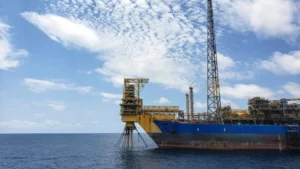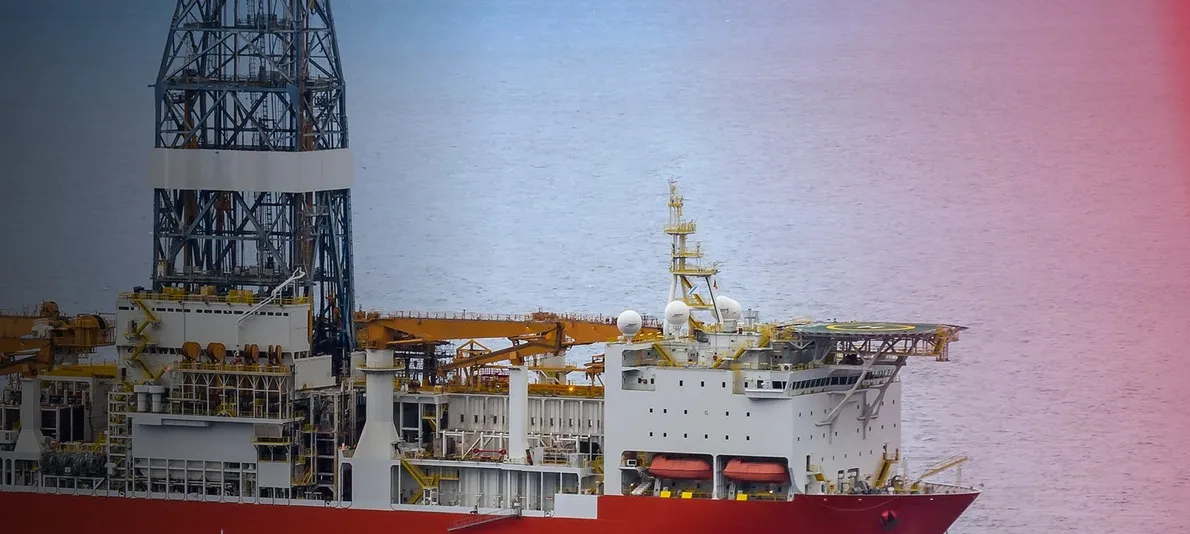
Halliburton and Eni achieved a new technological validation by successfully implementing a closed-loop drilling automation system during an exploratory deepwater well offshore Indonesia.
The operation represents the first deployment of this integrated architecture in Asia-Pacific and demonstrates the industry’s advancement toward platforms capable of automatically coordinating critical drilling processes through real-time digital control.
The project integrated full rig automation with Managed Pressure Drilling (MPD) technologies, remote operations, and Halliburton’s LOGIX™ Orchestration system, enabling the coordination of drilling, pipe tripping, and dynamic wellbore pressure management within a single workflow.
Integrated Automation to Enhance Well Control
Unlike traditional schemes, where different systems operate partially independently, the solution implemented in Indonesia connects surface equipment, downhole hydraulics, drilling trajectory, and the MPD system within a closed-loop automation architecture.
This approach enables sensors, control algorithms, and execution systems to continuously exchange information to adjust critical parameters without relying exclusively on manual intervention.
The incorporation of the LOGIX™ Orchestration system also represents a step toward digital drilling models where multiple subsystems work as a single operational unit, improving process stability and facilitating future advanced automation applications.
Halliburton and Eni: A Breakthrough for Deepwater Drilling
Deepwater offshore wells present some of the most complex challenges for drilling engineering due to the narrow window between pore pressure and formation fracture pressure. Under these conditions, small deviations can cause lost circulation, wellbore instability, or uncontrolled fluid influx.
The integration of automation with Managed Pressure Drilling technology enables maintaining pressure within that operational range through continuous adjustments throughout the operation. This capability becomes especially important in high-complexity exploratory campaigns, where hydraulic stability directly conditions project safety and efficiency.
The deployment carried out with Eni also strengthens the industry’s trend toward remote operations centers and increasingly digitalized platforms capable of coordinating operational decisions through intelligent monitoring and control systems.
Automation Redefines Digital Well Construction
The implementation in Indonesia reflects an evolution that transcends incremental productivity gains. Automation is beginning to modify the way wells are constructed by integrating information from surface, subsurface, and downhole into a single system capable of executing coordinated actions in real time.
This model reduces dependence on sequential manual decisions and favors more repeatable, consistent, and predictable operations—aspects especially relevant in offshore projects where technical complexity and operational costs are significantly higher.
As these platforms evolve, technologies such as artificial intelligence, digital twins, and advanced analytics can be incorporated onto this same architecture, accelerating the transition toward increasingly autonomous drilling processes.
Source and photo: https://www.halliburton.com/