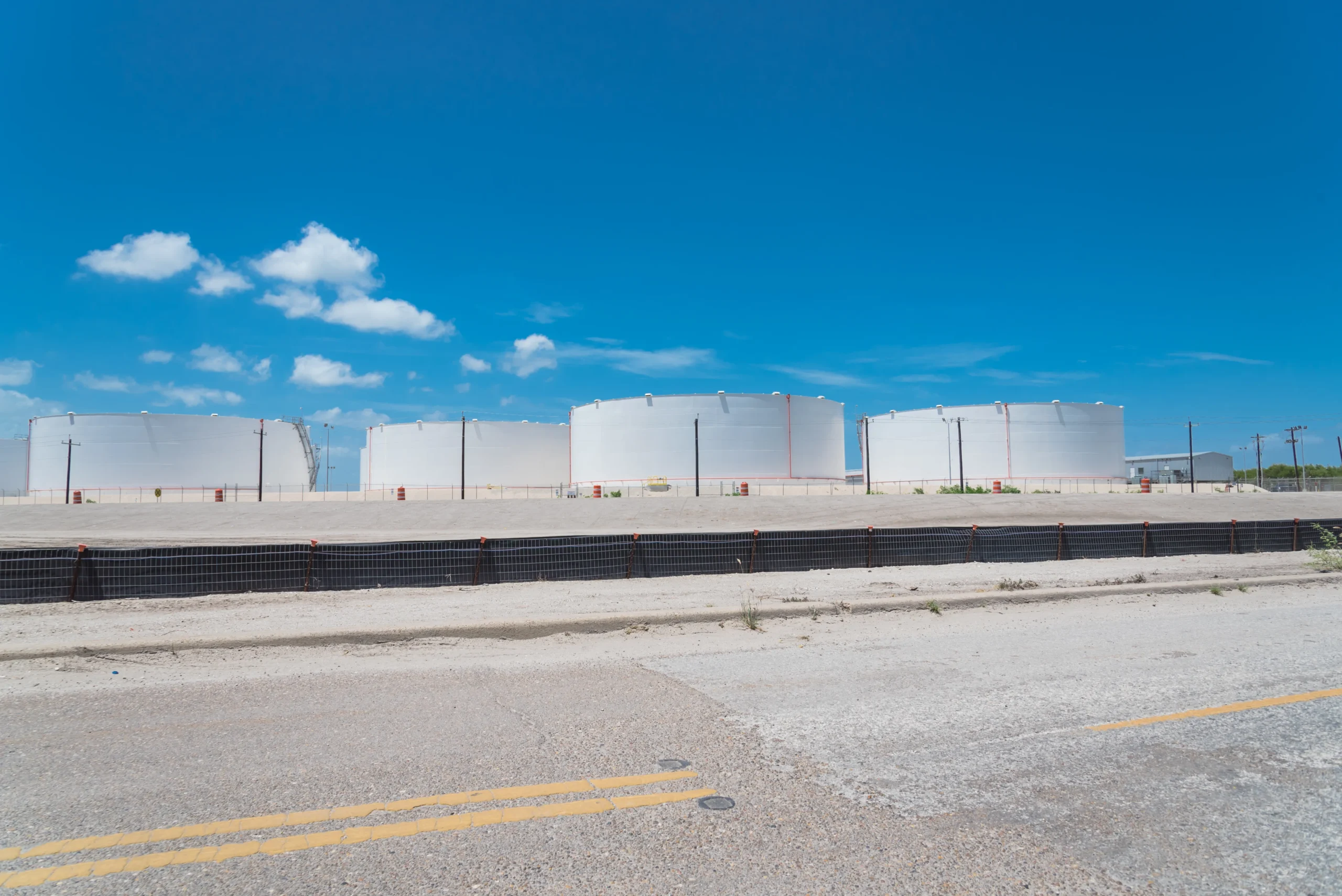
Enbridge will acquire the business of Salt Creek Midstream crude oil collection to connect Permian production with its transport and export infrastructure.
Enbridge agreed to acquire by US$600 million in cash Salt Creek Midstream’s crude oil gathering business, an operation that will strengthen its infrastructure in the Permian Basin and expand its connection to the US Gulf Coast’s export routes.
The transaction includes 100% of the collection systems Orla y Wink North and a 50% stake in Delaware Crossing (DCX) Collectively, the assets represent approximately 500 miles about 800 kilometers of crude oil gathering infrastructure located in the Delaware Basin.
In this way, Enbridge expands its presence in a strategic area within the Permian Basin, the main oil-producing region in the United States and a market where gathering networks and pipelines are essential to move production to storage and export centers.
The assets can handle 420,000 barrels per day
The Orla, Wink North, and Delaware Crossing systems have a combined capacity of approximately 420,000 barrels per day and can store some 350,000 barrels of crude oil.
In addition, the infrastructure serves more than 20 producers and is supported by approximately 320,000 net acres dedicated through long-term commercial agreements. According to Enbridge the average remaining contract life is around 10 years.
This contractual structure provides a long-term source of income for the assets and allows the company to incorporate a collection platform already connected to production in the Delaware Basin.
From the well to the export terminals
One of the strategic components of the acquisition lies in the available connections with different long-distance pipelines that transport oil out of the Permian Basin.
Among them appears Gray Oak Pipeline the company, which holds a majority stake in the system, is also considering integration with Cactus II within a network that allows crude oil to be transported from the producing areas to the coast.
Thus, the purchase creates a direct connection between the Permian and North African oil fields, Enbridge Ingleside Energy Center, a facility that the company identifies as the largest terminal of North American crude oil exports.
This integration allows Enbridge to extend its participation in the logistics chain from the initial collection of oil to its transport through pipelines and subsequent arrival at infrastructure destined for the international market.
Enbridge strengthens its presence in the Permian Basin
Colin Gruending, executive vice president and president of Enbridge Liquids Pipelines, noted that the operation will allow the incorporation of a crude oil gathering platform with a high level of connectivity.
These assets will strengthen our value chain in the Permian Basin and Enbridge can now offer its customers complete integration, from well to water, through Gray Oak, Cactus II and the Enbridge Ingleside Energy Hub.
Colin Gruending, executive vice president and president of Enbridge Liquids Pipelines.
The strategy gains relevance due to the weight of the Permian in the US oil market the region continues to attract investment in collection systems and pipeline networks designed to transport larger volumes of oil to Gulf Coast terminals.
The deal is expected to close by the end of 2026
Enbridge estimates that the acquisition will have an immediate positive effect on distributable cash flow per share and earnings per share. Despite the $600 million investment, the company maintained its financial guidance for 2026 unchanged.
Furthermore, the closing is planned for the end of 2026 and is still dependent on compliance with the usual conditions for this type of operation.
These include the corresponding authorization from the United States Federal Trade Commission under the Hart-Scott-Rodino Antitrust Improvements Act of 1976.
Finally, RBC Capital Markets acted as financial advisor to Enbridge, while Sidley Austin LLP and Sullivan & Cromwell LLP participated as legal advisors in the transaction.
Source: Rigzone
Photo: Shutterstock