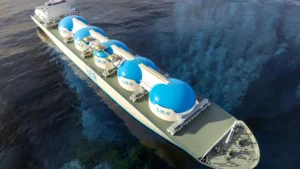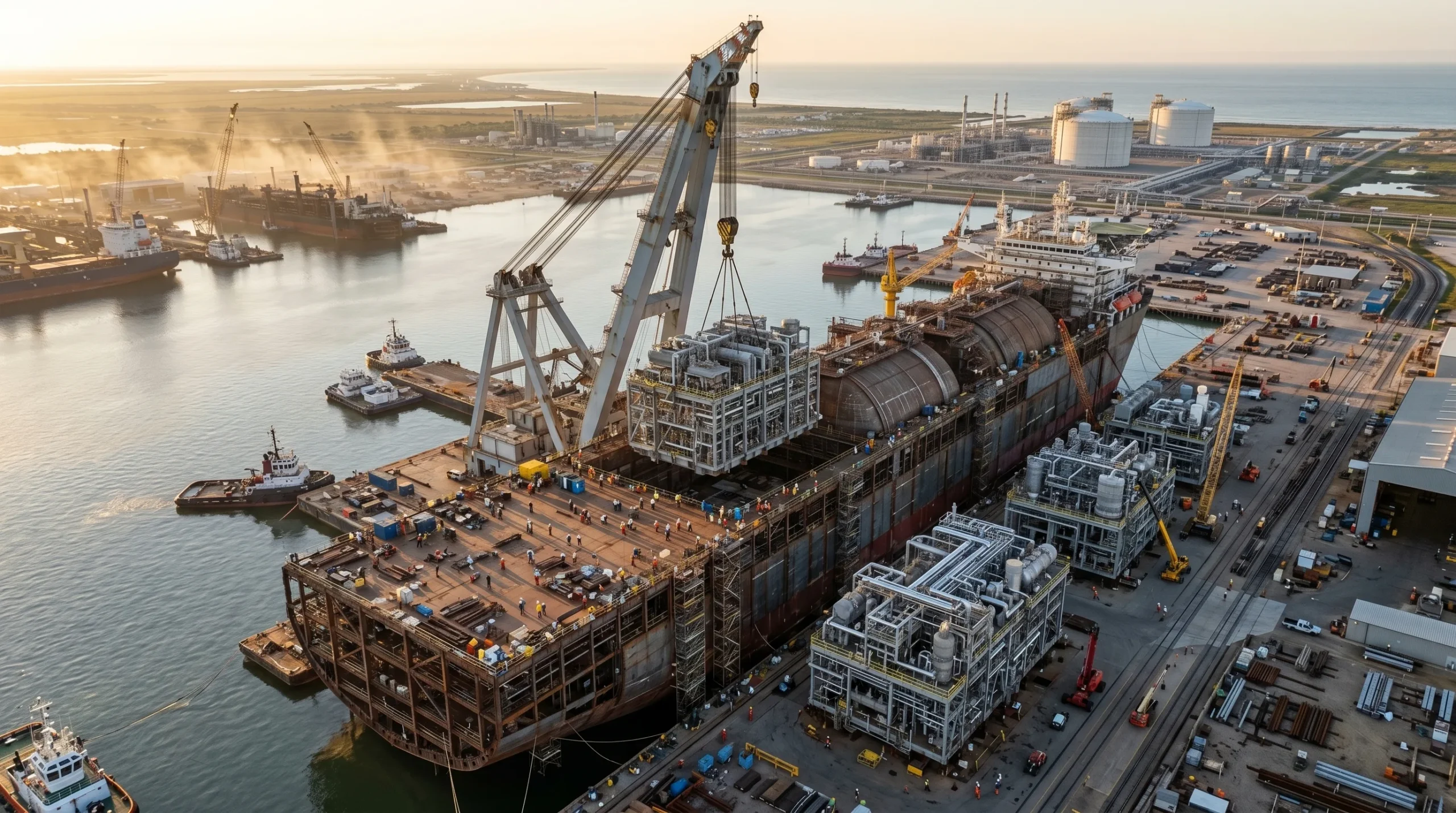
On June 3, 2026, Delfin FLNG 1 received the Final Investment Decision (FID), becoming the first floating natural gas liquefaction project approved in the United States. The committed investment totals $5 billion and establishes an export capacity of 4.4 million tonnes per annum of LNG (Mtpa), the largest recorded for any FLNG project globally.
Delfin Midstream FLNG FID: location, timeline, and contracts
The Delfin Midstream FLNG project is located offshore off the coast of Louisiana, in the Gulf of Mexico, with production expected to start in 2030. Delfin already has all required permits and licenses, including the deepwater port license granted by the U.S. Maritime Administration (MARAD) and authorization from the Department of Energy to export up to 13.2 Mtpa. The construction contract was awarded to Samsung Heavy Industries and Black & Veatch under a turnkey arrangement. Long-term sales agreements have been signed with Vitol, Expand Energy, Centrica, and Gunvor, securing capacity marketing even before operations begin.
Investors behind Delfin Midstream FLNG
The investor consortium is led by Global Infrastructure Partners (GIP), part of BlackRock, together with Mitsui O.S.K. Lines (MOL), operator of the world’s largest LNG tanker fleet, Vitol, and Diameter Capital Partners.
Dudley Poston, CEO of Delfin, stated:
Securing the FID for our first FLNG vessel is a game-changing milestone not only for Delfin, but also for global energy security. We support U.S. energy and maritime leadership by delivering safe, reliable, low-cost LNG exports to the global market.
Mark Florian, head of GIP’s mid-market funds, noted:
Delfin FLNG 1 is well positioned to deliver cost-competitive U.S. LNG to global markets, backed by an experienced management team, proven construction partners, and long-term agreements with leading energy companies.
Why does Delfin Midstream FLNG change the LNG export landscape?
All U.S. LNG exports have historically depended on onshore liquefaction facilities. The Delfin Midstream FLNG model—based on floating technology successfully used in Australia and Africa—enables offshore gas reserves to be monetized without requiring large-scale coastal infrastructure. U.S. LNG exports reached record levels in 2024, cementing the country as the world’s largest exporter of liquefied natural gas.
Offshore floating technology in Louisiana is an unprecedented model for the Gulf of Mexico, a region with decades of experience in subsea production but no precedent for commercial-scale floating liquefaction. The approval also coincides with a record year for the sector: the Venture Global CP2 LNG Phase 2 and Commonwealth LNG projects also reached FID in 2026, expanding the U.S. export base amid growing global demand.
Next steps: FLNG 2 and FLNG 3
Delfin is working in parallel on the FID for the FLNG 2 and FLNG 3 vessels, with decisions expected over the next 12 months. If finalized, the project’s total capacity would rise to 13.2 Mtpa, making it one of the largest LNG export complexes in North America. The decision also reinforces investor interest in energy infrastructure in the Gulf of Mexico basin, a region that is expanding its strategic profile beyond conventional oil extraction.
The Delfin FLNG project also represents a structural shift in the U.S. export strategy. While onshore terminals require 5 to 7 years of coastal construction, the Delfin FLNG model makes it possible to install liquefaction capacity in deep waters with greater logistical flexibility and less impact on existing port infrastructure. The FID for Delfin FLNG also paves the way for other operators to replicate the model in the Gulf of Mexico.
Sources:
– GlobeNewswire / Delfin Midstream Inc.: globenewswire.com
– Reuters Energy, June 3, 2026: reuters.com/business/energy
– Delfin Midstream: delfinmidstream.com
– WorkBoat: workboat.com