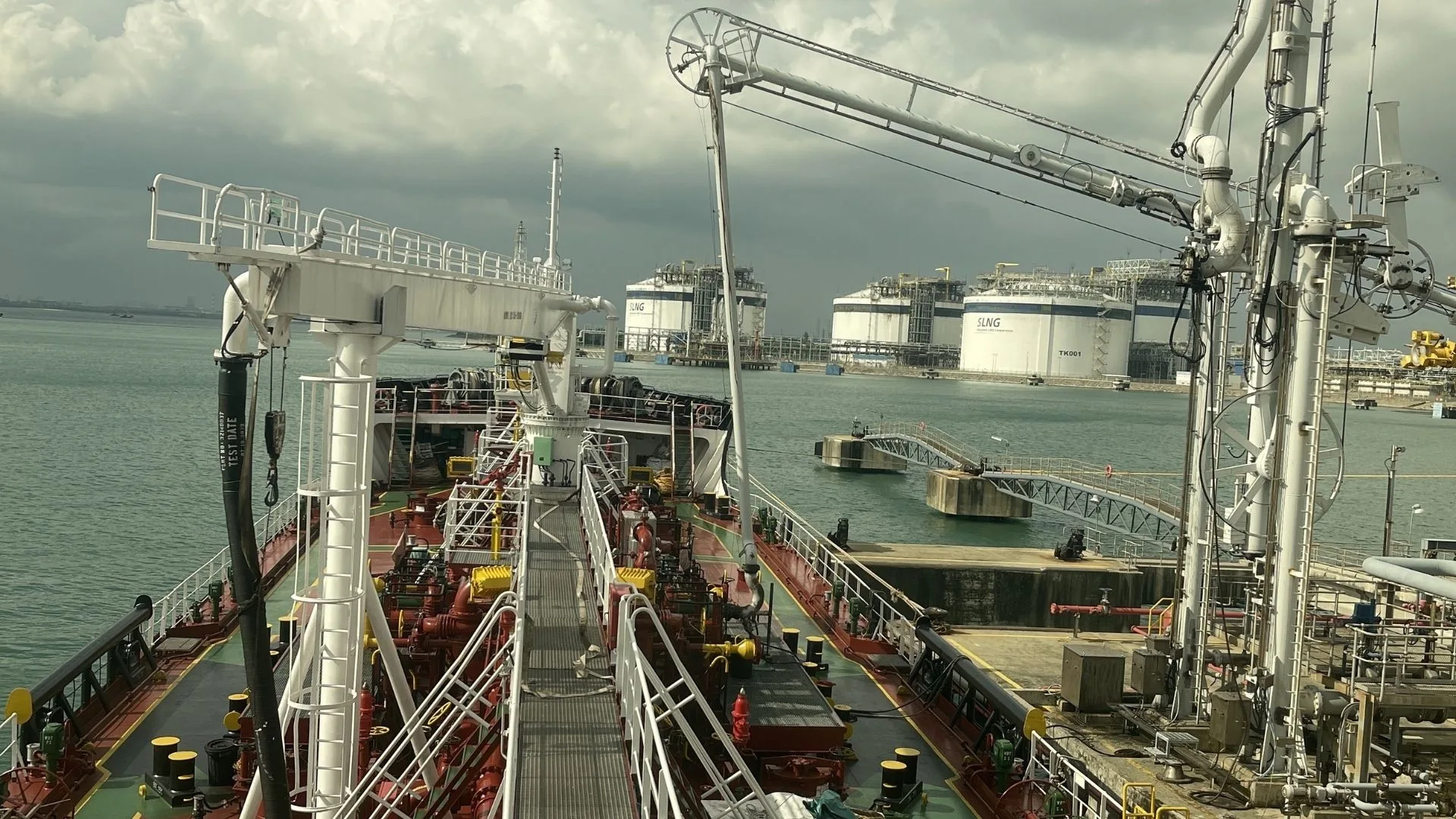
Dar Blend crude oil South Sudanese crude is regaining ground in the Singapore and Malaysian marine fuel markets. Lower demand from China’s refining sector freed up more barrels in August, increasing the availability of this feedstock for producing and blending low-sulfur fuel oil.
Specifically, near 1.7 million barrels of Dar Blend shipments arrived in Singapore and Malaysia during August, marking the third consecutive monthly increase, according to Kpler data cited by Reuters. China, on the other hand, received no shipments during the month after having imported this crude between March and July. This shift is once again disrupting the flows of a particularly valuable oil within the Asian bunkering market.
Why did China reduce its purchases of Dar Blend crude?
In early 2026, part of the Dar Blend that could normally target the blending market marine fuels it ended up in Chinese refineries. The move occurred after the conflict between the United States and Iran affected supplies of heavy crude from the Middle East. Now the scenario is different. Greater availability and variety of oil has reduced the need for Chinese refineries to resort to additional barrels of heavy and sweet crude.
According to Emril Jamil, according to Kpler’s senior manager of petroleum research, Chinese demand for these types of barrels has moderated in the face of this increased supply. Thus, a portion of the South Sudan oil it is returning to Asian centers where it traditionally found an outlet as a component for marine fuels.
Dar Blend crude oil gains ground in the marine fuels market
The appeal of the Dar Blend is directly related to its characteristics, it is a raw, heavy, and sweet which can be used in the blending or production of fuel oil with a maximum sulfur content of 0.5%. This property is relevant to the maritime sector because it allows for the production of fuel that complies with the sulfur limits applicable to international navigation.
In addition, the availability of crude oils that combine high density and low sulfur content it is limited, for this reason, Dar Blend barrels can become a valuable component for operators preparing marine fuels within supply hubs like Singapore. The return of more cargoes is having commercial consequences. Spot spreads of 0.5% low sulfur fuel oil in Singapore they fell during the week to one-month lows, according to data cited by Reuters.
However, the limited availability of diluents and other components needed to adjust the viscosity and sulfur content of the mixtures could contain a steeper market decline.
Sudan raises Dar Blend exports by 2026
On the other hand, the increased presence of crude coincides with an increase in exports, Sudan has shipped around 2.6 million barrels per month of Dar Blend during 2026 compared to an average of 1.9 million barrels per month during 2025, according to Kpler. Shipments mainly depart from Bashair a Sudanese port located on the Red Sea. Buyers identified in shipping data and market sources include BB Energy, BGN and PetroChina.
The current increase also reflects the recovery of an oil flow that was disrupted for almost a year, Dar Blend exports resumed in February 2025 after a pipeline rupture in 2024 affected supply. Before that disruption, a large portion of the barrels were destined for the United Arab Emirates and the fuel supply hub of Fujairah, in addition to Singapore and Malaysia.
With China temporarily reducing its purchases, these markets are once again absorbing a larger share of the available crude. This shift increases options for marine fuel blenders and adds pressure to the Asian low-sulfur fuel oil market.
Source: Reuters
Photo: Shutterstock