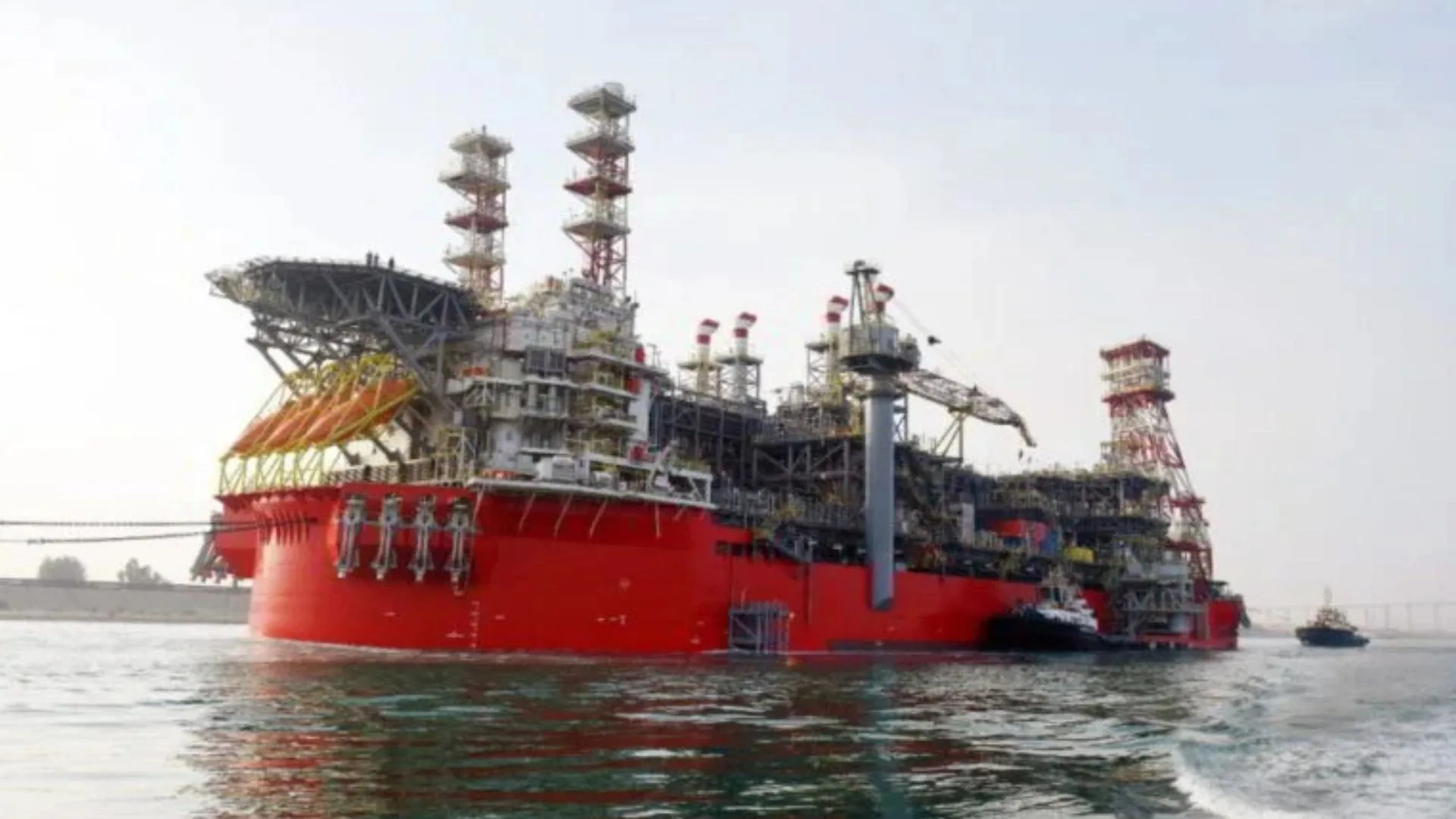
The Nigerian oil company is seeking to raise about US$1.63 billion with Africa’s largest IPO to double the capacity of its refinery to 1.4 million barrels per day.
The Dangote Group refinery is entering a new stage: after reaching a processing capacity of up to 700,000 barrels per day, the complex located near Lagos is preparing an expansion that aims to take it to 1.4 million barrels per day by 2029.
To fund some of that growth, Dangote has launched an initial public offering (IPO) that seeks to raise approximately 2.15 trillion naira, or about US$1.63 billion, by selling 4.1 billion shares at 525 naira each. The offering will be open from September 14 to October 13, 2026, and the shares could begin trading at the end of November.
The operation thus becomes the largest IPO in the history of Africa and puts on the capital market an industrial asset that has changed the structure of Nigeria’s fuel supply.
But behind the financial operation there is a much bigger bet: to turn a large refinery into an integrated energy platform with sufficient capacity to supply African markets and compete in international markets for refined products.
From 700,000 to 1.4 million barrels per day
Dangote plans to invest approximately US$14.3 billion to double the facility’s processing capacity to 1.4 million barrels per day. The expansion program is scheduled to be completed in 2029.
The refinery began operations in 2024 after an investment of close to US$20,000 million and reached its nominal capacity of 650,000 barrels per day at the beginning of 2026. It subsequently tested processing levels of approximately 700,000 barrels per day.
Doubling the performance of a facility of this scale is not simply about adding new process units.
An expansion of this type requires increasing the capacity of crude oil supply and storage, expanding transfer systems, processing units, treatment, hydrogen generation, utilities, electrical systems, instrumentation, control, effluent treatment and dispatch logistics.
The demand on the rotating equipment that keeps the process available is also increasing: feed pumps, gas compressors, turbines, refrigeration systems and auxiliary equipment.
The refinery is already generating cash flow
According to the IPO prospectus cited by Reuters, the refinery made US$1.82 billion in profit after tax during the first half of 2026, compared to a loss of US$476 million recorded during all of 2025.
Supply disruptions related to conflicts in the Middle East and Ukraine have disrupted international fuel flows, creating opportunities for producers able to place gasoline, diesel and jet fuel in loss-making markets.
The Dangote refinery has become one of the beneficiaries of this situation, exporting aviation fuel to different African markets and Europe.
However, this juncture raises an important question for investors: how much of the current profitability corresponds to a structural advantage of the refinery and how much comes from extraordinary market conditions?
The answer will be decisive in assessing Dangote’s ability to sustain the cash flow necessary for an expansion of such magnitude.
Crude oil will be as important as capacity
A refinery can have huge processing units and still not fully utilize its capacity if it doesn’t get enough competitive feed.
That will be one of the points that the market will have to watch as Dangote advances towards 1.4 million barrels per day.
The industrial equation can be expressed simply:
refining capacity ≠ effective fuel production.
The issue of crude oil supply becomes even more important when the goal is to double processing. A complex capable of processing 1.4 million barrels per day needs a proportionately robust supply chain: maritime reception, storage, internal transfer and continuous availability of food.
Therefore, the expansion of Dangote must be analyzed as a complete system and not only as an expansion of refining capacity.
SOURCE: https://www.reuters.com/
PHOTO: Shutterstock