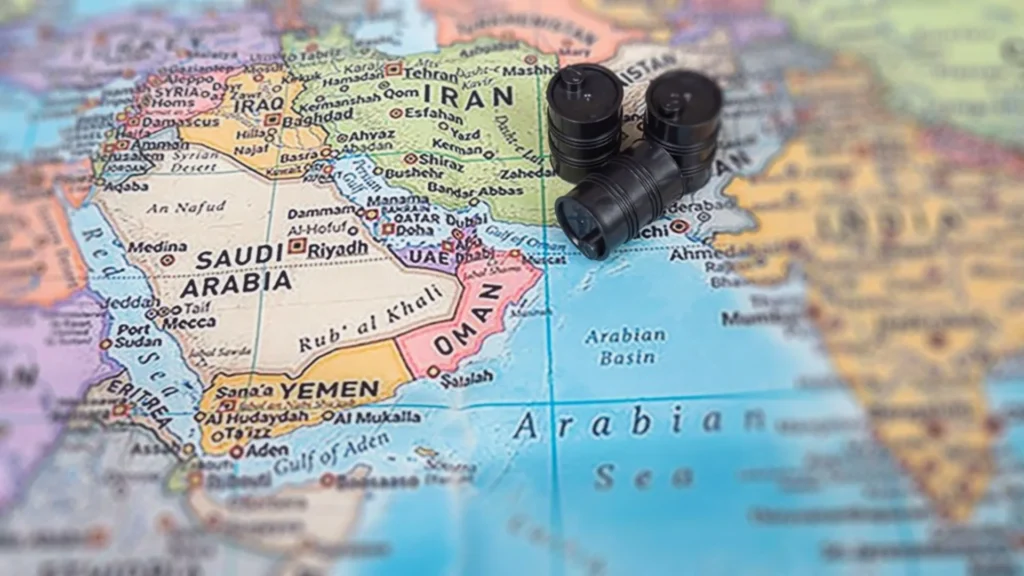
Chevron President and CEO Mike Wirth warned that oil shortages could begin to be felt in global markets if the Strait of Hormuz remains closed, a critical route through which nearly 20% of the world’s crude supply passes.
During a conversation sponsored by the Milken Institute, Wirth noted that the market would already be absorbing the available surplus in commercial channels, vessels linked to shadow fleets, and national strategic reserves. In the executive’s view, that safety cushion is shrinking rapidly while available supply is failing to meet global demand.
Oil shortages would hit Asia first
According to Wirth, Asia appears to be the region most exposed to a prolonged disruption of oil flows from the Middle East. The region depends heavily on crude and refined products leaving the Gulf, so any restriction in Hormuz can quickly be felt in refineries, transportation, power generation, and industrial costs.
In addition, Chevron’s CEO indicated that demand will have to adjust to the lower available supply. In practical terms, that implies an economic slowdown in the countries most dependent on energy imports—first in Asia and then in Europe.
Inventories, reserves, and exports under strain
Likewise, the closure of Hormuz puts pressure on global oil inventories at a time when buyers are seeking alternative routes and sources. The drawdown of commercial and strategic reserves reduces the room for maneuver for governments, refiners, and major industrial consumers.
In this scenario, U.S. crude exports gain relevance as a backstop source for the international market. However, Wirth warned that even a net exporting country like the United States would not be completely insulated from the effects. The impact could arrive later, but it would ultimately be reflected in prices, logistics availability, and fuel costs.
The Strait of Hormuz returns to the center of the energy market
The Strait of Hormuz is one of the most sensitive sea routes for global energy trade. Its closure limits the movement of crude oil, fuels, and other energy products from the Gulf to the main consumption hubs.
Therefore, Chevron’s warning reinforces concerns about global energy security. If the disruption is prolonged, the market would have to rely on ever-lower inventories, more costly alternative shipments, and a forced reduction in demand.
An impact comparable to the oil crises of the 1970s
Wirth compared the potential scope of the closure of Hormuz to the major supply disruptions of the 1970s, when economies faced rationing, price increases, and long lines to access fuels.
Although today’s oil market has more producers, routes, and financial tools, the concentration of energy flows in Hormuz maintains a systemic risk. The difference is that today the adjustment could be felt more quickly due to the integration of logistics chains, air transport, refining, and global trade.
Chevron’s warning points to demand adjustment
For Chevron, the core issue is not only the price per barrel, but the physical availability of crude. When inventories shrink and cargoes do not reach their destination, the market stops responding solely through prices and begins to force consumption cuts.
For now, the clearest signal is the vulnerability of Asia and Europe to a prolonged disruption of the oil supply from the Middle East. If the closure of the Strait of Hormuz continues, oil shortages could shift from a financial concern to a real constraint for industries, transportation, and importing economies.
Source: Reuters
Photo: Shutterstock