Table of Contents
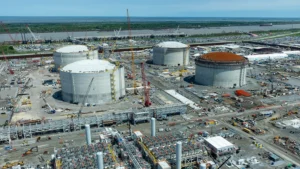
The energy firm Caturus has formalized the final investment decision for the construction of its liquefied natural gas infrastructure in Cameron Parish. This fundamental advancement secures a direct injection of $9.75 billion for the execution of the Commonwealth LNG plant, a complex designed to mobilize substantial volumes to international markets.
Financing for the Commonwealth LNG plant in Cameron
Through capital management that exceeded initial analyst expectations, the call for participation attracted accumulated commitments of $21.25 billion across debt schemes and equity positions.
Likewise, institutional backing consolidates the design of a business model that links proprietary production in North American fields with coastal liquefaction capacity. The corporate scheme is supported by global firms such as Mubadala Energy and the Canada Pension Plan Investment Board, institutions that substantially increased their equity stakes in the platform operated by Caturus.
Regarding the project’s commercial assurance, the company has secured long-term purchase and sale agreements with leading global corporations, guaranteeing the financial viability of the facilities from their initial stages.
Commercial brands of the caliber of Aramco Trading, PETRONAS, Glencore, and Mercuria are part of the fixed client portfolio that will receive the energy resource. Furthermore, formal commercial operations are projected to begin around 2030, at which point the plant will generate revenues calculated at over $3 billion annually due to the international commercialization of the processed hydrocarbon.
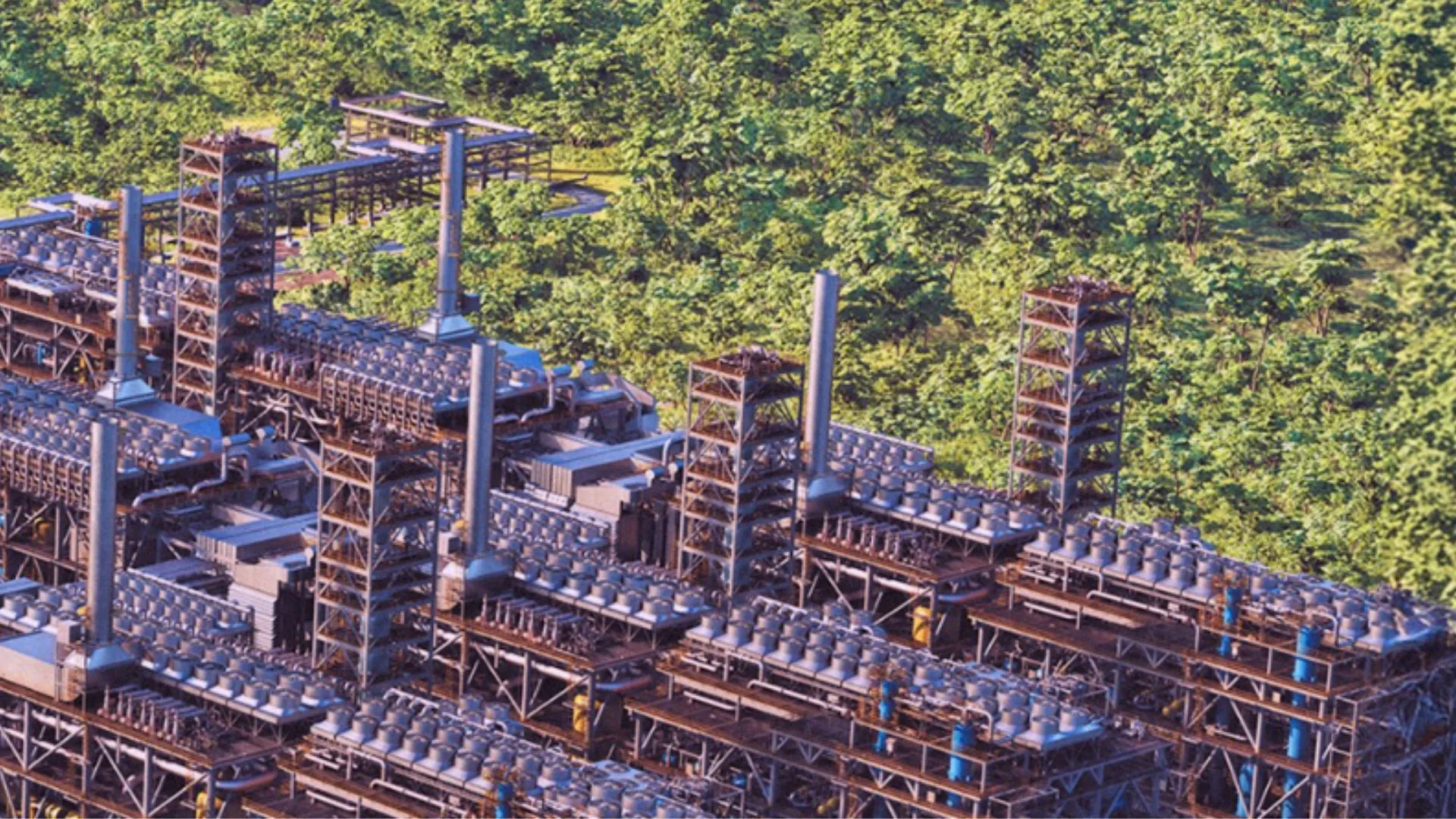
In the heavy infrastructure section, technical development will be coordinated under the direction of the engineering firm Technip Energies through a modular construction scheme that optimizes on-site assembly times.
The complex’s specifications integrate six Baker Hughes refrigerant compression units coupled to LM9000 gas turbines, in addition to Honeywell heat exchange systems. The terminal will have the operational capacity to receive and process cargo on LNG carriers with volumes of up to 216,000 cubic meters, positioning Louisiana’s geography as a logistical hub for the global supply of low-carbon natural gas.
Source and photo: Caturus