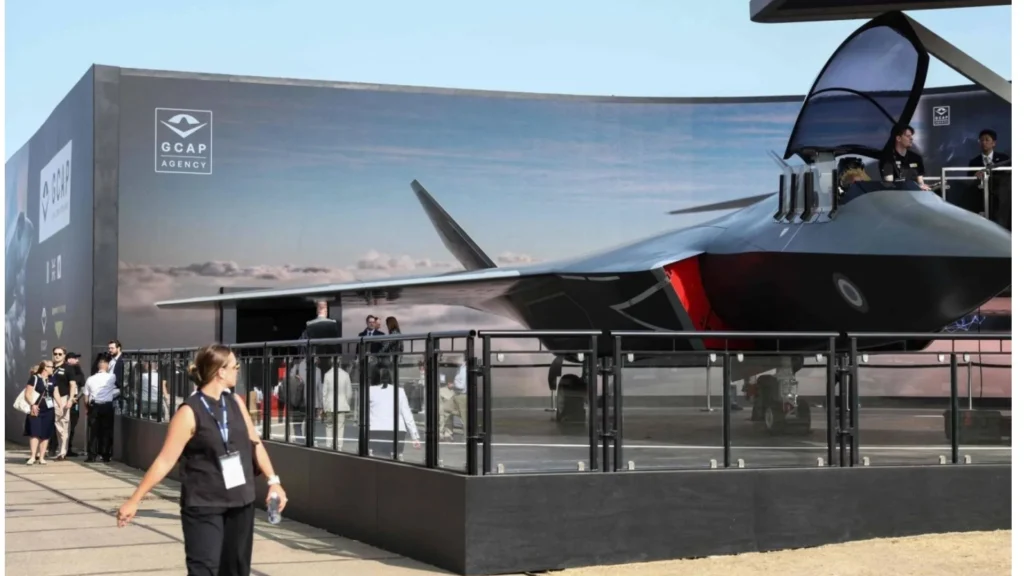
Canada will become the first observer country of the Global Combat Air Programme (GCAP), the initiative driven by Japan, the United Kingdom, and Italy to develop a sixth-generation stealth fighter set to enter service in 2035. The move marks the project’s first official expansion since its creation and opens the door to broader international cooperation in one of the most important defense aviation programs of the next decade.
A new level of international cooperation
During a meeting held in London, Japan’s Defense Minister Shinjiro Koizumi, Italian Minister Guido Crosetto, UK Defence Secretary Wes Streeting, and Canada’s Minister of National Defence, David McGuinty, jointly announced Ottawa’s inclusion as an observer country in the program. According to the statement issued after the meeting, this decision strengthens cooperation among strategic partners and creates new opportunities to share knowledge on GCAP’s development.
Observer status does not entail financial contributions or contractual obligations for Canada; however, it will allow the country to access information on the program’s governance, the planned capabilities of the future combat aircraft, the industrial model, and the security requirements underpinning the project.
Canada explores future industrial participation
Likewise, the new status will allow Canada to assess potential areas for technological and industrial collaboration. Various reports indicate that Ottawa is considering contributing expertise in advanced flight-simulation training systems, an area in which several Canadian companies have strong capabilities.
The Canadian High Commissioner to the United Kingdom, Bill Blair, had previously noted that Canadian industry has technologies related to pilot training and materials development that could contribute to future military aviation programs.
GCAP maintains its 2035 target
The Global Combat Air Programme aims to develop a sixth-generation fighter intended to replace Japan’s Mitsubishi F-2 and the Eurofighter Typhoon operated by the United Kingdom and Italy. The project is led by Mitsubishi Heavy Industries, Leonardo, and BAE Systems, which are coordinating the aircraft’s technological and industrial development.
At the beginning of this month, the three governments awarded a contract of approximately £4.6 billion to the joint venture Edgewing to move into the next phase of the aircraft’s development. In addition, the UK government confirmed an investment of £8.6 billion over the next four years to keep the schedule on track despite delays caused by budget constraints.
A possible opening to new partners
Canada’s inclusion also reflects the three founding partners’ intention to keep the program open to allies considered trustworthy. The joint statement notes that Japan, the United Kingdom, and Italy will continue working with like-minded countries to increase GCAP’s long-term strategic impact.
Currently, Saudi Arabia and Germany are among the nations that have shown interest in joining the project; however, Japan remains cautious about admitting new full members due to the risk of delaying the serial production planned for 2035. The decision also comes amid uncertainty for other European combat aviation programs, following difficulties in negotiations over the Future Combat Air System (FCAS) promoted by France, Germany, and Spain.
Source and photo: Japantimes