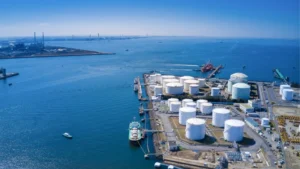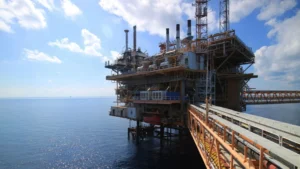
Canada and the United States they have developed two large natural gas industries of different scales, but deeply interconnected, production, pipelines, storage, and cross-border trade allow both markets to function as complementary parts of a broader North American energy system.
The United States maintains a significant difference in production volume, in 2025, its dry natural gas production reached an average close to 107.6 billion cubic feet per day (Bcf/d), compared to the 103.1 billion cubic feet per day recorded during 2024 by 2026, the U.S. Energy Information Administration (EIA) projects an approximate production of 111.7 billion cubic feet per day.
For its part, Canada reached a record of 18.3 Bcf/d in 2024 and continued to expand its production during 2025. A significant part of this growth comes from Montney, a formation located between Alberta and British Columbia that concentrates large resources of natural gas and associated liquids, becoming one of the most relevant energy assets in the country.
Montney promotes the growth of Canadian natural gas
Currently, the Canadian industry finds in Montney one of its main drivers of expansion, the formation combines large, technically recoverable resources, high-productivity wells, and competitive operating costs—factors that have spurred new investment in exploration and production. In this context, British Columbia produced approximately 6.7 Bcf/d in 2023, a figure equivalent to about 36% of total Canadian production during that year, most of this volume was associated with operations carried out within Montney.
Furthermore, the Energy Regulator of Canada (CER) identifies significant growth potential for this region; its scenario based on Current Measures projects production close to 27 Bcf/d by 2050, while a scenario of greater expansion could raise that volume to approximately 32 Bcf/d, however, this geographic concentration also poses strategic challenges. A considerable portion of the resources are located in western Canada, while major industrial and consumer centers are located thousands of kilometers away in provinces such as Ontario and Quebec.
For this reason, the availability of capacity in gas pipelines new regional connections and the development of industrial consumers in the west will be key elements in absorbing increasing production.
Canada and the United States connect their natural gas markets
Although both countries compete for investment, infrastructure, and trade opportunities, their natural gas industries are deeply interconnected through an extensive network of cross-border pipelines. Canada exported approximately 8.64 Bcf/d via pipelines in 2024 and practically all of that volume was destined for the United States.
Canadian energy supplies primarily serve regions such as the Pacific Northwest, California, the Midwest, and several northern states. During peak demand periods, especially in winter, this flow provides additional capacity and greater flexibility to the U.S. energy system. However, the trade relationship also works in the opposite direction.
The provinces of Ontario, Quebec and the Maritime provinces receive US natural gas primarily from the formations Marcellus y Utica some of the infrastructure located in southern Ontario even operates in both directions, allowing gas to move according to market conditions, regional prices, and supply needs.
In this way, western Canada can send production to western and central US markets, while eastern Canada supplements its supply with gas from the northeastern US.
This integration makes North America an interdependent energy network, where resource availability, transport infrastructure, and regional demand continually determine the movement of natural gas between the two countries.
Source: Energy Now
Photo: Shutterstock