Table of Contents
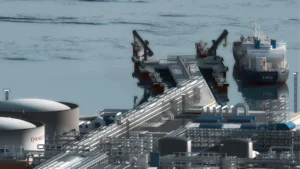
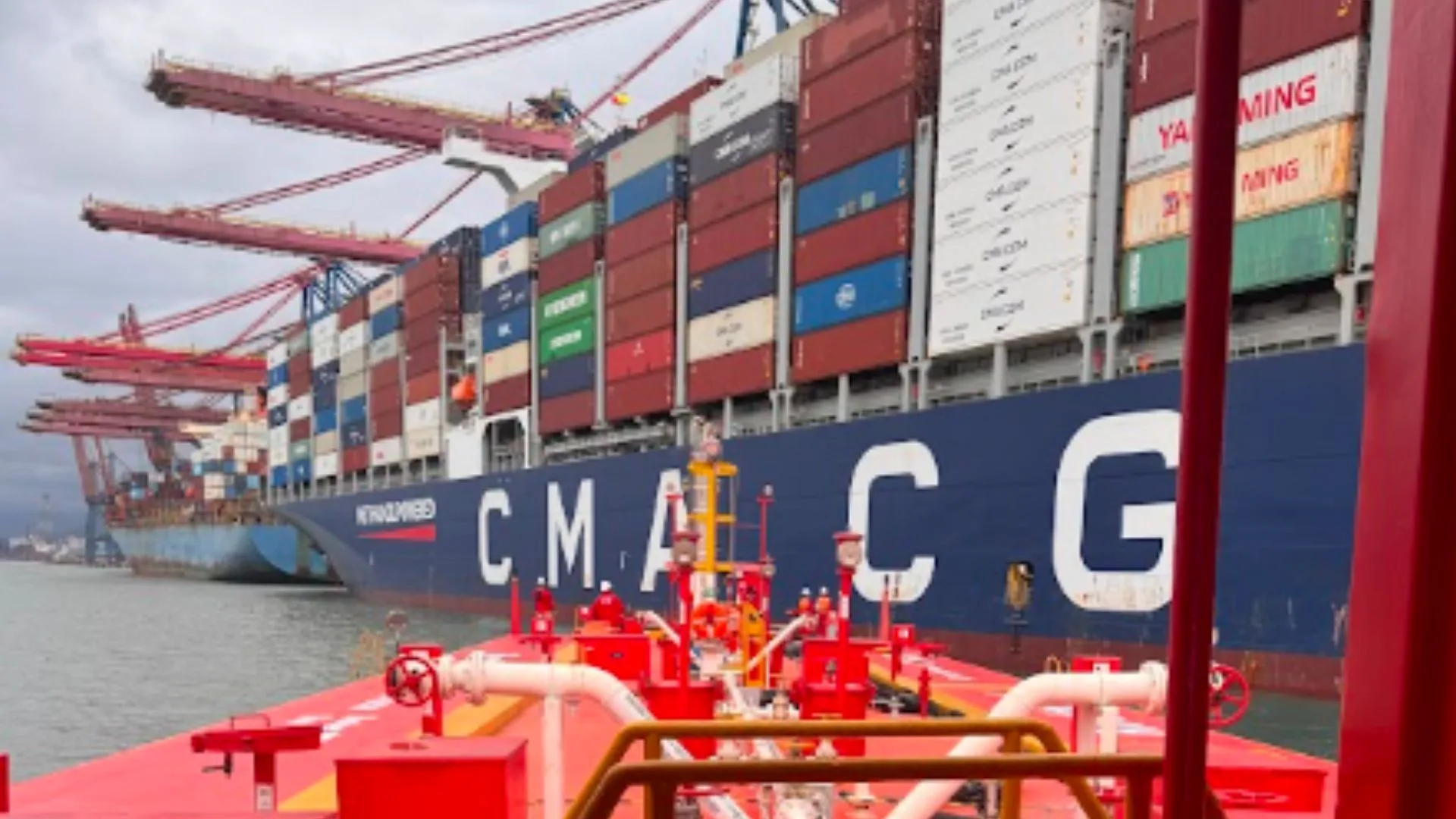
The company Bunker One has completed the first bioethanol supply to a large-scale container ship in Latin America. The historic maneuver was carried out at the Port of Santos, in Brazil, where 500,000 liters of anhydrous ethanol were delivered to the CMA CGM IRON vessel. This ship, belonging to the firm CMA CGM, has a capacity of 13,000 TEU and is equipped with a certified tri-fuel engine that allows it to operate safely with marine biofuels.
The First Bioethanol Supply at the Port of Santos
This event marks the evolution of marine biofuels from a conceptual phase toward an immediately applicable commercial solution. The fuel used was supplied by Copersucar, one of the world’s largest sugar and ethanol producers, while Bunker One managed the distribution through its specialized barge DONA ISA. In this way, a value chain is consolidated with capabilities to connect Brazil’s vast agricultural capacity with the operational demands of offshore navigation.
The handling of low flashpoint fuels poses complex logistical requirements that differ substantially from the protocols applied to traditional fuels. For this reason, the barge DONA ISA required an exhaustive process of technical adaptation and conditioning of its cargo tanks before initiating the maneuver. Likewise, the vessel’s crew along with ground technical personnel completed a rigorous theoretical and practical training program focused on operational risk prevention.
The planning of this maneuver required the integration of rigorous international guidelines to ensure safety during fluid transfer. Bunker One integrated the checklist of the International Association of Ports and Harbors for operations with low flashpoint fuels and designed a contingency response plan for specific scenarios. This protocol coordinated actions among port security teams, transfer personnel, and the receiving vessel’s crew.
Through this initiative, Brazil reaffirms its competitive position within the transition toward a low-emission economy. The maturity of the ethanol industry in this territory facilitates a scalable supply chain that can meet the needs of international fleets. The success of this maneuver establishes the essential logistical foundations for local renewable fuels to consolidate in the energy matrix of global commercial navigation.
Source and photo: Bunker One