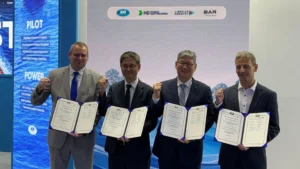
He European Investment Bank (EIB) will grant100 million euros to the port of Klaipėda, in Lithuania to support a broad modernization program that will strengthen its capacity to meet future development needs offshore wind energy in the Baltic Sea.
The financing will cover up to half of a total estimated investment in 201 million euros the remaining resources will come from European Union funds, national contributions, and other institutions. The works included in the program must be completed by the end of 2027.
Klaipėda prepares for offshore wind energy
A significant portion of the investments will be allocated to improving the docks and maritime infrastructure necessary to support the deployment and maintenance of offshore wind farms.
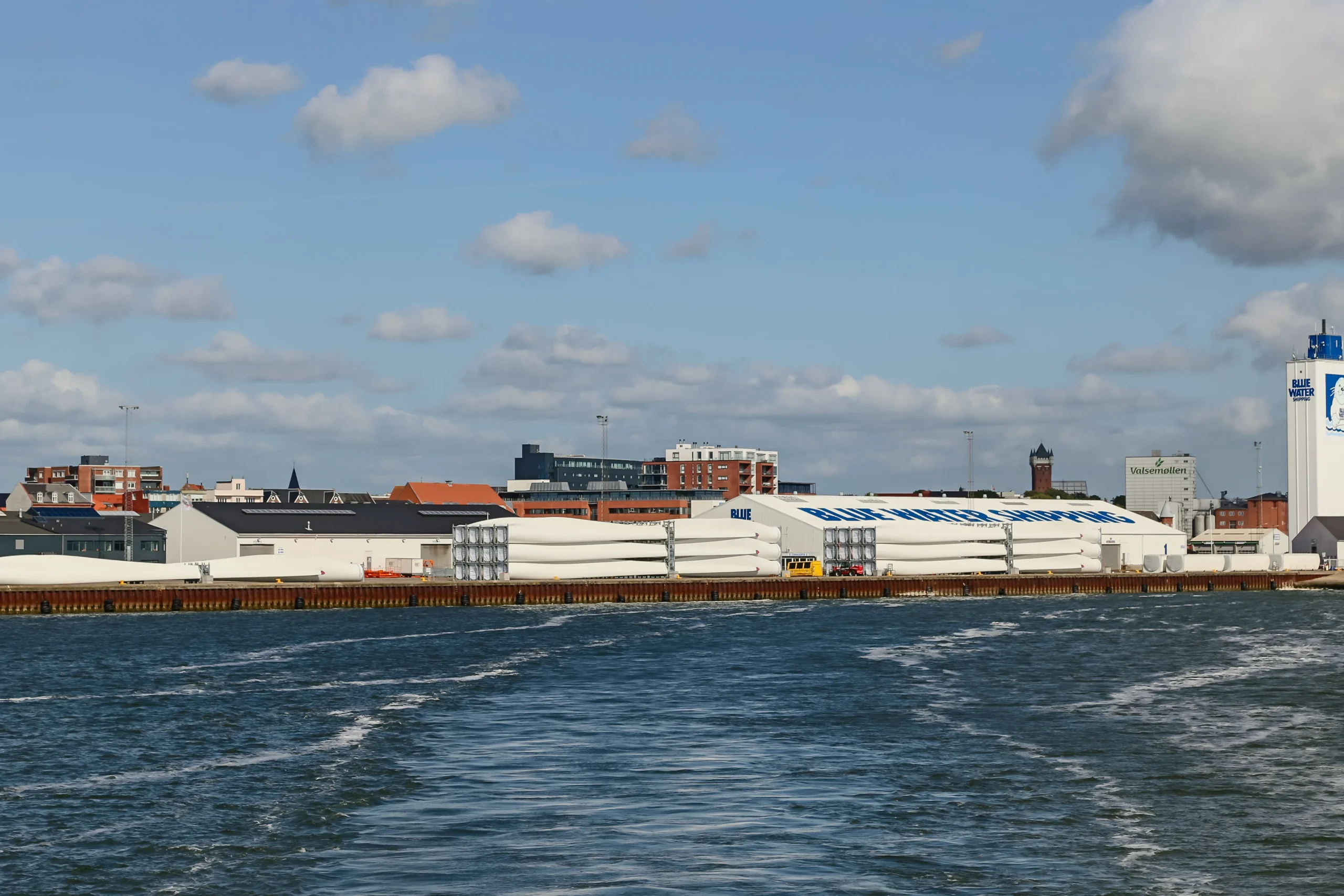
These improvements will allow Klaipėda to increase its capacity to serve the logistics operations associated with the offshore industry, which requires large port areas, access for specialized vessels and equipment capable of handling large components.
With this modernization, the port seeks to strengthen itself as a logistics base for the development of wind energy in the Baltic, offering infrastructure for different stages of the installation and subsequent maintenance of offshore wind farms.
Lithuania plans to develop 1.4 GW of offshore wind power
The investment in Klaipėda is also related to the plans of Lithuania’s offshore wind energy, which contemplates the development of two offshore parks with a combined capacity close to 1,4 GWOne of these developments is Curonian Nord, a 700 MW project currently being promoted by Ignite Renewables.
Ignitis Renewables and Ocean Winds initially obtained the rights to develop the park during Lithuania’s first offshore wind energy tender in 2023. Subsequently, Ignitis acquired its partner’s stake and assumed full control of the project.
For initiatives of this scale, having adequate port infrastructure is especially important due to the size and weight of the foundations, towers, blades and other components used in offshore wind turbines.
The project incorporates green hydrogen and port electrification
However, the EIB-backed program goes beyond offshore wind infrastructure. The investments also include Power supply from land for ferries, facilities for the production and refueling of green hydrogen as well as low-emission port vessels. This will be complemented by further work on docks and other maritime infrastructure.
With these improvements, Klaipėda will be able to expand its energy infrastructure and reduce some of the emissions associated with port operations, while also increasing its capacity to serve new projects linked to renewable energy.
A dual-use terminal for the port of Klaipėda
The program also includes the construction of a new dual-use cruise terminal, the infrastructure will maintain its civilian functions, but will also be prepared to facilitate logistical operations for NATO vessels.
In this way, the modernization of the port will integrate projects related to transport, energy, trade and military mobility within the same investment strategy.
For the energy sector, one of the main objectives will be to expand the maritime and logistical capabilities needed to support the growth of the Offshore wind power in the Baltic with these investments, Klaipėda seeks to position itself as one of the main support points for the installation and maintenance of future offshore wind farms in the region.
Source: offshoreWind
Photo: Shutterstock