Alexandroupolis LNG Terminal continues to consolidate its importance within European energy infrastructure following the expansion of supply agreements related to US liquefied natural gas (LNG). The increase in committed volumes for the next decade reinforces Greece’s role as a strategic entry point for energy supply to Central and Eastern Europe, in a context marked by the search for more diversified and resilient supply sources.
Alexandroupolis LNG Terminal Gains Prominence in European Energy Strategy
The Alexandroupolis infrastructure has become one of the most relevant energy projects in Southeast Europe. Its capacity to receive, store, and regasify LNG cargoes allows for expanding supply alternatives for countries seeking to strengthen their energy security through new import routes.
The Floating Storage and Regasification Unit (FSRU) operates as a gateway for liquefied natural gas from international markets, subsequently facilitating its distribution to different regional transport systems. This flexibility has increased the interest of producers, traders, and energy operators seeking to ensure access to stable gas volumes for decades to come.
The Vertical Corridor Drives New Supply Routes
The development of the so-called Vertical Corridor is transforming the way natural gas moves through Central and Eastern Europe. This network of interconnections allows gas to be transported from the Eastern Mediterranean to markets further north, strengthening regional energy integration.
The infrastructure connects import terminals, transport systems, and consumption markets through a network designed to improve operational flexibility and reduce dependence on traditional routes. For numerous countries in the region, this connectivity represents an opportunity to diversify their supply sources and increase their response capacity to potential market disruptions.
US LNG Expands Its Presence in Europe
The expansion of supply commitments linked to US LNG reflects the growing importance this fuel has acquired within the European energy mix. The new agreements contemplate an increase in long-term contracted volumes, strengthening trade flows between North America and the European continent.
The most recent agreement foresees doubling the initially committed volumes, from 0.5 million metric tons per year (MMtpa) to 1.0 MMtpa. The contract will be valid for twenty years and will begin execution in 2030, providing an additional source of supply for Central and Eastern European markets.
This type of agreement offers greater predictability for both producers and buyers, favoring investments in the import, storage, and transport infrastructure necessary to sustain future natural gas demand.
Greece Strengthens Its Position as a Regional Energy Hub
The evolution of Alexandroupolis confirms Greece’s growing prominence within the European energy architecture. In addition to serving as a reception point for LNG cargoes, the country is expanding its capacity to redistribute energy to different regional markets through new connections and complementary infrastructures.
The combination of regasification terminals, transport systems, and interconnection projects positions Greece as a strategic node within the energy corridors connecting the Mediterranean with Central and Eastern Europe. This transformation increases the country’s relevance in regional gas trade and strengthens its role within European energy diversification plans.
LNG Infrastructure and Energy Security Will Mark the Next Decade
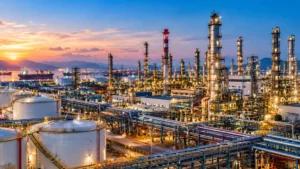
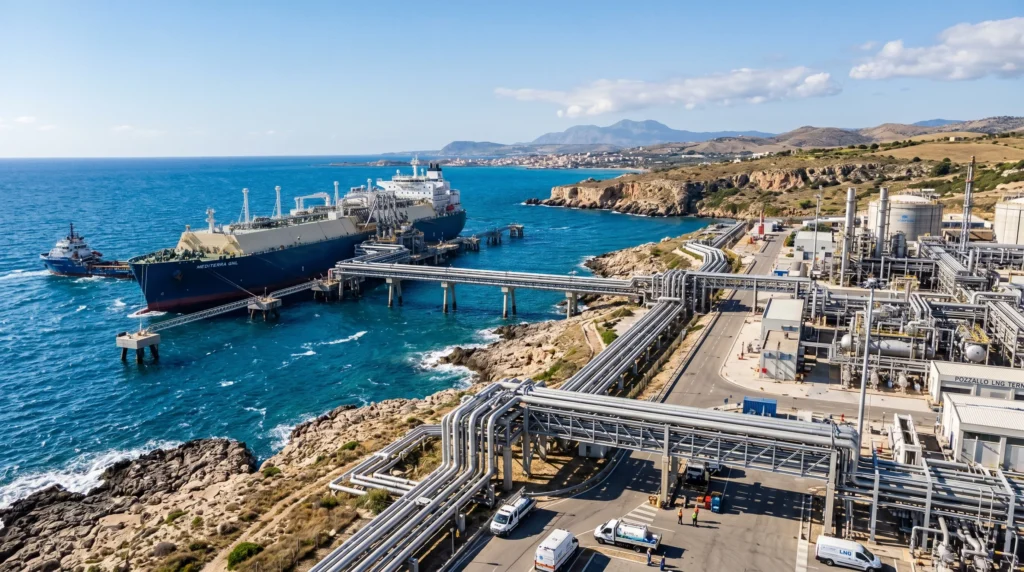
The expansion of the Alexandroupolis LNG Terminal demonstrates that European energy security will increasingly depend on the ability to mobilize resources through modern, flexible, and interconnected infrastructures. Beyond commercial agreements, the true strategic value lies in the existence of facilities capable of ensuring the continuous flow of energy to consumption centers. Alexandroupolis LNG Terminal with LNG tanker and FSRU unit strengthening the energy supply of Central and Eastern Europe.
As Europe continues to reinforce its import and regasification capabilities, projects like Alexandroupolis will continue to play a decisive role in shaping future regional energy flows. The combination of new supply routes, long-term contracts, and greater infrastructure integration will continue to strengthen the resilience of the European energy system in the coming years.
Source: Pipeline & Gas Journal