The renewable hydrogen plant could be operational in 2029. ENGIE and European Energy signed a cooperation agreement to develop a large-scale renewable hydrogen production project in Denmark, an initiative that aims to accelerate industrial decarbonization in Europe and contribute to the development of the future cross-border hydrogen infrastructure between Denmark and Germany.
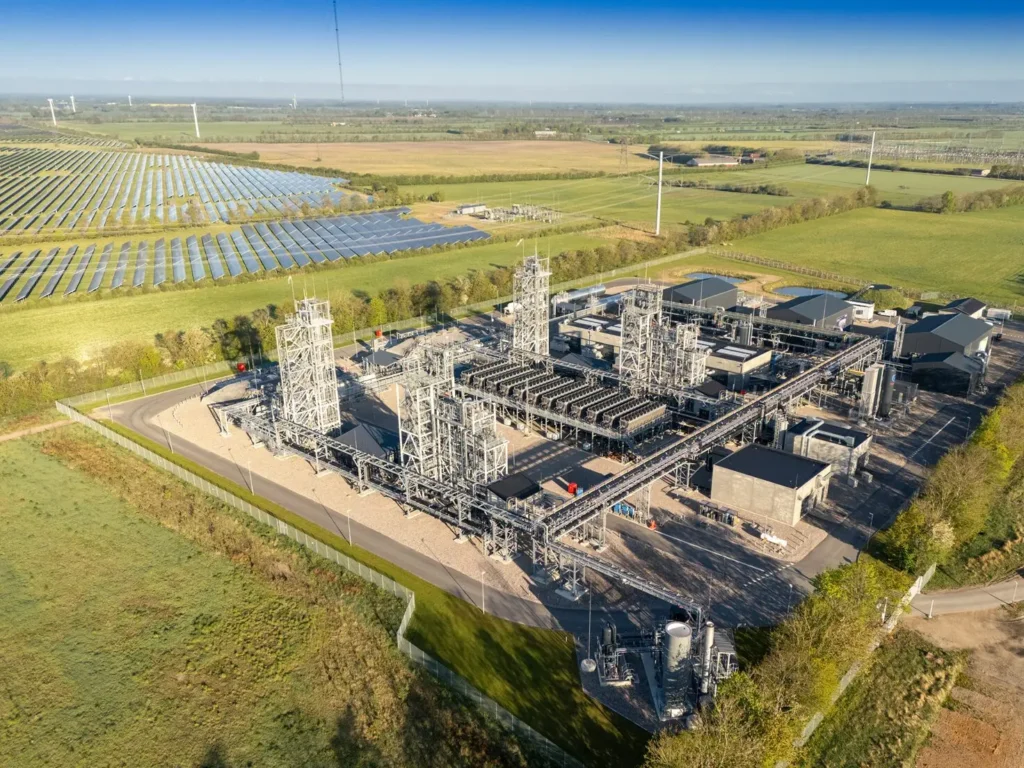
The project will be located in the municipality of Aabenraa, near Kassø, where the world’s first industrial-scale e-methanol plant is currently operating.
The new facility will have an electrolysis capacity of up to 150 MW and will be designed to integrate into the future Danish-German Hydrogen Backbone Network, which is expected to come into operation around 2030.
A new boost for the European hydrogen market
The collaboration between the two companies is part of the growth of the European green hydrogen ecosystem, where renewable energy production, transport infrastructure, and industrial demand are advancing in an increasingly coordinated manner.
The plant will be able to supply more than 20,000 tonnes of renewable hydrogen per year, a volume whose commercialization will be managed by ENGIE under the agreement signed between the parties.
The hydrogen produced will be intended primarily to meet industrial and mobility demand in Germany, supporting emissions reductions in hard-to-electrify sectors and helping to strengthen the European Union’s energy security and industrial competitiveness.
Kassø consolidates its position as a strategic energy hub
The future facility will be developed alongside the Kassø e-methanol complex, an international benchmark in the production of synthetic fuels from renewable energy.
European Energy, which is participating in that project together with Mitsui & Co., considers that the experience gained in developing green fuels positions the company to lead new large-scale renewable hydrogen initiatives.
The project also includes technical studies, regulatory analyses, and work associated with the future hydrogen transport infrastructure—key elements to ensure the efficient integration of supply into European markets.
Alliance to connect energy production and demand
Henri Domenach, Managing Director of Energy Management at ENGIE, highlighted the complementarity between the two companies and the strategic role the project will play in European industrial decarbonization.
“ENGIE aims to support its customers in the transition to low-carbon energy solutions. The Kassø project will strengthen our renewable hydrogen offering for German customers from 2030,” he said.
For his part, René Alcaraz Frederiksen, Executive Vice President and Head of Power-to-X at European Energy, underscored the importance of connecting renewable energy production with industrial demand.
Hydrogen gains prominence in Europe’s energy transition
The initiative reflects Europe’s growing commitment to renewable hydrogen as an energy carrier to reduce emissions in energy-intensive industries, heavy transport, and other sectors where direct electrification has technical or economic limitations.
With an electrolysis capacity of 150 MW and a planned connection to the future hydrogen backbone infrastructure between Denmark and Germany, the project is shaping up to be one of the most significant initiatives in Northern Europe to support the development of a green hydrogen-based economy.
Cooperation between ENGIE and European Energy also reinforces the trend toward integrated models that combine renewable generation, clean fuel production, and energy infrastructure—elements considered essential to achieving Europe’s long-term climate goals.
Source and photo: https://europeanenergy.com/