Table of Contents
- 24/7 Renewable Energy Drives Unprecedented Scale Projects
- Energy Storage Is No Longer a Complement
- International Banking Bets on More Complex Projects
- Electricity Demand Accelerates a New Generation of Investments
- Renewables Evolve Towards a Continuous Generation Model
- A New Paradigm for Energy Infrastructure
24/7 renewable energy, a model that combines solar or wind generation, energy storage systems, and smart grid management to continuously supply clean electricity, is transforming the way large electrical projects are financed and developed worldwide. This approach is driving multi-million dollar investments and redefining the energy infrastructure needed to meet the growing demand associated with artificial intelligence, data centers, and industrial electrification.
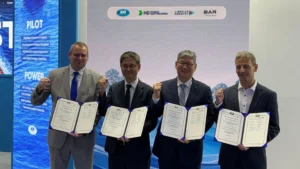
The recent advancement of a continuous generation megaproject in Abu Dhabi, driven by Masdar and Emirates Water and Electricity Company (EWEC), reflects how this new generation of energy infrastructure is gaining commercial credibility and consolidating as a viable model to respond to the sustained growth of global electricity demand.
24/7 Renewable Energy Drives Unprecedented Scale Projects
Over the last decade, the expansion of renewable energies was conditioned by the variability of resources such as solar radiation and wind. However, the incorporation of large-capacity storage systems is changing this paradigm by allowing electricity generated during peak production hours to be supplied stably when demand requires it.
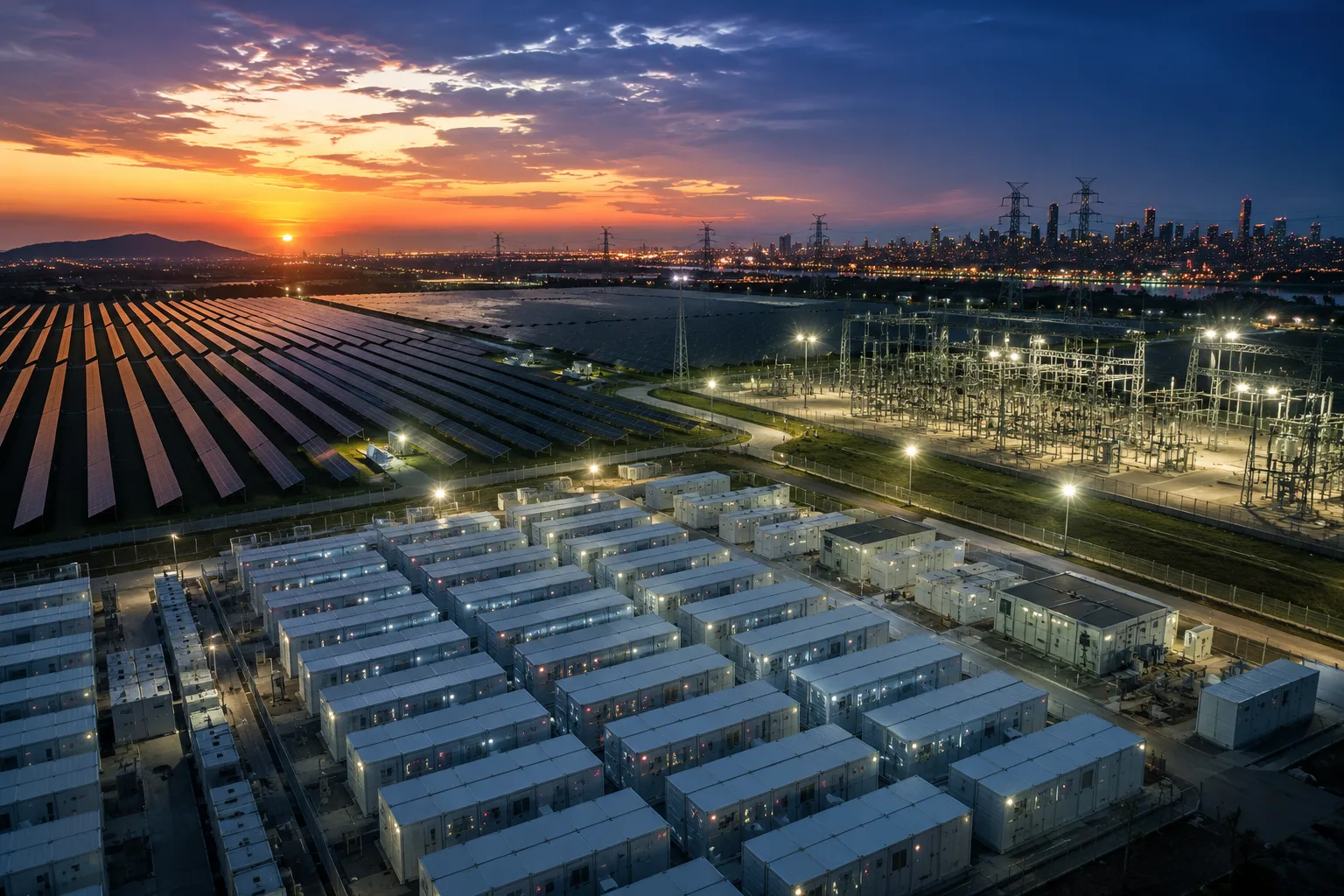
The development of projects that integrate photovoltaic solar plants with long-duration batteries demonstrates that the energy sector is moving towards a model where renewable generation no longer depends exclusively on weather conditions to become a manageable energy source.
This evolution represents a strategic shift for electrical systems, bringing renewable energies closer to a behavior similar to that of traditional base-load generation technologies.
Energy Storage Is No Longer a Complement
Battery Energy Storage Systems (BESS) are moving from a supporting role to becoming one of the most important assets in the energy transition.
In addition to storing surplus renewable production, these systems stabilize the grid, manage demand peaks, improve supply quality, and reduce reliance on fossil fuel-powered backup plants.
Their growing capacity and the gradual reduction of technological costs are favoring the development of large-scale facilities, capable of supplying electricity for several consecutive hours and increasing the reliability of electrical grids.
For system operators and generation companies, storage no longer represents merely a technological innovation, but a fundamental tool to guarantee service continuity.
International Banking Bets on More Complex Projects
One of the most significant changes the energy sector is experiencing is the evolution of financing.
Financial institutions are showing increasing interest in projects capable of combining technological innovation, scalability, and operational stability. The participation of a broad group of international banks in large-scale renewable infrastructure initiatives reflects that the market is beginning to consider these developments as assets with solid commercial fundamentals and long-term revenue generation potential.
This trend also responds to a greater maturity of the renewable energy market, where accumulated experience in engineering, construction, operation, and maintenance reduces risk perception and facilitates access to capital.
As a result, integrated hybrid projects are gaining prominence within global investment strategies in energy infrastructure.
Electricity Demand Accelerates a New Generation of Investments
The growth of artificial intelligence, data centers, industrial electrification, electric mobility, and low-carbon hydrogen production is increasing the need for reliable, round-the-clock electricity.
This new scenario forces developers to design systems capable of offering continuous supply without relying exclusively on conventional technologies.
Utilities are now seeking solutions that combine renewable generation, storage, digitalization, and smart demand management to respond to increasingly dynamic and demanding electricity consumption.
The ability to deliver clean energy permanently is becoming a differentiating factor to attract new industrial investments and strengthen the energy security of numerous countries.
Renewables Evolve Towards a Continuous Generation Model
24/7 renewable energy represents a natural evolution of the energy transition. More than increasing installed capacity, the goal is to ensure that clean electricity is available when users truly need it.
This approach integrates generation, storage, digital control, and advanced grid management to offer a more stable supply, reduce exposure to energy market volatility, and improve the resilience of electrical infrastructure.
As these solutions demonstrate their technical and economic viability, they could become the new standard for the development of large-scale projects in different regions of the world.
A New Paradigm for Energy Infrastructure
The consolidation of 24/7 renewable energy marks a turning point for the global electricity industry. The combination of renewable generation, long-duration storage, and institutional financing demonstrates that the market is beginning to value projects capable of offering clean energy with increasing levels of reliability.
Beyond a technological advance, this trend anticipates a new stage for energy infrastructure, where the ability to continuously supply electricity will be as important as the amount of energy generated. For developers, utilities, investors, and grid operators, the challenge is no longer solely to install more renewable capacity, but to build energy systems capable of permanently responding to the needs of an increasingly electrified economy.
Source: Masdar