Dangote refinery starts in Kenya with a US$16 billion investment
Dangote has begun construction in Lamu on a new US$16 billion facility that aims to transform East Africa's fuel market. The Dangote Refinery will expand regional processing capacity and reduce reliance on petroleum product imports.
Furthermore, the project aims to capitalize on the anticipated growth in crude oil production in several countries in the region. The facility will be modeled after the refinery the group operates in Nigeria, and its completion is scheduled for 2030.
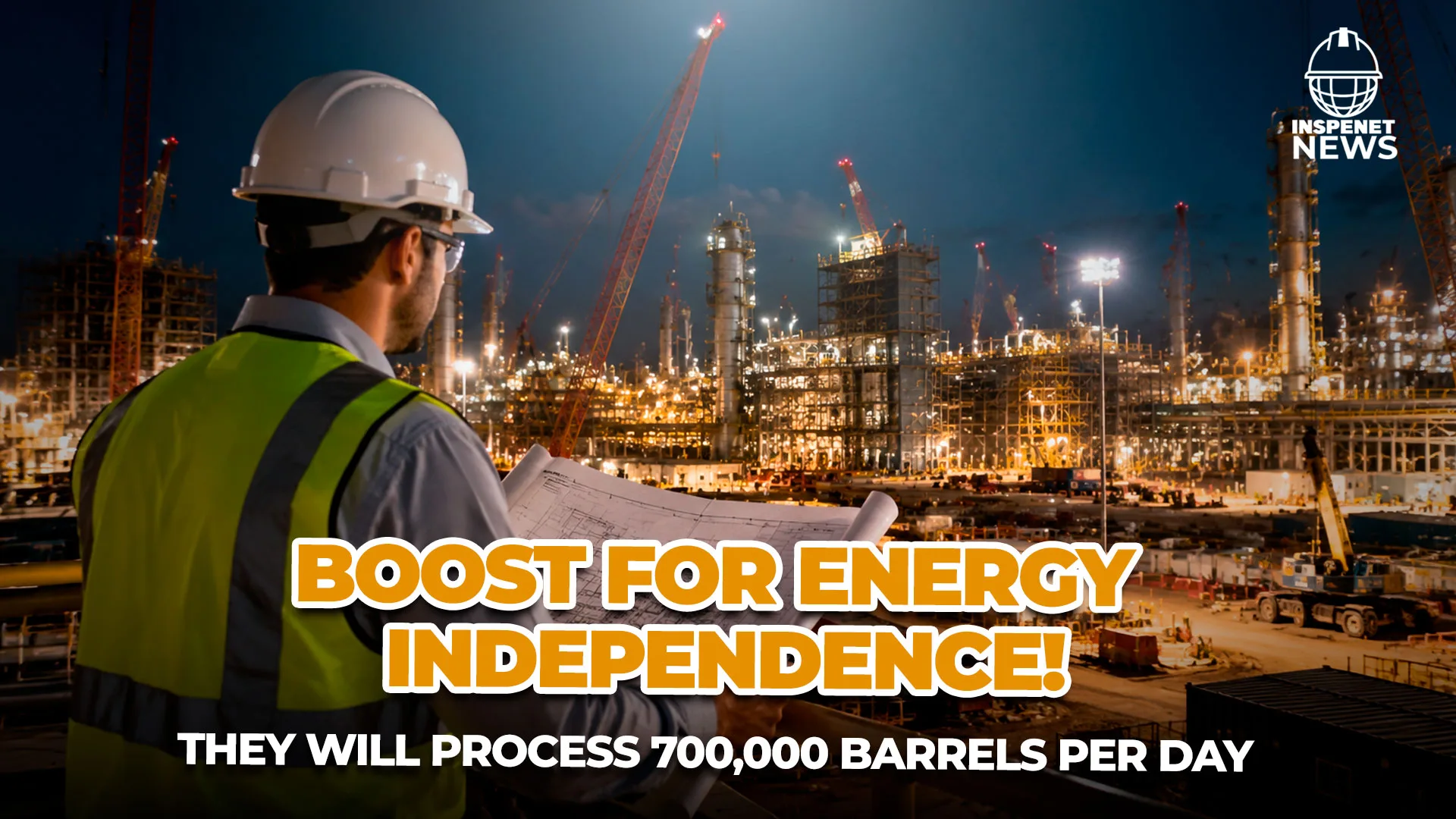
The Dangote Refinery will have a capacity of 700,000 barrels per day.
The planned plant in Kenya will have a capacity of approximately 700,000 barrels per day, a volume that would place the facility among the largest oil refining centers on the continent.
Dangote also seeks to transfer to East Africa some of the experience gained from its industrial complex in Nigeria. That facility allowed the country to increase its supply of processed fuels and develop new export options.
Furthermore, the East African market presents considerable demand; according to figures included in the project, the regional annual consumption of petroleum products is between 20 and 30 million metric tons.
Meeting all that demand would require a capacity exceeding one million barrels per day. Therefore, the new oil refinery could cover a significant portion of regional consumption without completely eliminating the need for other supply sources.
East Africa seeks to reduce fuel imports
In this context, one of the project's main objectives is to reduce dependence on imported refined products. Many African countries continue to import gasoline, diesel, and other petroleum products despite having their own hydrocarbon production or reserves.
Furthermore, these purchases require large amounts of foreign currency; greater oil refining capacity within East Africa would allow some of the crude to be processed closer to the markets where it is subsequently consumed.
Similarly, the plant could alter current supply routes. Kenya and its neighboring countries would gain access to a regional source of fuel, while the port of Lamu would assume a greater role in distribution.
Dangote offers regional governments a 30% stake
On the other hand, Aliko Dangote has offered the region's governments a joint stake of up to 30% in the project. The proposal seeks to involve several countries in the development of a facility designed to supply a market that extends beyond Kenya's borders.
This formula would also allow for linking the region's producing and consuming countries with the processing infrastructure. Uganda and Kenya are among the markets where crude oil production could gain importance within regional energy plans.
At the same time, the involvement of several governments could facilitate agreements related to supply, transport, and distribution. These aspects will be crucial for keeping a facility of this scale operating close to its planned capacity.
Engineers India is involved in the development of the plant
On the technical side, Engineers India Limited received an engineering contract valued at US$450 million. The company will participate in the development of an infrastructure that will require processing facilities, storage and connection to logistics networks.
Furthermore, construction must proceed in coordination with the infrastructure needed to receive crude oil and subsequently distribute finished products. The scale of the project necessitates consideration of ports, roads, storage facilities, and other associated systems.
Therefore, the refinery's performance will depend on both its installed capacity and consistent access to raw materials. A plant with a capacity of hundreds of thousands of barrels per day needs a stable supply to avoid operating below its capacity.
Lamu gains importance in Kenya's logistics plans
Meanwhile, the selection of Lamu links the oil project to the country's logistics expansion plans. The port in the area began receiving cargo ships in 2021 and is part of a corridor intended to improve northern Kenya's connections with neighboring countries.
Furthermore, a refinery of this size would increase the movement of raw materials and processed products around the port. The complex will need to receive crude oil and ship fuel to various destinations in East Africa.
In this way, Lamu could assume a broader role within the regional energy trade; the oil refinery could also increase the demand for transportation, storage, maintenance, and industrial operation services.
The project anticipates more than 50,000 jobs
In terms of employment, the authorities expect the development to generate more than 50,000 jobs; construction will require workers of varying levels of specialization, while subsequent operation will demand technical personnel and related services.
Furthermore, the economic impact could extend to other industries; among the planned activities are petrochemicals and bitumen production, along with services related to logistics and maintenance.
At the same time, the project may increase the demand for specialized training; machine operators, technicians, engineers, and workers related to industrial facilities will have a place within a project that will extend over several years.
Crude oil supply poses one of the main challenges
However, the size of the plant also raises questions; a capacity of 700,000 barrels per day requires enormous volumes of raw materials, and East African crude production will need to grow to provide a significant part of the supply.
Consequently, the facility may require oil from different markets as regional production increases. The mix of local production and imports will determine how the plant can reach its projected processing levels.
There are also challenges related to energy infrastructure. Transporting crude oil to Lamu and then distributing the fuels will require systems capable of handling large volumes continuously.
The Lamu development faces environmental opposition and a legal process
Furthermore, the project faces ongoing disagreements with residents and environmental organizations. One of the concerns raised relates to the potential impact on marine ecosystems and the surrounding area of Lamu Old Town, a UNESCO World Heritage Site.
Furthermore, the Kenyan High Court ordered the preservation of portions of the land while a hearing is held in connection with a lawsuit filed by local residents. This process adds a legal layer to the planned construction timeline.
In response to these criticisms, Dangote has linked some of the opposition to businesses and merchants whose operations could be affected by increased regional refining capacity. Groups opposed to the project focus their arguments on environmental protection and the project's impact on the region.
Kenya will test the model applied by Dangote in Nigeria
Finally, the Dangote Refinery in Kenya will have to demonstrate whether the scheme developed in Nigeria can be adapted to the East African market. The project shares its large scale and a strategy focused on replacing a portion of imports through processing within the continent.
However, the conditions are different. The availability of crude oil production, regional connections, and the necessary infrastructure will have a direct impact on the facility's operation.
From now on, the progress of the works until 2030 will show whether the US$16 billion investment succeeds in turning Lamu into a new regional center for oil refining and reducing the volume of fuels that East Africa buys from abroad.
News of additional interest
Germany strengthens its gas shield for winter
Germany is heading into the colder months with its gas storage facilities at around 57% capacity, a level that is raising concerns about the possibility of a colder winter. Even so, VNG, one of the country's major importers, maintains that the supply is more resilient than in 2022 thanks to greater access to liquefied natural gas (LNG) and a broader network of suppliers.
After losing much of the Russian gas that arrived via pipelines, Germany accelerated its search for alternative sources. VNG receives gas from Norway and has added agreements with Azerbaijan and Algeria. Furthermore, it has secured new volumes from the Algerian state-owned company Sonatrach starting in 2027. This diversification aims to reduce dependence on a single supplier and maintain deliveries even during periods of high demand.
Russia turns off the diesel tap until November
restrictions on diesel exports from its producers until the end of October . Moscow seeks to secure fuel within the country and contain local prices following Ukrainian attacks on Russian refineries. Some nations with special agreements, such as Mongolia and former Soviet republics, have been exempt from previous restrictions.
The decision comes at a time of heightened tension in the international fuel market. Russia is typically a major global exporter of diesel and had already reduced its foreign sales during the summer. This is compounded by international conflicts that have limited supplies and driven up fuel prices in various markets.
OPEC+ aims to maintain its production in November
OPEC + is likely to maintain its oil production targets for November, according to sources cited by Reuters. The decision is not yet final and will be discussed on Sunday by the group's seven producers. The potential pause comes after several months of increases and maintaining the projected levels for October.
The seven countries produced nearly 25 million barrels per day in August, 630,000 more than in July. However, that figure remained about 5 million barrels per day below pre-Iran-related production disruptions. Furthermore, OPEC+ maintains production cuts of nearly 2 million barrels per day that will remain in place until the end of 2026.
India buys more Arab crude and reduces its Russian purchases.
India increased its oil imports from the Middle East to around 3 million barrels per day in September, according to Kpler data cited by media reports. At the same time, purchases of Russian crude fell to 1.75 million barrels per day, down from 2.1 million in August. Despite the decline, Russia remains India's largest single oil supplier.
India's total oil imports reached 5.3 million barrels per day, about 600,000 more than in August. New Delhi is maintaining purchases from Russia while increasing supplies from other markets. This move comes under trade pressure from the United States, which has proposed tariffs of up to 100% on Indian products linked to the sanctions scenario.