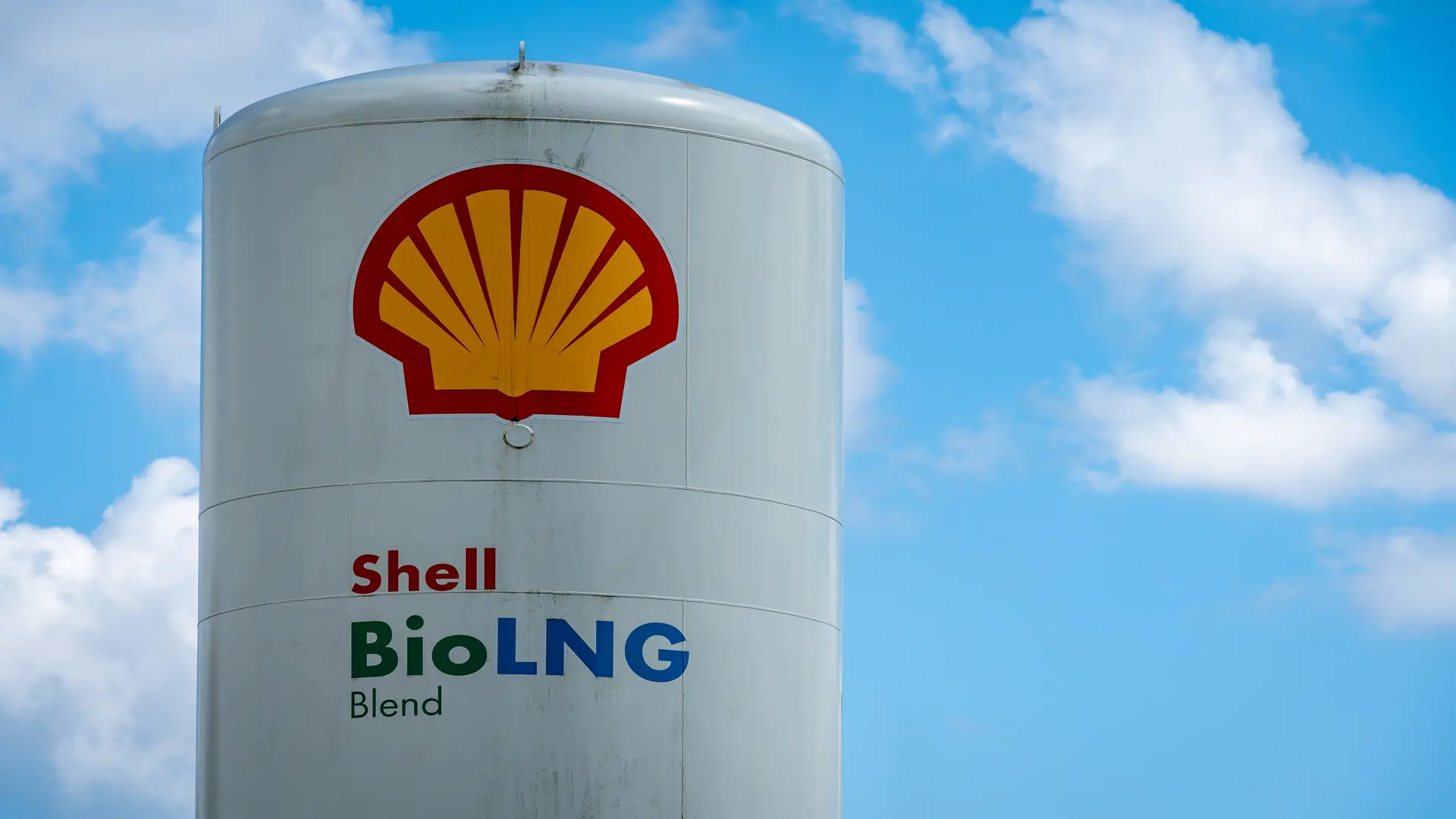
Considered one of the most advanced solutions for decarbonizing maritime transport, BioLNG combines a renewable source with energy performance equivalent to that of conventional fossil fuels. Its main distinguishing feature lies in its contribution to the carbon balance: as it is part of the biogenic cycle, the CO₂ emitted during its use does not increase the net atmospheric load and can even result in negative emissions under certain production conditions.
What is BioLNG and why does it play a role in the decarbonization of maritime transport?
BioLNG is a renewable gaseous fuel in liquid form, composed primarily of biogenic methane and produced through the thermochemical and biological conversion of organic waste. Its production chain includes anaerobic digestion for biogas generation, followed by advanced purification processes that increase the methane concentration to levels equivalent to those of commercial natural gas. Subsequently, the biomethane undergoes cryogenic liquefaction at temperatures around −160 °C, which significantly increases its volumetric energy density and optimizes its storage and transport.
The result is an energy vector compatible with existing gas infrastructure, characterized by its high logistical efficiency and its ability to replace fossil fuels in energy-intensive applications such as maritime transport. Its renewable origin and its integration into circular economy models enable a substantial reduction in greenhouse gas emissions, establishing it as a technically viable alternative for sectors that are difficult to electrify.
Differences between BioLNG and fossil LNG
The differences between BioLNG and fossil LNG do not lie in their physicochemical properties, since both consist mainly of liquefied methane and exhibit equivalent thermodynamic behavior, but rather in their origin, carbon footprint, and environmental performance over their life cycle. Fossil LNG comes from geological deposits, adding “new” carbon to the atmospheric system after combustion, while BioLNG is integrated into the biogenic carbon cycle, releasing CO₂ previously captured by recent biomass.
This difference in origin results in significant contrasts in emission levels, with BioLNG capable of substantially reducing greenhouse gas emissions compared to fossil fuels, even achieving near-neutral or negative emissions under specific conditions. Furthermore, BioLNG offers regulatory and economic advantages by reducing exposure to carbon pricing mechanisms. In contrast, fossil LNG maintains a larger structural environmental footprint and faces growing regulatory pressure, despite its technological maturity and widespread availability.
How BioLNG Is Used in Maritime Transport
The use of BioLNG in maritime transport is based on its status as a drop-in fuel, which allows for its direct integration into LNG-based energy systems without requiring structural modifications to ships or the associated logistics chain. Dual-fuel marine engines or those designed to operate on LNG can use either fossil LNG or BioLNG interchangeably, maintaining equivalent operating parameters in terms of combustion, cryogenic storage, and fuel management.
Supply can be carried out using the same bunkering methods developed for LNG (such as truck-to-ship, ship-to-ship, or port terminals), through existing liquefaction, storage, and distribution infrastructure. This enables rapid scalability and deployment without significant additional investment in port assets.
The Actual Contribution of BioLNG to the Decarbonization of the Maritime Sector
The main advantage of this fuel lies in its integration into the current energy mix through co-firing schemes with fossil LNG, which enables a gradual and operationally viable transition away from carbon emissions.
BioLNG can achieve reductions of up to 80% in lifecycle greenhouse gas emissions compared to conventional fuels, provided that variables such as methane slip are controlled. Furthermore, even in blended configurations, its impact is significant: incorporating 20% BioLNG can further reduce emissions by approximately 13% compared to pure fossil LNG.
At the sectoral level, its strategic importance is amplified when compared to conventional LNG, which on its own offers more limited reductions (in the range of 14–23% compared to marine fuel oils). In this context, BioLNG acts as a catalyst for bridging the gap between available technologies and climate goals.
In addition, its potential to meet energy needs is significant, as it could supply a substantial portion of future demand in the maritime transport sector, particularly when deployed in combination with LNG. This flexibility, coupled with its economic competitiveness compared to e-fuels, makes it one of the most efficient options for accelerating the effective decarbonization of the maritime sector in the short and medium term.
What certification does BioLNG require for the maritime sector?
The primary certification required for the use of BioLNG in the maritime sector is ISCC (International Sustainability and Carbon Certification); it is one of the leading standards recognized at the European level. Through independent audits, this certification ensures that the source biomethane meets strict criteria regarding the origin of raw materials, effective emission reductions, and life-cycle carbon balance.
A key element of this framework is the use of Proof of Sustainability (PoS) certificates, which verifiably document the gas’s renewable origin, the conversion processes, and its carbon intensity. These certificates enable the traceability of biomethane even when mechanisms such as equivalence liquefaction are used, ensuring that the volumes injected into the grid correspond to the BioLNG supplied for maritime use.
The purpose of this certification is to validate the renewable nature of the fuel and to ensure its eligibility under regulatory frameworks such as emissions trading systems and specific maritime sector regulations, where verification of emissions savings is necessary for regulatory compliance and the optimization of carbon-related costs.
Traceability and Chain-of-Custody Models for BioLNG
Traceability involves identifying and tracking the origin, transformations, physical flows, and environmental characteristics (such as carbon content or emissions savings) of each batch of material. This principle requires comprehensive documentation of inputs and outputs, energy balances, and sustainability statements, ensuring that environmental properties remain linked to each unit of product.
In this context, chain-of-custody models regulate how these material flows are managed both physically and in accounting terms. The physical segregation model involves the strict separation of materials based on their sustainability characteristics, ensuring a direct correspondence between origin and use. Meanwhile, the mass balance model allows for the physical mixing of materials, provided that accurate accounting is maintained to ensure that the quantity of certified BioLNG does not exceed the volume of sustainable biomethane introduced into the system.
In the case of biomethane transported via the gas grid and subsequently liquefied, traceability relies on systems for recording and verifying injected and withdrawn volumes, ensuring that physical flows correspond to sustainable attributes.
These mechanisms help prevent double counting, ensure market transparency, and enable regulatory recognition of BioLNG as a renewable fuel in maritime applications.
Conclusions
BioLNG is now considered a technically mature and operationally viable solution for advancing the decarbonization of maritime transport, as it does not require disruptive changes to existing infrastructure. Its functional equivalence to fossil LNG allows for immediate implementation in current engines and logistics chains; combined with its renewable origin, this results in a substantial improvement in the emissions balance over the entire life cycle.
However, its successful integration requires robust certification and traceability systems to ensure transparency, prevent double-counting of emissions, and facilitate its incorporation into international regulatory frameworks. In this way, BioLNG helps reduce the sector’s carbon footprint, while also optimizing regulatory compliance and strengthening competitiveness in an increasingly demanding environmental landscape.
References
- Enagás. (n.d.). What is bioLNG? Good New Energy. Retrieved April 20, 2026, from https://goodnewenergy.enagas.es/sostenibles/que-es-biognl/
- Sedigas. (s. f.). BioGNL: una alternativa sostenible para el transporte pesado y marítimo. Gas Actual. Retrieved April 20, 2026, from https://www.sedigas.es/new/gas-actual/articulo-reportaje/ biognl-una-alternativa-sostenible-para-el-transporte-pesado-y-maritimo
- International Sustainability and Carbon Certification [ISCC]. (2025). ISCC EU 203: Traceability and Chain of Custody (Version 4.2). https://www.iscc-system.org/wp-content/uploads/2025/04/ISCC_EU_203_Traceability_and_Chain-of-Custody_4.2.pdf