Table of Contents
- Fundamentals of natural gas commercialization
- Commercial flexibility in connected gas markets
- Cross Border arbitrage and supply value
- Factors influencing the commercial value of natural gas
- Relationship between infrastructure and supply flexibility
- Technological, environmental, and political challenges
- Future trends: AI, hydrogen, advanced nuclear, and smart grids
- Conclusions
- References
Let’s get straight to the point: natural gas has consolidated its position as one of the world’s most strategic energy resources. However, the true value of gas no longer depends solely on production capacity, but increasingly on the ability to commercialize it with flexibility, move it efficiently across markets, and capture regional price differentials through cross-border arbitrage.
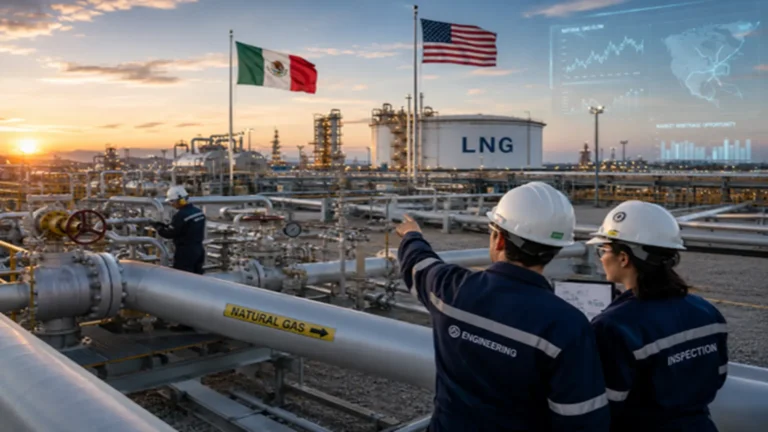
At present, North America provides a clear example of this dynamic. Energy integration between Mexico and the United States has transformed midstream infrastructure and cross-border commercial mechanisms into essential components for supply optimization. Market evolution now requires a comprehensive understanding of the different variables involved in commercialization, including logistics, contracts, technology, geopolitics, and digitalization, all of which contribute to the development of more resilient and competitive energy systems.
Fundamentals of natural gas commercialization
Natural gas commercialization encompasses a series of technical, contractual, financial, and logistical processes designed to move the resource from production centers to end consumers. Unlike other energy commodities, natural gas depends heavily on physical infrastructure, particularly pipelines, compression stations, storage facilities, and liquefied natural gas (LNG) terminals. Consequently, logistics becomes an inseparable component of its commercial valuation.
The gas value chain is divided into upstream, midstream, and downstream segments. While all are important, the midstream sector has become the strategic backbone of modern gas commercialization because it connects markets, responds to changes in demand, and enables regional arbitrage opportunities.
Commercialization activities are conducted through physical and financial contracts that allow market participants to acquire gas volumes, reserve transportation capacity, and manage risks associated with price volatility. Traders continuously evaluate variables such as power demand, weather conditions, pipeline availability, storage capacity, and spot prices at regional hubs. They subsequently optimize both physical and financial flows to maximize margins and maintain operational continuity.
According to the U.S. Energy Information Administration (EIA, 2025), “the increasing liquidity of international gas markets has transformed natural gas into a highly dynamic asset, where commercial responsiveness is as important as the physical availability of the resource.”
Commercial flexibility in connected gas markets
Commercial flexibility represents the ability to adapt contracts, volumes, logistical routes, and supply strategies in response to market fluctuations, operational disruptions, and regulatory changes. In today’s energy markets, flexibility has become one of the most valuable assets for operators and traders.
Historically, natural gas contracts were structured under rigid long-term agreements with take-or-pay clauses and fixed delivery destinations. However, the expansion of LNG, regional market integration, and the development of liquid trading hubs have significantly transformed this model. Modern markets increasingly favor dynamic contracts with destination flexibility, adjustable nominations, and daily balancing mechanisms (Stern, 2022).
Commercial flexibility also provides a major advantage by reducing risk exposure and maximizing economic efficiency. For example, during extreme weather events or unexpected infrastructure outages, companies with flexible access to storage, alternative transportation routes, and dynamic contracts can redirect supply toward regions offering higher pricing or greater operational security. In contrast, rigid systems are more likely to face contractual penalties and substantial financial losses.
Winter Storm Uri in Texas during 2021 remains one of the clearest examples. The freezing of energy infrastructure triggered a severe gas and power supply crisis, resulting in extreme spot price spikes. “Companies with logistical flexibility and storage capacity were able to capitalize on these extraordinary price differentials, while others were exposed to critical operating costs” (Federal Energy Regulatory Commission [FERC], 2021).
Within the context of the energy transition, flexibility is becoming even more critical. The growth of intermittent renewable energy sources such as solar and wind increases the need for gas systems capable of rapidly responding to fluctuations in electricity generation. In other words, modern gas commercialization requires not only economic efficiency, but also operational resilience.
Cross Border arbitrage and supply value
Another major advantage of the gas market system is cross-border arbitrage. Natural gas arbitrage involves leveraging differences in price, availability, or regulatory conditions between interconnected markets. In North America, the integration between Mexico and the United States represents one of the most significant examples of this phenomenon.
According to industry reports and analyses, increased production from basins such as the Permian Basin and Eagle Ford enabled low-cost gas production, driving large-scale exports to Mexico through cross-border pipelines. Currently, Mexico imports more than 70% of the natural gas it consumes, primarily from Texas (EIA, 2025).
Arbitrage occurs when a marketer acquires gas in a lower-priced market and transports it to another market where valuations are higher. Profitability depends on multiple variables previously discussed throughout this article. Under this framework, cross-border infrastructure gains extraordinary strategic value. Recently, similar dynamics have emerged between Canada and the United States, although focused on crude oil rather than gas.
A new cross-border pipeline project has reportedly secured contracts necessary to reshape North America’s oil map. Industry sources indicate that producers have already committed to transport 400,000 barrels per day, representing 72% of the project’s initial capacity proposed by South Bow and Bridger Pipeline. Canadian production is projected to reach 6.1 million barrels per day by 2030. Similar models will likely be implemented in the natural gas sector in the future.
Nevertheless, cross-border arbitrage also involves significant risks, whether caused by extreme weather events or operational constraints. The February 2021 energy crisis clearly demonstrated how a regional disruption can simultaneously impact industrial supply chains, power systems, and fuel markets in both countries.
From a geopolitical perspective, natural gas is also a strategic instrument of economic influence. The European energy crisis resulting from the Russia-Ukraine conflict demonstrated how disruptions in gas flows can destabilize industrial activity, increase inflation, and reduce national competitiveness (IEA, 2024). Consequently, cross-border arbitrage is not merely a financial mechanism, but also a central component of energy security.
Factors influencing the commercial value of natural gas
The commercial value of natural gas depends on a complex interaction between physical, economic, logistical, and geopolitical variables. Unlike commodities that are easily transportable, gas requires specialized infrastructure, creating substantial regional price differentials.
One of the most important factors is geographic location. The location of production plants and processing trains, as well as proximity to liquid hubs, storage facilities, or LNG terminals, directly influences the ability to monetize the resource. Seasonal weather conditions also play a fundamental role. During periods of extreme temperatures and elevated electricity demand, prices tend to increase due to greater generation requirements. Severe weather events can also disrupt production and transportation systems, leading to delivery delays and supply interruptions.
Regulatory variables, including export permits and environmental policies, also have a profound impact on the market. According to the Organisation for Economic Co-operation and Development (OECD, 2017), “regulatory stability constitutes one of the most decisive factors for the efficient development of international gas markets.”
Finally, emerging technologies such as renewables, hydrogen, and advanced nuclear energy are forcing the gas sector to improve commercial efficiency and operational flexibility in order to remain competitive within transitioning energy systems.
Relationship between infrastructure and supply flexibility
The natural gas business is ultimately centered around the midstream sector. Midstream infrastructure represents the physical core that enables commercial flexibility in natural gas markets. Without interconnected pipelines, strategic storage, and efficient compression systems, regional integration and arbitrage would be virtually impossible.
Pipelines constitute the backbone of the system. A diversified network enables operators to redirect flows during disruptions, capitalize on commercial opportunities, and reduce supply shortage risks.
Underground storage facilities also play an essential role by allowing inventories to be accumulated during periods of low demand and released when prices rise or operational restrictions emerge. This contributes to market stabilization.
LNG terminals have further increased global flexibility. The growth of LNG maritime trade has transformed the market from rigid regional structures into a more integrated and competitive global system. According to the IEA (2025), global LNG expansion during this decade will significantly increase international arbitrage capacity and commercial liquidity.
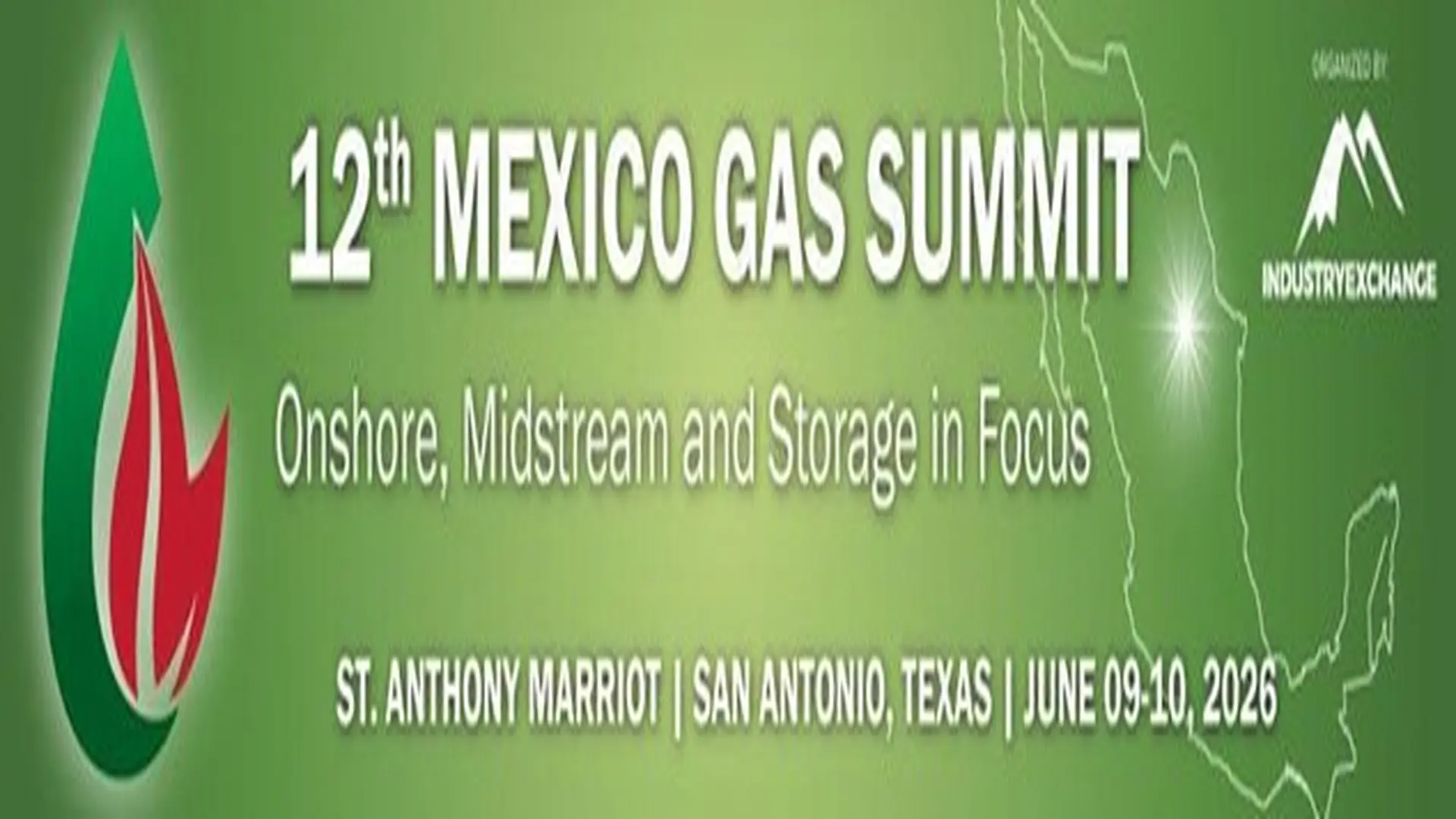
In North America, the expansion of midstream infrastructure is also being driven by industrial growth associated with nearshoring. In this context, the Mexico Gas Summit, scheduled for June 9–10, 2026, in San Antonio, Texas/Mexico, under the theme “Onshore, Midstream and Storage in focus,” reflects the increasing strategic importance of infrastructure and regional energy integration for sustaining industrial competitiveness and supply security.
Technological, environmental, and political challenges
Despite its strategic advantages, natural gas faces numerous challenges, particularly those related to sustainability, infrastructure maintenance costs, modernization requirements, and energy governance considerations that emerge during commercial negotiations. One of the industry’s greatest challenges is reducing methane emissions. Although natural gas emits less CO₂ than coal, methane leaks can significantly affect its environmental footprint. As a result, stricter regulations and advanced monitoring technologies are becoming increasingly important.
Future trends: AI, hydrogen, advanced nuclear, and smart grids
Since 2023, the industry has entered a phase of profound technological transformation. Artificial intelligence will enable natural gas trading activities to automate commercial decision-making, optimize predictive maintenance, and improve risk management through large-scale data analytics. Hydrogen is also expected to reshape gas infrastructure. Several international projects are currently evaluating hydrogen blending within existing pipeline networks as a progressive decarbonization strategy. This will require upgrades to materials and system components across the production and transportation chain.
At the same time, Small Modular Reactors (SMRs) could complement power systems where natural gas serves as flexible backup generation for intermittent renewable energy. The combination of advanced nuclear energy, gas, and energy storage may define the global energy architecture for decades to come.
Looking ahead, smart grids will integrate electricity, gas, storage, and digital analytics into increasingly interconnected energy systems. In this environment, commercial flexibility will become an essential attribute for ensuring efficiency, resilience, and industrial competitiveness.
Conclusions
Natural gas commercialization has evolved from a traditional physical supply model into a sophisticated ecosystem where infrastructure, logistics, digitalization, financial arbitrage, and energy geopolitics converge.
The energy integration between Mexico and the United States demonstrates how commercial flexibility and midstream infrastructure have become fundamental pillars of regional energy security. Cross-border arbitrage not only captures economic value, but also strengthens industrial resilience and operational stability. As technologies such as artificial intelligence, hydrogen, flexible LNG, and smart grids continue to advance, natural gas commercialization will become increasingly dynamic and strategic.
Under this new paradigm, competitiveness will no longer depend solely on producing more gas, but on having the technical capabilities, logistical organization, and financial vision required to commercialize it with greater intelligence and adaptability.
References
- American Gas Association. (2024). Natural gas market indicators. https://www.aga.org
- Federal Energy Regulatory Commission. (2021). The February 2021 cold weather outages in Texas and the South Central United States. https://www.ferc.gov
- International Energy Agency. (2024). Gas market report Q4 2024. https://www.iea.org/reports/gas-market-report-q4-2024
- International Energy Agency. (2025). Gas 2025: Analysis and forecast to 2030. https://www.iea.org/reports/gas-2025
- Organisation for Economic Co-operation and Development. (2017). Global gas security review 2017. OECD Publishing. https://www.oecd.org
- Reuters. (2026, March 6). IEA expects huge amount of LNG to reach market in next five years. Reuters. https://www.reuters.com
- Stern, J. (2022). The new geopolitics of natural gas. Oxford Institute for Energy Studies. https://www.oxfordenergy.org
- U.S. Energy Information Administration. (2025). Natural gas explained. https://www.eia.gov/energyexplained/natural-gas/