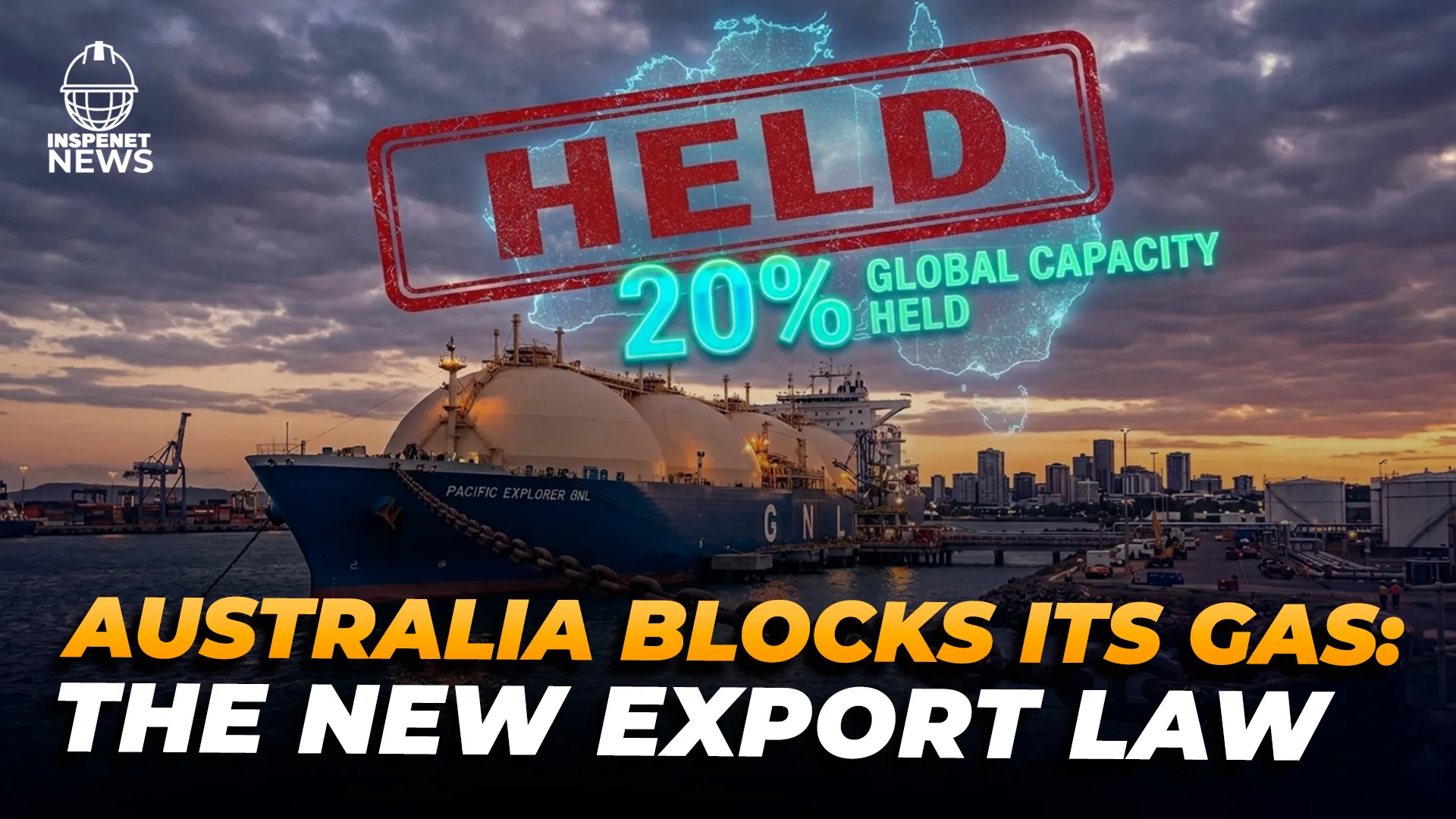
Australia is preparing a gas reserve to bolster local supply
Australia is moving forward with an energy reform that will require LNG exporters to allocate a portion of their production to the domestic market. The measure aims to bolster gas supplies and reduce pressure on gas prices for industries and consumers.
What does the new reservation scheme propose?
The Australian government has unveiled a draft regulatory framework for its new domestic gas reserve scheme . The proposal stipulates that exporting companies will be required to reserve an annual volume equivalent to 20% of their exports to supply the domestic market, starting July 1, 2027.
The obligation is called the Domestic Supply Obligation (DSO) and will be part of a broader package of reforms aimed at improving the functioning of the Australian gas market.
According to authorities, the goal is to ensure a more stable gas supply for Australian businesses and households in the face of international volatility and strong Asian demand for liquefied natural gas.
How will the obligation for exporters work?
Furthermore, the project specifies that the DSO calculation will be based on each operator's total annual export volume. The draft also includes regulatory compliance and oversight mechanisms.
The government clarified that the framework can still be modified before its final approval. In fact, the public consultation will remain open until June 30, 2026, to receive comments from energy companies, operators, and other stakeholders in the sector.
Authorities also confirmed that export contracts signed before December 22, 2025 will remain protected under the new system.
Australia seeks to reduce pressure on gas prices
Meanwhile, the government maintains that the reserve scheme will improve gas availability within the country and reduce imbalances between exports and domestic demand.
During the last few years, Australia faced episodes of energy stress driven by high international prices and lower domestic fuel availability, especially in industrial regions.
In that context, Canberra is also promoting complementary reforms related to contract transparency, market supervision and commercial conduct among participants in the energy industry.
The energy industry warns of investment risks
However, some in the export sector expressed concern about the potential consequences of the measure. Some companies and business associations believe the scheme could affect investment decisions and Australia's international competitiveness as an LNG supplier .
Energy market analysts also point out that the new system could alter trade dynamics with Asian buyers, due to the obligation to divert part of the supply to the Australian market.
Despite this, the Government insists that the priority is to strengthen national energy security and ensure that the gas supply responds first to the country's internal needs.

News of additional interest
India seeks oil outside the Middle East
India shifted some of its oil purchases to Latin America and Africa following disruptions in the Strait of Hormuz caused by the conflict between Israel, the United States, and Iran. The country's refineries increased imports from Venezuela, Brazil, Angola, and Nigeria to cover potential shortages while continuing to receive Russian crude. The shift occurred in April and May when several Middle Eastern shipping routes faced delays and risks to maritime transport.
Russia remained India's main oil supplier, although its shipments fell by nearly 30% in April due to maintenance at a Nayara Energy refinery. Iraq was excluded from Indian purchases that month due to a suspension of exports, though shipments began to return in May. India also received Iranian oil for the first time in almost seven years thanks to a temporary authorization from the United States to prevent further pressure on international prices.
PETRONAS takes full control of PREfChem
PETRONAS and Aramco have agreed to transfer the Saudi oil company's stake in PRefChem to the Malaysian group. With this transaction, PETRONAS will gain full control of the refining and petrochemical companies located in the Pengerang Integrated Complex in Johor. The agreement is subject to final conditions before being officially completed.
The Malaysian company explained that full ownership will give it greater flexibility to coordinate operations and strengthen its global supply chain in the face of changes in the energy market. Aramco noted that the sale of PRefChem is part of a reorganization of its refining and petrochemical investments to focus on projects aligned with its international objectives. Despite the sale, both companies will maintain commercial cooperation in areas such as crude oil supply, technology sharing, and product distribution.
Repsol accelerates its solar expansion in Texas
Repsol has begun commercial operation of Pinnington Solar in Texas, an 825 MW plant that has become one of the company's largest solar projects in the United States. The park has 1.5 million solar panels and its annual production will prevent nearly one million tons of CO₂ emissions. Furthermore, the project will add capacity to the Texas electrical grid at a time of strong growth in energy demand.
The company highlighted that Pinnington became operational much faster than is typical for large-scale projects in Texas. During its construction, it generated approximately 700 jobs and significant economic activity in the region. With this new plant, Repsol's renewable capacity in the United States exceeds 2,000 MW, encompassing solar projects and battery storage systems. Texas remains the company's primary focus for expansion, with several facilities already operational and others still under development.
ABS connects Greece and the US with maritime technology
ABS unveiled the SeaTech Innovation Exchange, a new maritime innovation network with hubs in Athens and Houston, designed to accelerate the development of new technologies in the shipbuilding industry. The project aims to combine the operational expertise of the Greek maritime sector with the technological research capabilities of the United States to bring solutions from laboratories to commercial fleets more quickly.
The Houston center will work in areas such as artificial intelligence, robotics, simulation, and digital engineering, collaborating with universities, technology companies, and government agencies. Meanwhile, the Athens center will focus on applying these technologies to real-world operations using advanced simulators and training programs for maritime crews and operators. ABS explained that both facilities will serve as a permanent platform for collaboration between companies, academics, and industry specialists.