Vattenfall will develop Hesseløy North Sea I Mid, two offshore wind projects with a minimum combined capacity of 1.8 GW.
Swedish energy company Vattenfall has been awarded the Hesselø and North Sea I Mid offshore wind projects in Denmark’s latest tender. Both wind farms will bolster electricity generation capacity in Danish waters and expand the company’s offshore portfolio in Europe.
The award includes a combined minimum installed capacity of 1.8 GW, according to the Danish Energy Agency. The two projects must be fully operational by 2032 and will be able to generate an amount of electricity equivalent to the annual consumption of at least 1.8 million Danish and European households.
Hesselø will contribute at least 800 MW to the Kattegat
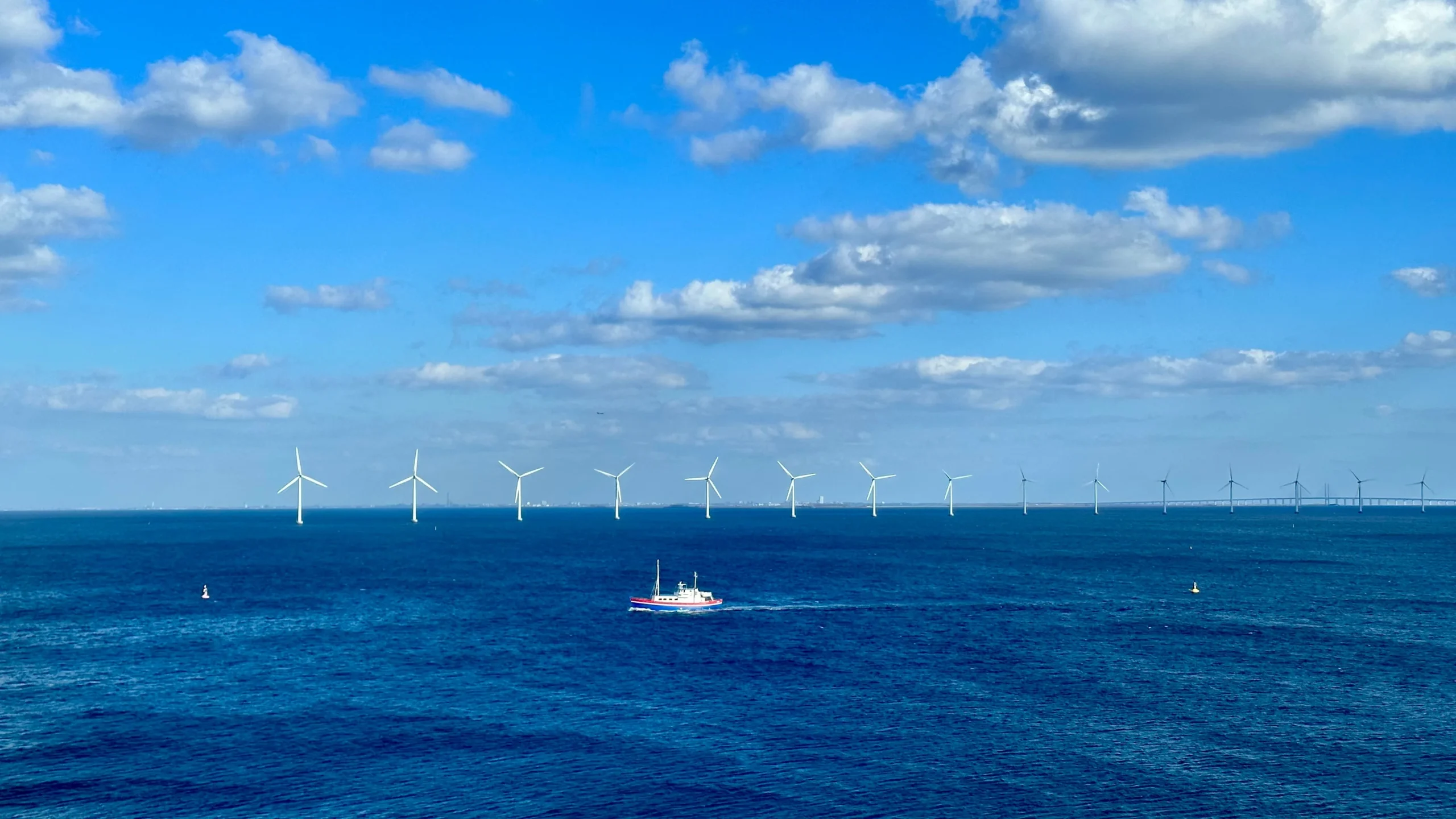
The Hesselø offshore wind farm will be located in the Kattegat Strait, between Denmark and Sweden, approximately 30 kilometers off the Danish coast. The project will have a minimum capacity of 800 MW.
Furthermore, Hesselø received five bids during the tendering process, with Vattenfall submitting the lowest economic proposal with an exercise price of 542 Danish kroner per MWh, equivalent to about 72.70 euros per MWh.
The authorization to develop the park will have an initial validity of 30 years, and will also include the possibility of an additional 10-year extension.
North Sea I Mid will add 1 GW in the North Sea
On the other hand, North Sea I Mid will be located in the North Sea near Hvide Sande and about 20 kilometers from the coast. Its minimum installed capacity will be 1 GW.
The project received two bids; Vattenfall’s winning proposal set an exercise price of 504 Danish kroner per MWh, around 67.60 euros per MWh.
The awarded prices will be guaranteed for 20 years from the date each park becomes operational, this scheme aims to provide stability for developers in the face of fluctuations in the electricity market.
Denmark resumes its wind energy tenders with CfD contracts
The new round marks the return of the promoters to the Danish tenders following the failure of a previous 3 GW process that received no bids by the end of 2024.
To correct this situation, Denmark modified its contracting model and adopted bidirectional contracts for difference (CFDs). Under this system, the producer receives a reference price for the electricity generated. When the market price falls below the agreed-upon level, the state covers the difference. When it exceeds the reference price, the developer returns the surplus.
Furthermore, the grid connection has already been reserved for both projects; the connection point will be located approximately 50 kilometers inland, which will facilitate the integration of the new offshore wind capacity into the Danish electrical system.
Before final signing, the awards must pass documentary reviews and verifications related to public procurement regulations.
Vattenfall expands its offshore wind portfolio in Denmark
Vattenfall already operates five offshore wind farms in Denmark these facilities generate approximately 6.5 TWh of electricity per year, enough to supply approximately 1.5 million homes.
With Hesselø and North Sea I Mid, the company will add at least 1.8 GW to its development portfolio, David Flood, head of Vattenfall’s offshore wind unit, noted that the award reflects the intention to expand offshore capacity and support the electrification of industry and society.
The company will integrate environmental and social criteria from the earliest stages of development, and will also work with authorities and technical partners to complete permits, define the design of the facilities and prepare their connection to the electrical grid.
The two projects reinforce Denmark as one of the most active European markets in offshore wind energy and reinforce the role of the North Sea and the Kattegat as crucial areas for the expansion of fossil fuel-free electricity generation.
Source: Vattenfall
Photo: Shutterstock