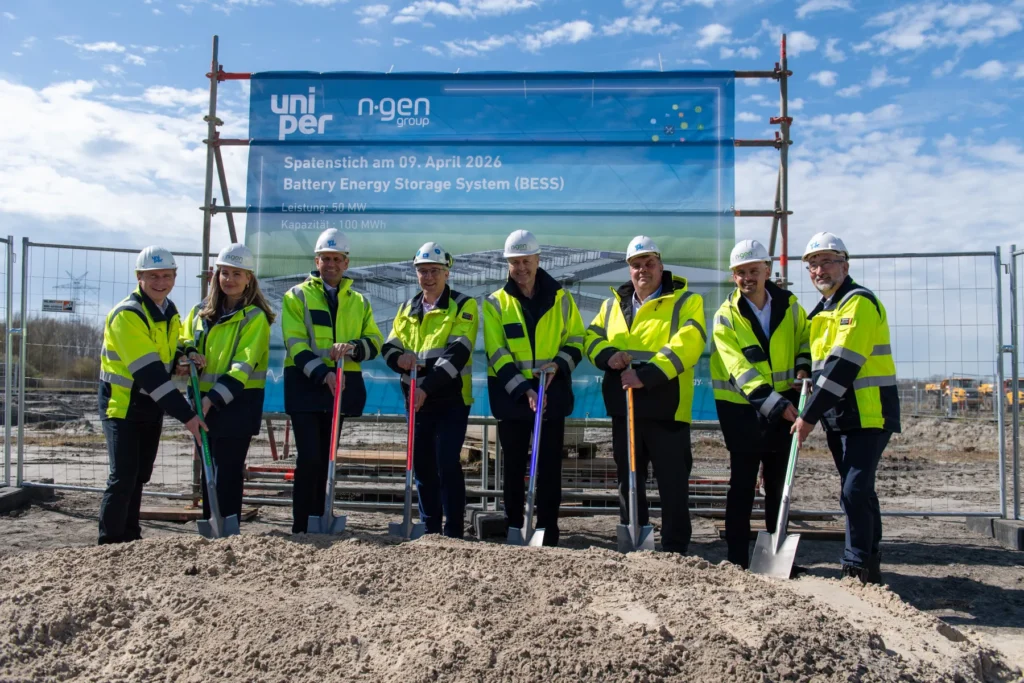
Energy company Uniper, together with NGEN, has initiated construction of a 50 MW / 100 MWh battery energy storage system (BESS) in Wilhelmshaven, marking a significant milestone in Germany’s energy transition.
The project is being developed on the site of a former power plant, reflecting a growing trend: the repurposing of fossil assets into flexible and digitalized energy infrastructure.
Furthermore, the initiative is part of the energy hub in northwestern Germany, reinforcing Wilhelmshaven’s strategic role as a reference point in the renewable energy, hydrogen, and storage sectors.
BESS: High-Impact Technology for Grid Stability
Battery Energy Storage Systems (BESS) have become an exceptional component for mitigating the intermittency of renewable sources such as solar and wind.
In this case, the system will compensate for short-term fluctuations in the electrical grid, preventing energy curtailment and improving supply quality.
In advanced electricity markets, up to 10–20% of renewable energy can be lost without adequate storage systems, making projects like this strategic assets for energy efficiency.
Uniper: Cost Reduction and Resilience
From an economic perspective, BESS systems directly impact key indicators:
LCOE (Levelized Cost of Energy): reduction by minimizing renewable energy losses.
ROI: accelerated through revenues from ancillary services (frequency regulation, arbitrage).
OPEX: reduction by optimizing grid operation.
Additionally, these systems enable avoidance of more costly investments in grid expansion, acting as flexible assets within the energy system.
In European markets, BESS systems can achieve returns in less than 8 years depending on the business model and regulation.
Wilhelmshaven: Strategic Intersection of Transition
The project is integrated within a broader ecosystem driven by Uniper, focused on developing hydrogen infrastructure, renewable energy, and storage.
This technological convergence positions Wilhelmshaven as a real-world laboratory for the energy transition, where different energy vectors (electricity, gas, hydrogen) interact in an integrated manner.
In this context, the BESS is not an isolated project, but an essential component of a resilient, decentralized, and digitalized energy system.
Source: https://www.uniper.energy