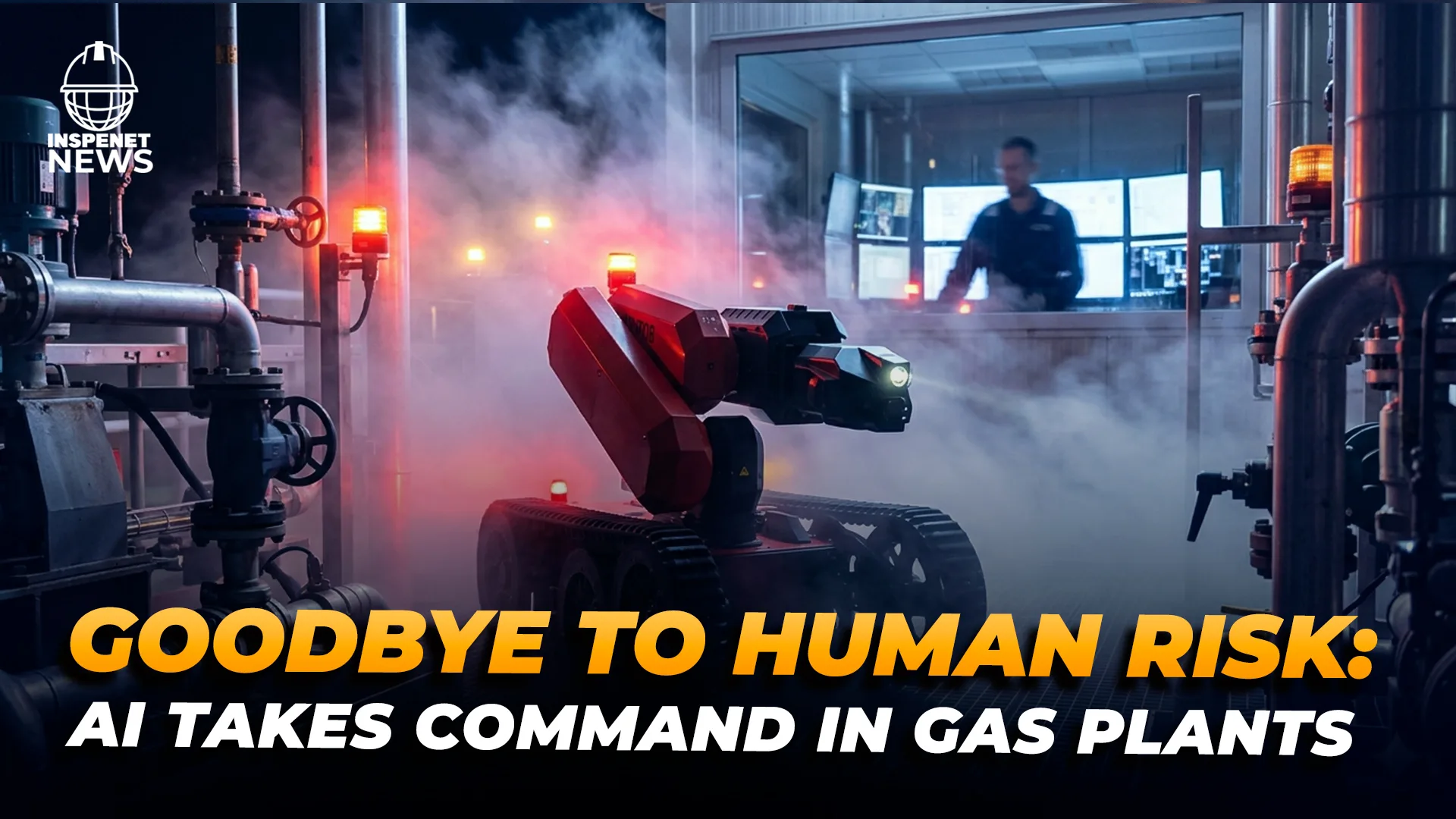
ADNOC incorporates autonomous robot for inspections in gas plants
ADNOC deployed a heavy-duty autonomous robot at its Taweelah gas compression plant in the UAE, with the aim of strengthening operational safety and optimizing industrial inspections in hazardous areas.
In addition, the company confirmed the development of the first heavy-duty robotic operator in the energy sector, designed to handle industrial equipment and perform remote maintenance tasks in extreme conditions.
ADNOC is committed to industrial robotics in critical operations
Currently, the inspection robot developed by Taurob performs autonomous inspections within gas installations. The system supports technical teams by identifying potential leaks, thermal anomalies, and operational risks without exposing personnel to hazardous areas.
The device incorporates 3D LiDAR sensors and 360-degree thermal cameras, technologies that allow for continuous monitoring and real-time data collection within the industrial plant.
According to ADNOC, this integration is part of its artificial intelligence and automation strategy to improve the reliability of its energy operations.
The inspection robot will operate in extreme industrial environments.
The autonomous robot was designed to work in complex facilities where environmental and operational conditions pose risks to workers.
Thanks to its autonomous navigation capabilities, the system can move through hard-to-reach industrial areas while analyzing operating parameters and detecting potential incidents before they become major problems.
industrial robotics applications at other ADNOC energy facilities.
ADNOC develops an operator robot for industrial tasks
Furthermore, the company announced the joint development of a heavy-duty robot operator within the ARGOS Joint Industry Project.
This new system will be capable of lifting heavy equipment, manipulating valves, and operating pressure gauges autonomously or remotely. Furthermore, it will be able to function in temperatures ranging from -20°C to 60°C.
The project brings together companies and organizations such as Equinor, Petrobras, TotalEnergies, Saft and Taurob, focused on accelerating the use of advanced automation in the energy industry.
ADNOC expects the robot operator to become operational towards the end of 2026.
AI and robotics drive changes in oil and gas
Dena Almansoori, Director of Technology and Innovation at the ADNOC Group, explained that artificial intelligence and robotics are a central part of the company's long-term energy strategy.
The executive noted that automation allows for strengthening security, improving operational performance, and reducing emissions through autonomous systems integrated into the energy value chain.
In parallel, ADNOC indicated that tools such as HSE Cockpit.ai have already made it possible to reduce security incidents by 30% thanks to real-time monitoring and predictive analysis based on artificial intelligence.
Robots and drones expand autonomous operations
The company also uses robots and drones to perform inspections in confined spaces, emissions monitoring, and incident response on land, sea, and air.
With this strategy, ADNOC seeks to expand the use of industrial robotics in critical operations while accelerating the digital transformation of its energy facilities.
News of additional interest
ISO 9001 enters its final phase of update
The international standard ISO 9001 is moving towards a new version, which will be published in 2026 after entering the final stage of review and voting. The standard is one of the most widely used in the world for quality management systems and serves as a guide for companies and organizations to continuously improve their processes, products, and services.
The update will include moderate changes compared to the 2015 version, although it will incorporate new requirements related to leadership, organizational culture, risk management, and adaptation to climate change. Measures to improve internal change management and increase clarity in various sections of the standard will also be strengthened. Certified companies will have an estimated three years to adapt to the new requirements once the final version is published.
Rotterdam promotes alliance to innovate in hydrogen
Several public academic and technological institutions in the Netherlands officially launched LAUNCH 2 during the World Hydrogen Summit 2026 in Rotterdam. The alliance aims to accelerate the development of hydrogen projects in the region by providing technical support, access to infrastructure, and connections between businesses, governments, and research centers.
The project brings together entities such as the Port of Rotterdam, TU Delft TNO, and regional authorities to strengthen hydrogen-related supply chains. Initiatives already receiving support include industrial electrification projects and iron-based circular fuels. Furthermore, the alliance aims to facilitate pilot testing, financing, and commercial scaling for new energy technologies.
China maintains control over fuel exports
China will maintain strict restrictions on refined fuel exports throughout June as it faces supply risks linked to tensions in the Middle East. Industry sources estimate that exports will barely increase compared to May, hovering around 550,000 tons outside of Hong Kong. Chinese authorities continue to require monthly approvals for each exported shipment in order to protect domestic supplies.
The move comes amid concerns about potential disruptions to the global oil supply due to the conflict surrounding Iran and the Strait of Hormuz. Although China will continue to export diesel, gasoline, and jet fuel to markets in Asia and Oceania, quantities remain limited compared to previous years. Despite the restrictions, profit margins for exports remain high for refining companies.
GE Vernova acquires Canadian robotics firm
GE Vernova announced the acquisition of Robotech Automation, a Canadian company specializing in robotics and industrial automation. The transaction aims to accelerate the development of automated systems within the energy company's supply chain and strengthen its technological capabilities in advanced manufacturing.
Robotech has expertise in the design, engineering, and integration of automated solutions for industrial processes. Both companies were already collaborating on projects within GE Vernova plants in the United States and now expect to expand the use of robotics to improve safety, efficiency, and operating costs. The acquisition will also allow for the integration of specialized technical talent into GE Vernova's Advanced Research Center.