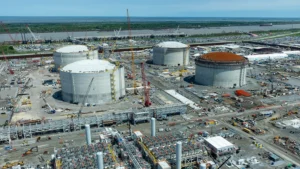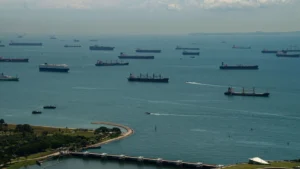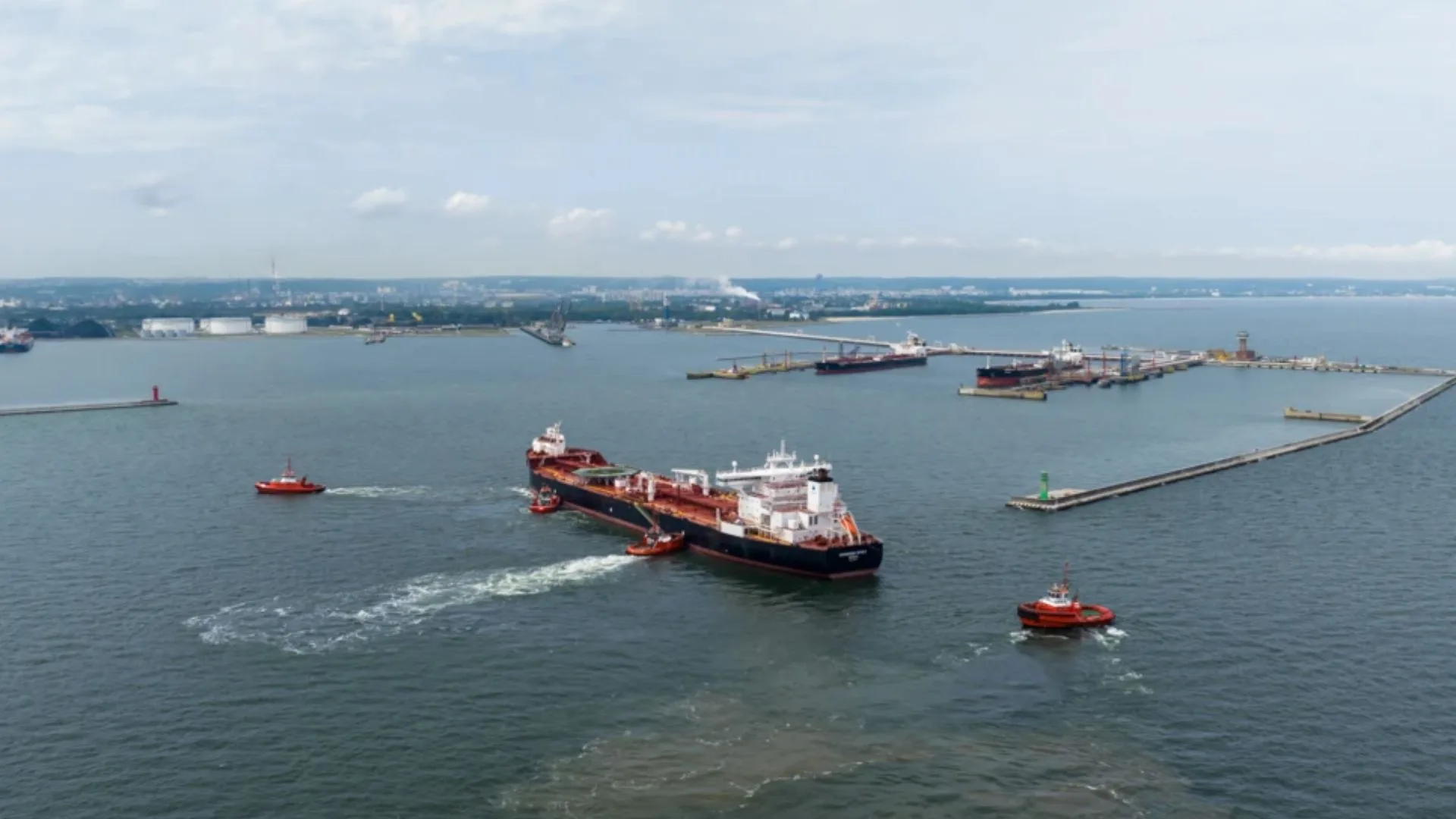
The Polish company Unimot Paliwa, a division of the independent multi-energy group Unimot, coordinated the reception of a crude oil shipment by sea at the Naftoport terminal in Gdańsk during July. This operation represents a strategic alternative to optimize the supply chain in Central and Eastern Europe. The raw material will be transported from Polish port facilities directly to the Schwedt Refinery, Germany, using the pipeline network operated by the logistics corporation PERN.
Logistics for the Schwedt Refinery: Sea and Land Transport
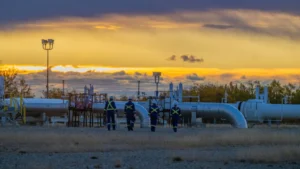
In this regard, PERN’s infrastructure has seen operational improvements thanks to the implementation of advanced technologies aimed at mitigating flow resistance within the pipelines. This technical innovation led to an increase of nearly 30% in the nominal transport capacity from the Polish port. This optimization allows the logistics operator to have the technical and operational capability to efficiently channel a greater volume of crude oil to German territory.
The commercial administration of the Polish entity emphasizes that the design and execution of these distribution channels consolidate the group’s role within the European energy architecture. Robert Brzozowski, Vice President of the Management Board for Commercial Affairs at Unimot SA, noted that solutions aimed at strengthening the consistency of supply from the West optimize the protection of fuel markets on both sides of the border. According to the executive, the logistical integration of South American crude demonstrates the company’s versatility in managing physical logistics and international trade.
The Impact of Kazakh Crude Suspension on Regional Security
Consequently, securing this shipment from South America emerges as an immediate response to the continent’s logistical contingencies. The interruption of Kazakh crude flows through the Druzhba pipeline system, which occurred in May, forced the Schwedt plant to seek viable commercial alternatives. Unimot’s intervention facilitated the acquisition of this supplementary volume of hydrocarbons, mitigating the risk of shortages in the area.
In this context, the geographical diversification of energy sources acquires critical relevance for industrial and civil stability. The continuous availability of energy resources directly benefits the industrial and commercial activities of the region. In this way, the import dynamics implemented protect the economy from unforeseen fluctuations in international production.
Likewise, global supply chain management is positioned as a natural extension of the group’s accumulated commercial trajectory in the domestic fuel sector. The corporation has perfected its competencies in foreign trade, route planning, and financial risk mitigation. These technical capabilities of the firm provide a key competitive advantage when resolving supply crises in highly regulated markets.
Distribution and Supply in Border Areas
The Schwedt Refinery constitutes an indispensable nerve center for the daily operation of land and air transport in Eastern Germany. Operational statistics from the PCK Refinery confirm that approximately nine out of ten cars in the Berlin and Brandenburg regions consume fuels produced at these facilities. The plant processes and supplies nearly 90% of the gasoline, diesel, aviation kerosene, and heating oil that sustain the urban apparatus of the German capital.
Therefore, the socioeconomic influence of this refining center transcends border lines and positively impacts Polish territory. Each year, nearly two million tons of refined products are transported from Schwedt to the western provinces of Poland. This constant flow of petroleum derivatives ensures regular supply at service stations located in border regions, strengthening the local economic fabric.
Finally, institutional control of the PCK Refinery remains under a special administration regime. The German government has kept the plant’s majority shareholder under state trusteeship since September 2022, a measure decreed in the wake of the geopolitical conflict in Ukraine. The purpose of this governmental intervention is to safeguard national energy security, protect the integrity of critical infrastructure, and prevent operational disruptions arising from global economic sanctions.
Source and photo: UNIMOT