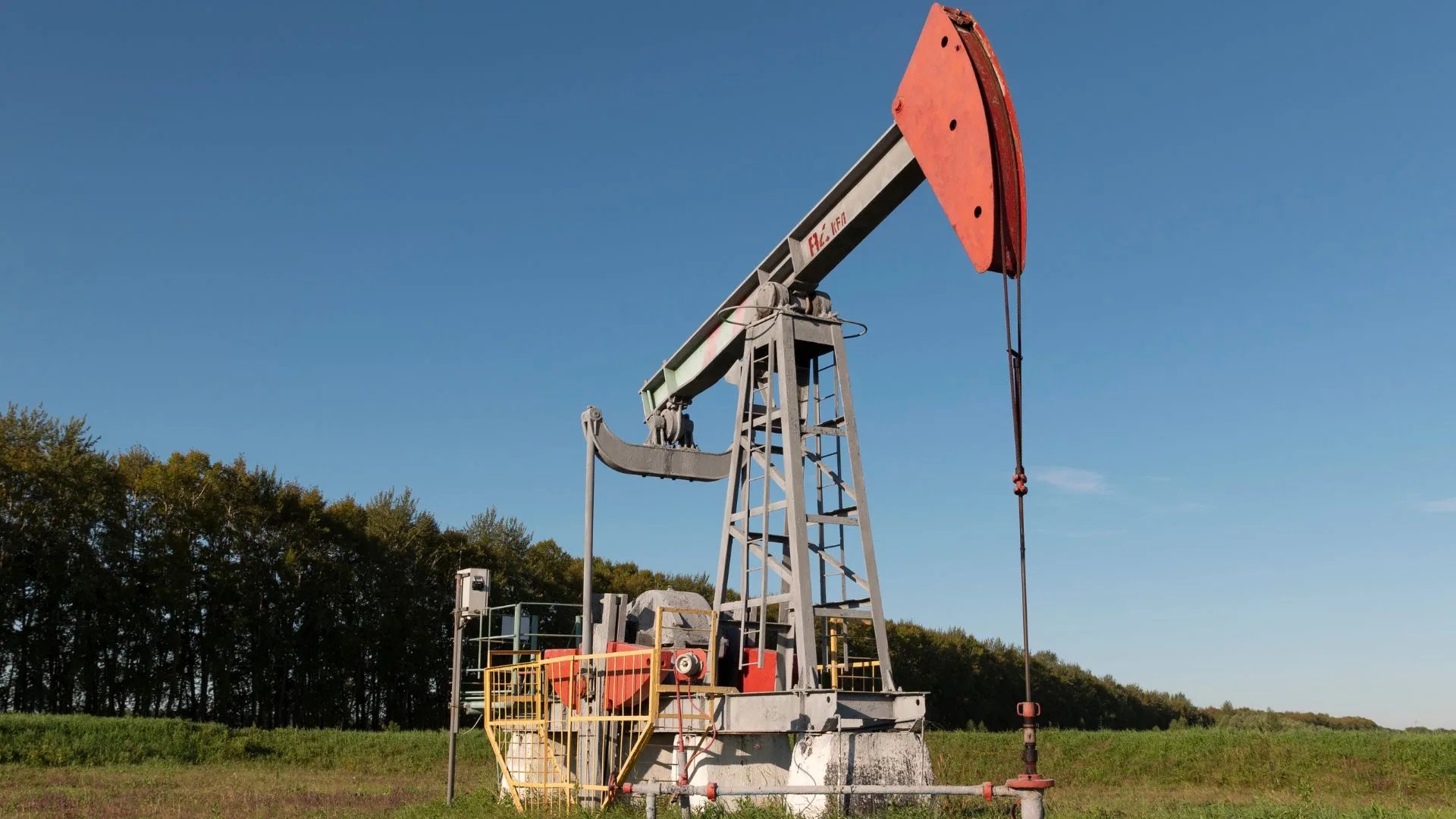
During the last fiscal period, the international energy landscape has experienced a notable consolidation of United States leadership in hydrocarbon supply. The North American nation maintains its position as the leading global oil producer since assuming that status in 2018. Figures from the last year show that the margin of advantage over competitors such as Russia and Saudi Arabia has expanded considerably, sustained by an increase in local extraction.
The increase in United States crude oil production
According to the report from the Energy Institute, U.S. extraction of crude and condensate averaged 13.586 million barrels per day in the 2025 fiscal year. This volume represented a 2.7% increase compared to the previous cycle, granting the national industry a share equivalent to 15.8% of the international oil supply. Likewise, records consolidated by the U.S. Energy Information Administration (EIA) placed the extraction average at a historic high of 13.6 million barrels per day.
This upward trajectory materialized in an environment of moderate prices for West Texas Intermediate crude (WTI), which averaged $65 per barrel. The dynamism was concentrated in the Permian Basin, whose contribution rose to 6.6 million barrels per day after recording a 4% increase. This basin represented approximately 48% of all U.S. production during the evaluated period.
The performance of global competitors and hydrocarbon supply
The production progress of the United States contrasted notably with the evolution of activity in the other two energy giants of the global market, whose operations were conditioned by geopolitical factors and corporate decisions of the OPEC+ alliance. Russia’s production averaged 10.161 million barrels per day, a figure that represented a year-on-year decrease of 0.6% and an 11.8% share of the global extraction volume. The performance of Russian infrastructure was directly compromised by offensives with unmanned aerial systems from Ukraine.
For its part, Saudi Arabia recorded a crude production of 9.727 million barrels per day. Although this figure reflected a year-on-year increase of 5.7%, derived from the partial easing of previous restrictions applied by OPEC+, the Saudi volume did not exceed the production levels declared by the Russian Federation, representing 11.3% of the international supply. In this scenario, average U.S. production exceeded the individual records of both OPEC+ exporters by nearly 40%.
The domestic demand for crude in the U.S. market showed clear signs of recovery during the annual cycle, settling near the parameters observed in the stage prior to the global health emergency and approaching the highs reached in 2018. This consumer behavior consolidates an essential market support for the continuity of corporate investment plans in extractive infrastructure.
Official estimates indicate that the expansionary trend will maintain its course during the coming market cycles. EIA analyses suggest that national production will average nearly 13.7 million barrels per day during the current year, subsequently surpassing the 14 million barrels per day barrier in the following annual cycle. This upward trend will be influenced by the evolution of international crude prices, which could increase as a result of geopolitical instability derived from bilateral tensions between the United States and Iran.
Source: OilPrice
Photo: Shutterstock