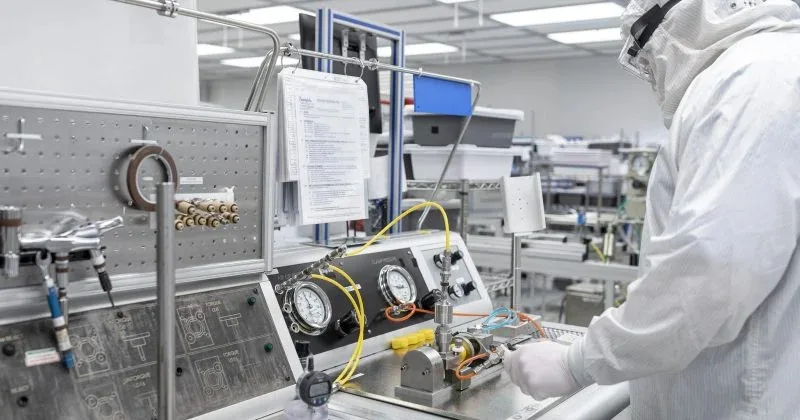
Manufacturer confidence in Japan maintained a stable performance during the month of July, driven by a solid increase in the demand for microchips and other technological components. According to data from the recent Tankan survey conducted by Reuters, the industrial optimism indicator remained unchanged at a level of +13 points. This scenario reflects a firm recovery in the trade of memory, microchips, and servers designed for the development of artificial intelligence.
The semiconductor market stabilizes industrial production
For this reason, corporations linked to precision machinery and general electronics have experienced an unprecedented volume in their export order books. Likewise, the rapid adoption of advanced technologies has generated concern among producers regarding the limitations of their own installed operating capacity. The monthly indices calculated subtract the percentage of negative assessments from the positive ones, confirming a clear favorable trend for the national heavy industry.
In contrast, the service sector experienced a decline in confidence levels due to growing inflationary pressures. Specifically, the non-manufacturing optimism indicator fell from the +32 points recorded the previous month to a level of +25 points. This contraction is a direct response to the prolonged weakness of the Japanese currency, rising energy costs, and upward variations in benchmark interest rates.
The boost of artificial intelligence and microchip demand
Additionally, geopolitical instability stemming from armed conflicts in the Middle East continues to undermine the expectations of service and logistics companies. The prolongation of these tensions keeps the cost of raw materials high, complicating the financial planning of local distribution, transport, and retail operators.
Regarding the global macroeconomic outlook, the Bank of Japan maintains a posture of extreme caution in the face of the latent risk of an inflationary spiral. It should be noted that the country’s wholesale inflation reached a year-on-year rate of 6.3% in May, representing its highest level in the last three years. This trend progressively forces retail companies to pass on the increase in production costs to the final consumer.
Consequently, analyst forecasts point to possible additional monetary adjustments by the central bank before the end of the fiscal year. Executives from various financial entities estimate that the combination of a depreciated yen and international tensions will force further rate hikes to ensure the stability of the currency.
Source: Reuters
Photo: Shutterstock