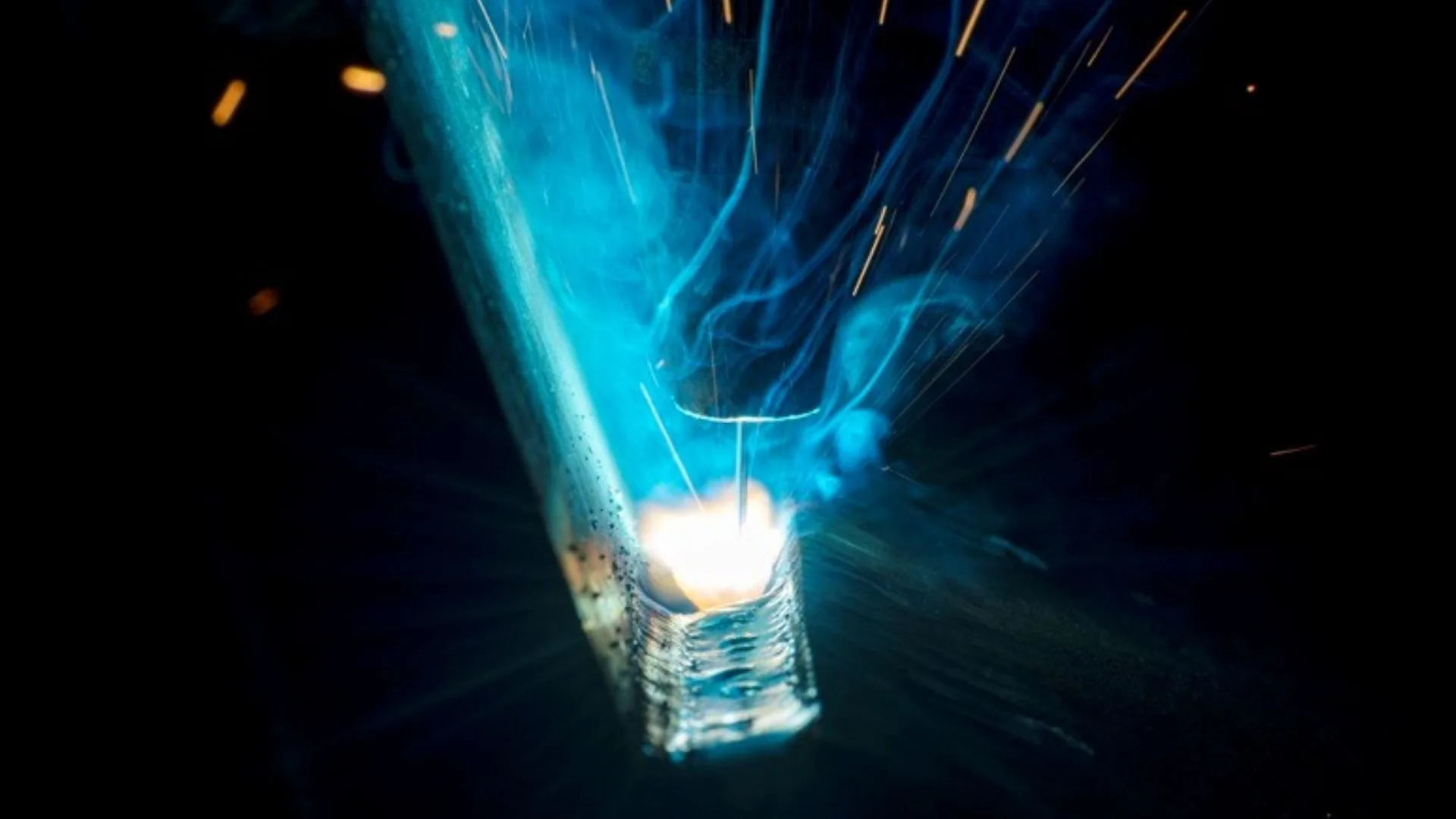
The Federal Institute for Materials Research and Testing (BAM) has presented the results of a study focused on LTT welding to optimize critical offshore wind energy components. Welded joints in wind turbines undergo severe wear due to ocean weather conditions.
By implementing low-transformation-temperature filler metals, the scientific body has validated a substantial increase in the durability of metal structures exposed to constant cyclic stresses.
Reducing structural stresses through LTT welding
Offshore wind turbines operate under extreme mechanical loads caused by waves, currents, and wind. These dynamic forces generate fatigue in high-strength steel components, directly affecting the weld beads. The conventional process alters the steel microstructure and generates residual tensile stresses that promote the formation of microscopic cracks.
The application of special LTT alloys counteracts this physical phenomenon during the metal cooling phase. By modifying the microstructural transformation, these materials convert harmful forces into compressive stresses that are beneficial to the integrity of the assembly. Technical tests show that adding an additional LTT weld pass in the areas of highest mechanical demand increases fatigue resistance by between 50% and 140%.
Optimizing industrial processes and sector applications
The key advantage of this procedure lies in eliminating post-weld thermal treatments or mechanical treatments, factors that typically increase manufacturing costs and lead times. The use of these filler metals optimizes workflows in shipyards and industrial assembly facilities, enabling the safe design of larger turbines with higher generation capacities.
The WindBAM Competence Center has noted that this technical innovation facilitates both the original construction of infrastructure and the repair and corrective maintenance of existing offshore welds.
Likewise, the scope of these technical findings extends to mechanical engineering, the manufacture of high-capacity heavy cranes, and the construction of conventional steel structures. Project development has involved collaboration with the Fraunhofer Institute for Mechanics of Materials and the Research Association of the German Welding Society and Related Processes, funded by the German Federal Ministry for Economic Affairs and Energy.
Source and photo: BAM