US$12.5 billion investment secures Louisiana export terminal
On June 13, 2026, the final investment decision (FID) for the Commonwealth LNG project was formally announced, committing US$12.5 billion to a new liquefied natural gas export terminal in the Lake Charles area of Louisiana. The project aims to reach a capacity of 9.5 million tonnes per annum (MTPA) of LNG, placing it among the mid-sized Gulf Coast export facilities currently under construction. This decision concludes a multi-year development cycle and generates binding engineering, procurement, and construction (EPC) commitments across the supply chain.
The Lake Charles site is located within the Gulf Coast LNG corridor, a region that has accumulated more than US$100 billion in new investment announcements since 2023, according to Louisiana state economic reports. This figure now includes Commonwealth’s US$12.5 billion commitment as the latest addition. The terminal’s location provides direct pipeline connectivity to the Haynesville Shale and the Permian Basin, reducing feedstock transportation costs compared with export projects located further inland.
Commonwealth LNG FID: 20 institutions commit to a US$12.5 billion financing package
A consortium of 20 financial institutions has committed to debt and equity financing for Commonwealth’s LNG terminal, as confirmed by PR Newswire in a press release on June 13, 2026. The size of the banking group, which includes global and regional lenders, indicates broad risk appetite for U.S. Gulf Coast LNG infrastructure despite high interest rates. Final financial close is expected during the current quarter, with construction set to begin before the end of 2026.
The financing structure reflects a trend toward project-finance models in which non-recourse debt is secured by future LNG offtake agreements rather than corporate balance sheets. This approach isolates project risk from the sponsor’s overall operations and is common in large-scale LNG projects worldwide. Commonwealth LNG joins a group of Gulf Coast projects—including Plaquemines LNG and Golden Pass—that have obtained similar structures over the past two years.
Reuters reported on June 10, 2026 that the commitment from 20 institutions was finalized ahead of the formal Final Investment Decision (FID) announcement, allowing Commonwealth LNG to move directly into construction without an additional financial-close milestone. This early agreement reduces execution risk for EPC contractors and equipment suppliers involved in procuring long-lead items. In addition, it enables the project to meet U.S. Department of Energy timelines for permitting and commissioning the LNG export terminal.
EPC contracts, engineering workforce, and implications for the LNG export market
The final investment decision (FID) triggers a series of EPC (engineering, procurement, and construction) contracts for cryogenic processing units, storage tanks, marine loading infrastructure, and pipeline interconnections. U.S. engineering firms specializing in LNG process design will compete for subsequent front-end engineering design (FEED) work, a segment that typically represents between 3% and 5% of the project’s total cost. The Lake Charles industrial cluster already hosts several LNG-related EPC contractors, reducing mobilization costs compared with greenfield projects.
Workforce impacts extend across the Gulf Coast, where the LNG plant construction cycle has generated steady demand for welders, pipefitters, instrumentation technicians, and steel erectors. Commonwealth LNG will add to a regional labor market already absorbing workers from multiple simultaneous LNG projects, which could tighten wage conditions in the Lake Charles–Beaumont corridor. Training partnerships with local technical institutes and union apprenticeship programs are expected to be part of the project’s local-content commitments.
From a market perspective, Commonwealth LNG’s 9.5 MTPA capacity contributes to the expansion of U.S. LNG exports, a key factor in the debate on energy security in both North America and Europe. European buyers, still seeking to diversify supply sources to reduce dependence on Russian pipeline gas, remain the primary buyers of new Gulf Coast LNG volumes. The terminal’s ability to secure long-term sales and purchase agreements with Asian and European counterparties will determine how quickly it reaches full commercial operation.
The Commonwealth LNG project is also linked to U.S. energy security policy, as Washington has positioned Gulf Coast LNG exports as a strategic tool in global energy diplomacy. The Department of Energy’s LNG export authorization framework has maintained approvals for projects with binding purchase agreements, and Commonwealth’s final investment decision demonstrates confidence in that regulatory continuity. As the terminal advances through construction, its schedule will be closely watched as an indicator of whether the U.S. LNG sector can maintain its current pace through 2030.
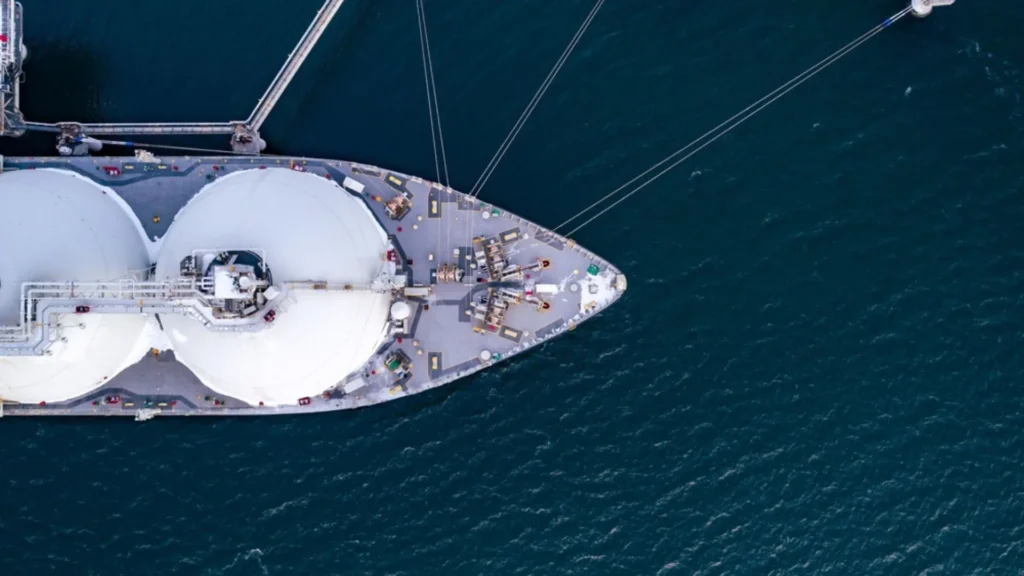
Photo: shutterstock