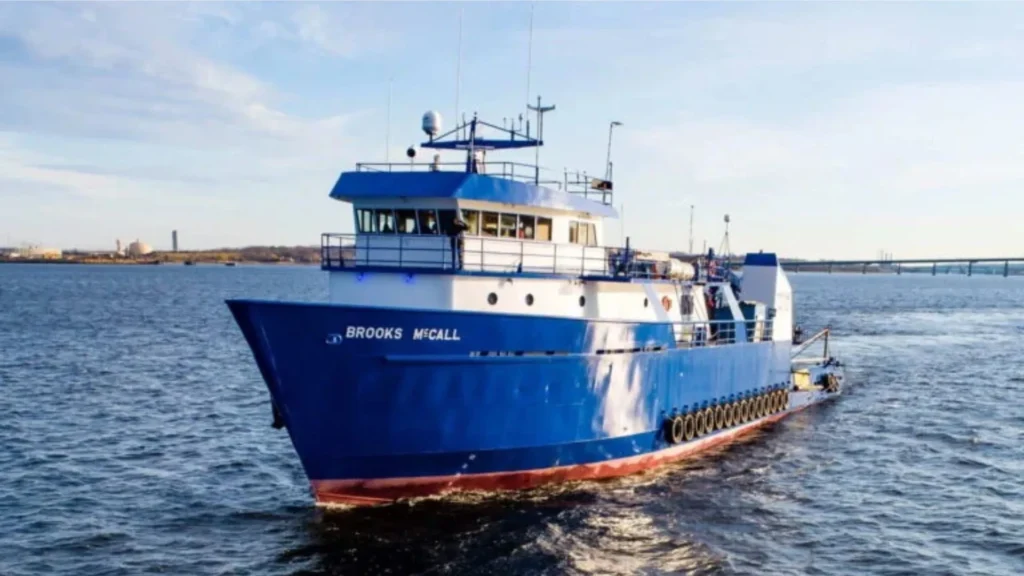
TDI-Brooks will carry out a marine geophysical and geotechnical survey to support the development of the deep-water port of Delfin LNG.
Delfin LNG awarded TDI-Brooks the geophysical and geotechnical prospecting work for its liquefied natural gas export project off the coast of Louisiana. The campaign will provide information on the seabed and subsoil necessary to continue the development of offshore infrastructure.
In this way, TDI-Brooks will act as the main contractor and will be in charge of the geophysical operations, the company will also manage the geotechnical investigation together with Tolunay-Wong Engineers (TWE), which will participate as a subcontractor.
TDI-Brooks will begin prospecting for Delfin LNG in August
Specifically, the acquisition of geophysical data the survey is scheduled to begin at the end of August 2026 using the research vessel R/V Brooks McCall. The geotechnical phase will then commence at the end of September, according to the planned schedule.
The work will characterize the seabed and subsurface conditions in the Delfin Deepwater Port Project area. This data will serve as the technical basis for the engineering and development of the infrastructure necessary for future LNG operations.
Furthermore, the combination of geophysical and geotechnical studies will provide integrated information on the offshore site conditions before moving forward with new phases of the project.
An FLNG project off the coast of Louisiana
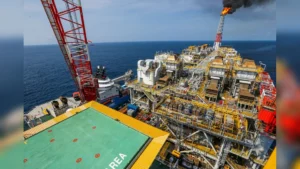
Besides, Delfin LNG it plans to develop an offshore LNG export facility using floating liquefaction technology. The complex will be located in an existing deep-water port in the Gulf of Mexico off the coast of Louisiana.
The plan involves leveraging previously installed infrastructure, including the UTOS gas pipeline system acquired by Delfin, a strategy aimed at limiting new infrastructure needs and reducing development capital requirements.
At full scale, Delfin LNG envisions up to three floating LNG storage units with a combined capacity of approximately 13.2 million tons per year. The first FLNG unit will have a planned capacity of around 4.4 million tons per year.
With the start of the TDI-Brooks campaign, the project will now move into a new phase of gathering technical information about the site. The results of these studies will be used to support the development of the future deep-water port and its LNG export infrastructure.
Fountain: Offshore Energy
Photo: TDI-Brooks