Table of Contents
- A development backed by major players in the energy sector
- More than 47 trillion cubic feet of offshore gas
- Tanzania seeks to position itself as an LNG exporter
- East Africa gains prominence in the gas market
- The challenge of developing gas in the midst of an energy transition
- An agreement that could redefine the country's energy future
Tanzania is approaching one of the most important moments in its energy history. The government hopes to finalize the agreement with the host government for the Tanzania LNG project before mid-2026, an initiative valued at approximately $42 billion that seeks to develop vast natural gas reserves located off its coast.
The signing of this agreement provides the necessary legal framework for the megaproject to move into the construction phase. Without this document, the companies involved cannot make any final investments or carry out the planned works.
A development backed by major players in the energy sector
The project is led by Equinor and Shell, who act as main operators, and also involves ExxonMobil, Pavilion Energy, Medco Energi and the state-owned Tanzania Petroleum Development Corporation (TPDC).
The persistence of these companies throughout years of negotiations reflects the strategic interest generated by the deep-water gas reserves discovered off Tanzania. In addition to the necessary capital, these companies contribute technical expertise, commercial infrastructure, and access to international LNG markets.
More than 47 trillion cubic feet of offshore gas
The initiative envisions the exploitation of more than 47 trillion cubic feet of natural gas located in offshore deposits.
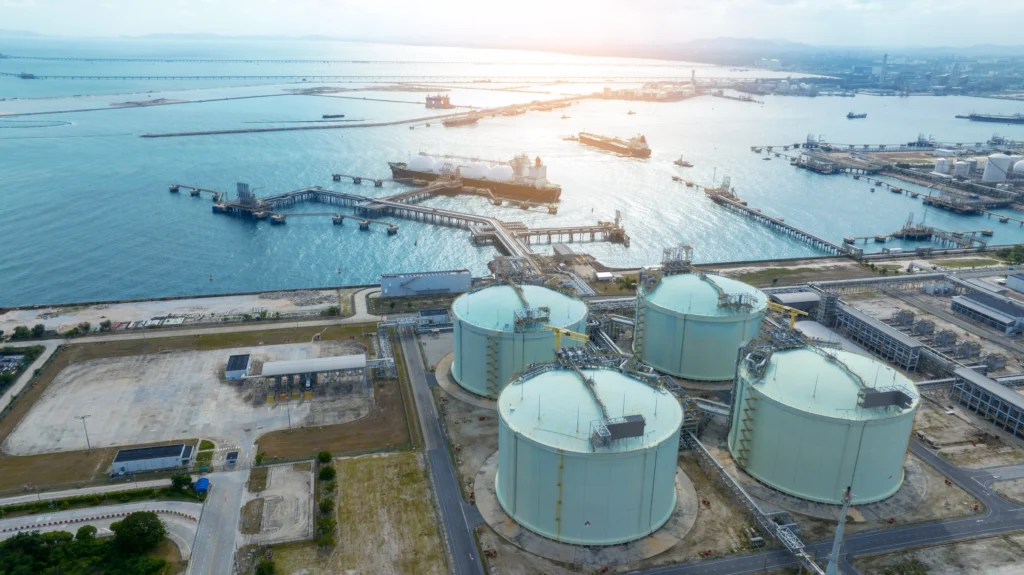
To bring this resource to international markets, an onshore liquefaction plant will need to be built. There, the gas will be cooled until it becomes a liquid, facilitating its storage and transport to major energy consumption centers.
Although expectations are high, the project timeline remains long-term; current forecasts indicate that commercial production could begin around 2034.
Tanzania seeks to position itself as an LNG exporter
The completion of the agreement would allow Tanzania to move towards joining the group of liquefied natural gas exporting countries in Africa.
Authorities believe the project could become a significant source of tax revenue, job creation, and foreign investment. Furthermore, the development of energy infrastructure could boost industrial sectors related to natural resource processing and electricity supply.
Several analyses also highlight that the initiative could strengthen the country’s image within international energy markets in a context of growing demand for diversified supply sources.
East Africa gains prominence in the gas market
The project’s progress comes as East Africa strengthens its presence on the global energy map.
Mozambique is already developing major LNG export facilities, and several industry players view the region as one of the areas with the greatest potential for new gas supplies over the next few decades.
In this scenario, Tanzania seeks to attract investment and accelerate the regulatory processes necessary to compete for international capital destined for large energy projects.
The challenge of developing gas in the midst of an energy transition
The project’s development also coincides with a period of transformation in the global energy sector. Proponents of natural gas argue that it can play a significant role as a transition fuel thanks to its lower emissions compared to other fossil fuels. On the other hand, some experts warn about the uncertainty surrounding climate goals and the expansion of low-carbon technologies.
Given this scenario, Tanzania is committed to maintaining the competitiveness of its gas resources through long-term agreements and a contractual structure capable of offering stability to investors.
An agreement that could redefine the country’s energy future
If the negotiations conclude as planned, the signing of the agreement with the host government will mark the beginning of a new stage for the Tanzania LNG project.
Beyond authorizing the construction of the infrastructure, the agreement would send a signal of confidence to the international market and reinforce Tanzania’s attractiveness as a destination for large-scale energy investments. The outcome could transform the country’s image within the African gas sector for decades to come.
Source: Riotimesonline
Photo: Shutterstock