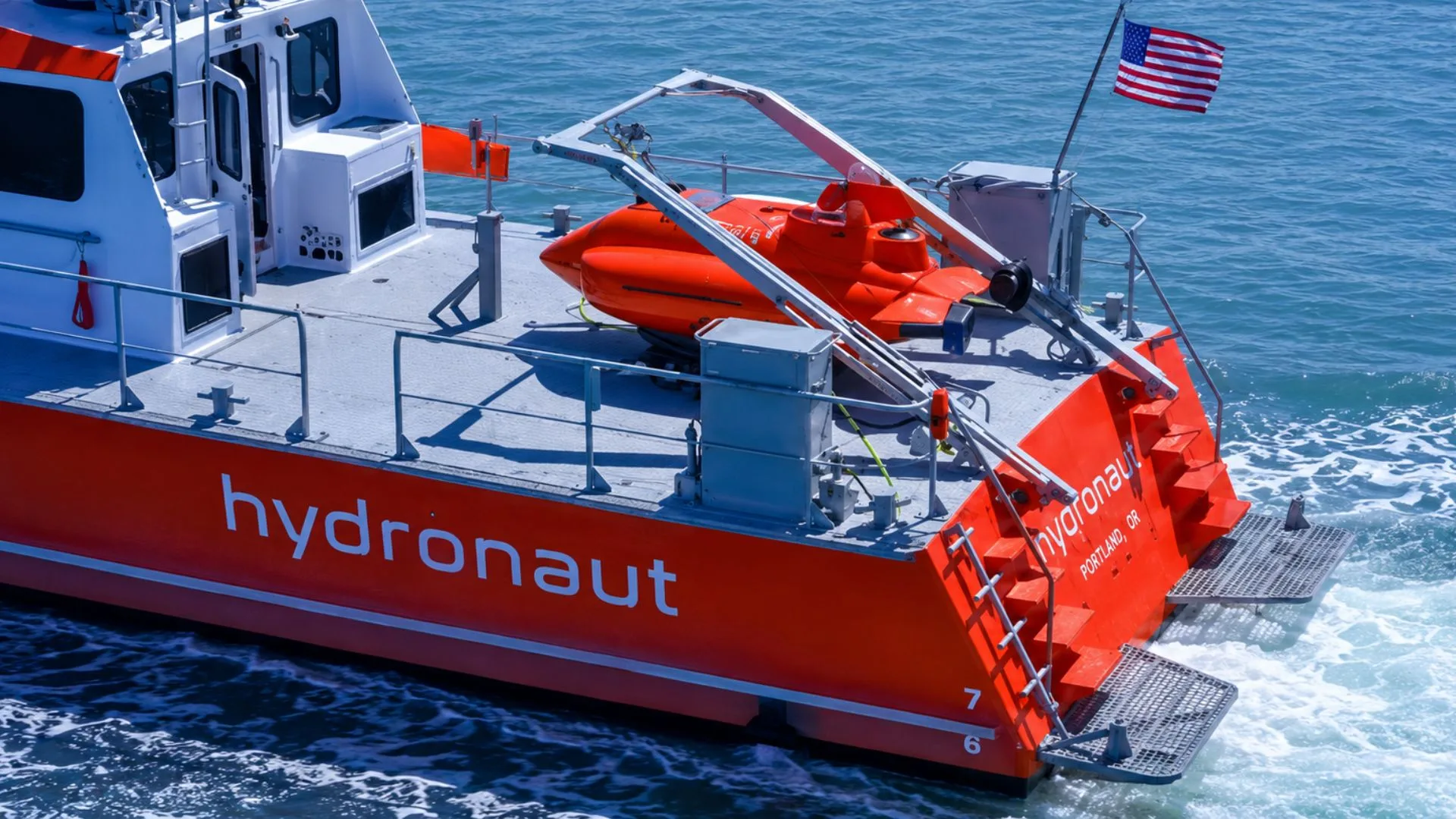
Nauticus Robotics announced the completion of first prototype of its electric manipulator next generation, a technology developed to strengthen the intervention capabilities of autonomous underwater vehicles (AUVs) and expand the reach of its underwater robotics ecosystem.
The new system has been designed to integrate with the vehículo autónomo Aquanaut and with the company’s robotic platform. Its modular design replaces traditional hydraulic systems with a fully electric architecture that aims to reduce maintenance tasks, increase operational availability, and decrease costs associated with underwater operations.
The electric manipulator expands the capabilities of AUVs
The first prototype incorporates a three-joint configuration that will serve as the basis for future five- and seven-joint versions, aimed at performing more complex underwater work.
According to the company, the manipulator is being integrated with the ToolKITT software platform, which is capable of autonomously identifying work areas, locating intervention points, compensating for variations in the underwater environment, and executing precision maneuvers with minimal operator intervention.
This combination of hardware and software allows for the coordination of vehicle navigation, environmental perception, and manipulator control within a single architecture specifically designed for autonomous operations.
Less maintenance and greater operational efficiency
Compared to the hydraulic manipulators commonly used in the offshore industry, the electric solution developed by Sailor it aims to simplify the mechanical architecture and reduce maintenance times, which could translate into greater reliability during underwater inspection and intervention campaigns.
During the first half of 2026, the company completed the initial prototype and validated the basic movement using its software control system. Functional and load tests are currently being conducted to verify the equipment’s performance before moving on to new development phases.
Ameen Albadri, Vice President of Engineering at Nauticus Robotics, explained that autonomous underwater intervention requires complete integration between mechanical components and perception and control software. He indicated that this approach will expand the number of tasks that underwater vehicles can perform autonomously.
Next stages of development
The roadmap includes the manufacture and evaluation of new three-joint prototypes during the remainder of 2026, while work continues on the five- and seven-joint versions.
As part of the validation program, Nauticus will use its Aquanaut platform to conduct future demonstrations of autonomous intervention under real-world conditions, reinforcing the development of technologies aimed at increasing the autonomy and efficiency of the underwater robotics.
In parallel, the company continues the development of the Olympic Arm electric manipulator, aimed at conventional applications in remotely operated vehicles (ROVs), in collaboration with an industrial partner.
Source: Oedigita
Photo: Nauticus Robotics