SLB and Liberty Energy will combine modular infrastructure, distributed generation, and digital management to accelerate new data center projects.
SLB and Liberty Energy announced a strategic alliance to offer modular infrastructure and integrated power generation solutions for new data centers in various international markets.
The collaboration aims to address the increased electricity consumption associated with artificial intelligence and high-performance computing. These projects require large volumes of energy and shorter execution times than those typically associated with traditional grid connections.
Power for data centers with modular deployment
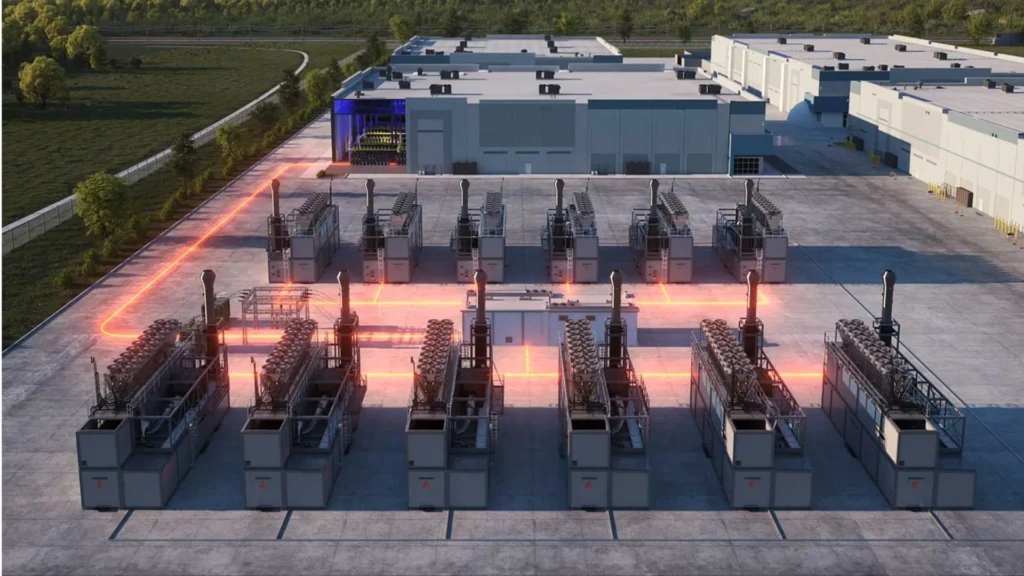
As planned, SLB will contribute prefabricated infrastructure solutions, project execution capabilities, and a global commercial presence. Liberty Energy will supply modular power generation systems, smart behind-the-meter controls, and operational expertise.
This model will allow for the design of facilities capable of operating more independently of the conventional electrical grid. In this way, developers can add processing capacity without being entirely subject to the authorization and connection times of public systems.
Furthermore, modular infrastructure reduces some of the work done on-site; components can be manufactured in controlled environments and then transported to the project for integration. This approach facilitates standardization and can shorten the construction schedule.
The demand for AI is putting pressure on electrical capacity
The growth of artificial intelligence is changing energy planning for data centers, new computing systems require more power per installation and a constant power supply.
Given this scenario, the energy supply has become one of the main limitations to expanding digital infrastructure. Processing capacity can be installed quickly, but the construction of lines, substations, and network connections typically requires longer periods.
Gavin Rennick, president of SLB’s New Energy and Industry division, noted that the current challenge no longer depends solely on computing power. It also involves delivering infrastructure and energy within the timeframes demanded by the market.
Therefore, the alliance will focus on behind-the-meter solutions; these installations generate or manage energy directly at the point of consumption and reduce dependence on an immediate connection to the grid.
SLB and Liberty Energy functions
SLB has expertise in energy technology, project execution, and industrial systems development, the company has also expanded its activities into digital solutions, decarbonization, and infrastructure for new energy systems.
Liberty Energy will contribute its energy services platform and distributed generation capabilities, the company also works with energy storage, advanced geothermal energy, and other technologies applied to industrial clients.
Ron Gusek, CEO of Liberty Energy, indicated that customers are placing greater priority on integrated solutions tailored to each project. The company expects to address current capacity constraints while preparing systems capable of responding to future growth.
Hybrid systems and digital energy management
In addition to the initial supply, both companies plan to collaborate on technologies to improve the efficiency, flexibility, and environmental performance of data centers.
The planned areas include hybrid energy systems, digital consumption management, and advanced electrical architectures. These solutions would allow for the combination of different sources of generation, storage, and automated controls within a single installation.
Likewise, digital management can adjust production and demand in real time; this is relevant in data centers where electrical loads can vary depending on the use of servers, AI accelerators, and cooling systems.
Planned capacity in gigawatts
Since April 2024, SLB has shipped more than 1.3 gigawatts of prefabricated modular data center infrastructure. The company expects to surpass 2 gigawatts of cumulative global deployment by the end of the year. Meanwhile, Liberty Energy plans to deploy nearly 3 gigawatts of energy projects by 2029.
These figures illustrate the scale of electricity demand linked to the expansion of digital infrastructure. They also reflect the industry’s interest in solutions that can be deployed more quickly and operate flexibly as permanent grid connections are rolled out.
Source and photo: Slb