ARC Resources has become central to one of the most significant corporate operations in the energy sector in 2026, after Shell temporarily suspended its $3 billion share buyback program while the approval process for a $16.4 billion acquisition advances. The company confirmed it would resume capital distribution once the shareholder vote concludes, a decision reflecting the priority given to the strategic expansion of its energy portfolio.
The Acquisition of ARC Resources and its Strategic Impact
The $16.4 billion agreement makes Shell the main shareholder of ARC Resources, one of Canada’s largest natural gas producers and a key partner in the LNG Canada project, located in Kitimat, British Columbia. The LNG Canada terminal is the first of its kind in Canada for liquefied natural gas export and represents a critical node in the North American energy supply chain to Asia.
The operation strengthens Shell’s position in the Canadian upstream gas segment, a strategic asset that complements its global LNG portfolio. According to Shell’s official statement, the integration of ARC Resources’ liquefied natural gas assets expands the company’s capacity to supply Asian markets with additional volumes of Canadian gas from the Montney basin.
The Montney basin, where ARC Resources concentrates most of its reserves, is recognized as one of North America’s most productive unconventional gas formations. Its volumes represent a significant fraction of the liquefied Canadian gas shipped to Asian markets via Kitimat.
Shell and its Strategy in LNG Canada
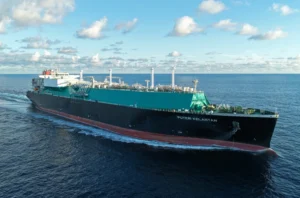
Shell operates as a lead partner in the LNG Canada project, a consortium that also includes Petronas, PetroChina, Mitsubishi Corporation, and Korea Gas Corporation. The export terminal in Kitimat, with a production capacity of approximately 14 million tons per year in its first phase, began commercial operations in 2025 and primarily ships liquefied natural gas to Japan, South Korea, and other high-growth Asian markets.
The acquisition of ARC Resources aligns with Shell’s strategy to consolidate control over the natural gas supply feeding the Kitimat terminal. ARC’s assets in the Montney basin, one of North America’s most productive gas formations, provide low-cost gas volumes that are fundamental to the long-term profitability of the LNG Canada project.
For further context on standards applicable to hydrocarbon infrastructure, Inspenet offers a resource on API RP 584 asset management and integrity, relevant for natural gas transport and processing projects of this scale.
Implications of the M&A Agreement for Shell and the Market
The pause in the $3 billion share buyback underscores the priority Shell places on closing the transaction with ARC Resources. Buyback operations are a common mechanism for returning capital to shareholders, but the company has chosen to defer them until the shareholder vote is resolved, which is standard practice in large-scale mergers and acquisitions.
The Canadian natural gas market is currently undergoing consolidation, with multiple international players interested in securing access to gas volumes linked to LNG export projects. The acquisition of ARC Resources positions Shell as the primary vertical integrator of the Canadian gas chain, from extraction in Montney to export via the Kitimat terminal, with volumes destined for Asian markets under long-term contracts.
Once the shareholder vote is confirmed, Shell will resume its buyback program, as indicated in its press release. The conclusion of the M&A process will mark a milestone in the company’s energy transition strategy, consolidating its leadership in North American liquefied natural gas.
Source: Investing
Photo: shutterstock