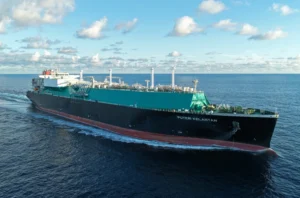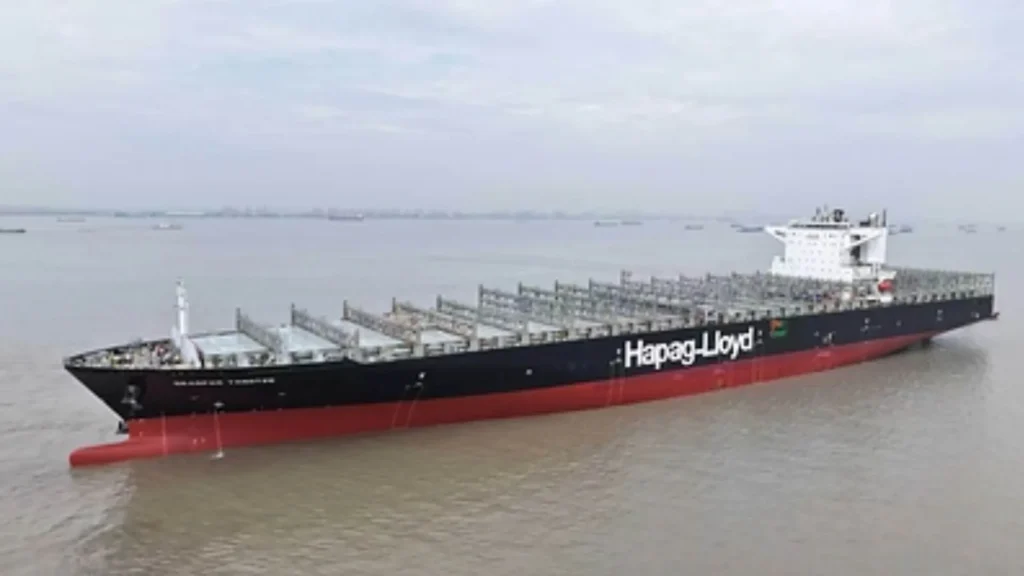
Seaspan Corporation and shipping company Hapag-Lloyd announced the completion of the first vessel conversion within their SAVER CleanBlue methanol retrofit program, marking a new advance in the decarbonization strategy for container shipping.
The modernization was completed on the Seaspan Yangtze, the first vessel in a series of five ships that will be retrofitted to operate on low-carbon methanol. The project aims to significantly reduce greenhouse gas emissions from the existing fleet while extending the lifespan of maritime assets.
What Does the Yangtze Vessel Conversion Represent?
The conversion of the Seaspan Yangtze represents the first delivery of a program that will continue with the Seaspan Amazon, Seaspan Ganges, Seaspan Thames, and Seaspan Zambezi vessels.
According to the companies, each modernized vessel could reduce between 30,000 and 50,000 metric tons of CO₂ equivalent emissions per year when operating on low-emission methanol. In addition to decreasing the carbon footprint, the retrofits improve operational flexibility by allowing the use of alternative fuels.
Likewise, the project demonstrates the maritime sector’s growing interest in leveraging existing fleets as part of the global energy transition, avoiding exclusive reliance on new builds to achieve climate goals.
More Than a Decade Driving Efficiency Improvements
The initiative is part of the sustainability strategy developed by Seaspan for over ten years. Through its SAVER and CleanBlue programs, the company has allocated over $230 million to projects aimed at improving the energy performance of its vessels.
These investments have enabled the execution of more than 550 efficiency and modernization initiatives across a fleet that currently exceeds 240 operational vessels and will reach approximately 2.5 million TEU capacity once all units under construction are incorporated.
Modernizing the Existing Fleet Gains Prominence
For Bing Chen, President and CEO of Seaspan, the decarbonization of maritime transport requires combining new technologies with the optimization of vessels already in service.
The executive highlighted that vessel modernization constitutes an immediate and economically viable alternative to accelerate emissions reduction, relying on the technical and industrial capabilities developed by Seaspan and its technology partners.
For her part, Silke Lehmköster, Managing Director Fleet at Hapag-Lloyd, noted that the conversion of the Seaspan Yangtze represents another step forward in the corporate goal of achieving a net-zero emission fleet by 2045.
Methanol Gains Ground as an Alternative Fuel
The use of low-carbon methanol continues to consolidate as one of the most promising options for reducing emissions from international maritime transport. Its incorporation into container ships allows for a decrease in the environmental impact of operations without compromising the logistical efficiency required by global trade.
With the completion of this first retrofit, Seaspan and Hapag-Lloyd aim to demonstrate that retrofit programs can become a scalable tool to accelerate the transition towards more sustainable and competitive maritime transport.
Source and photo: PR Newswire