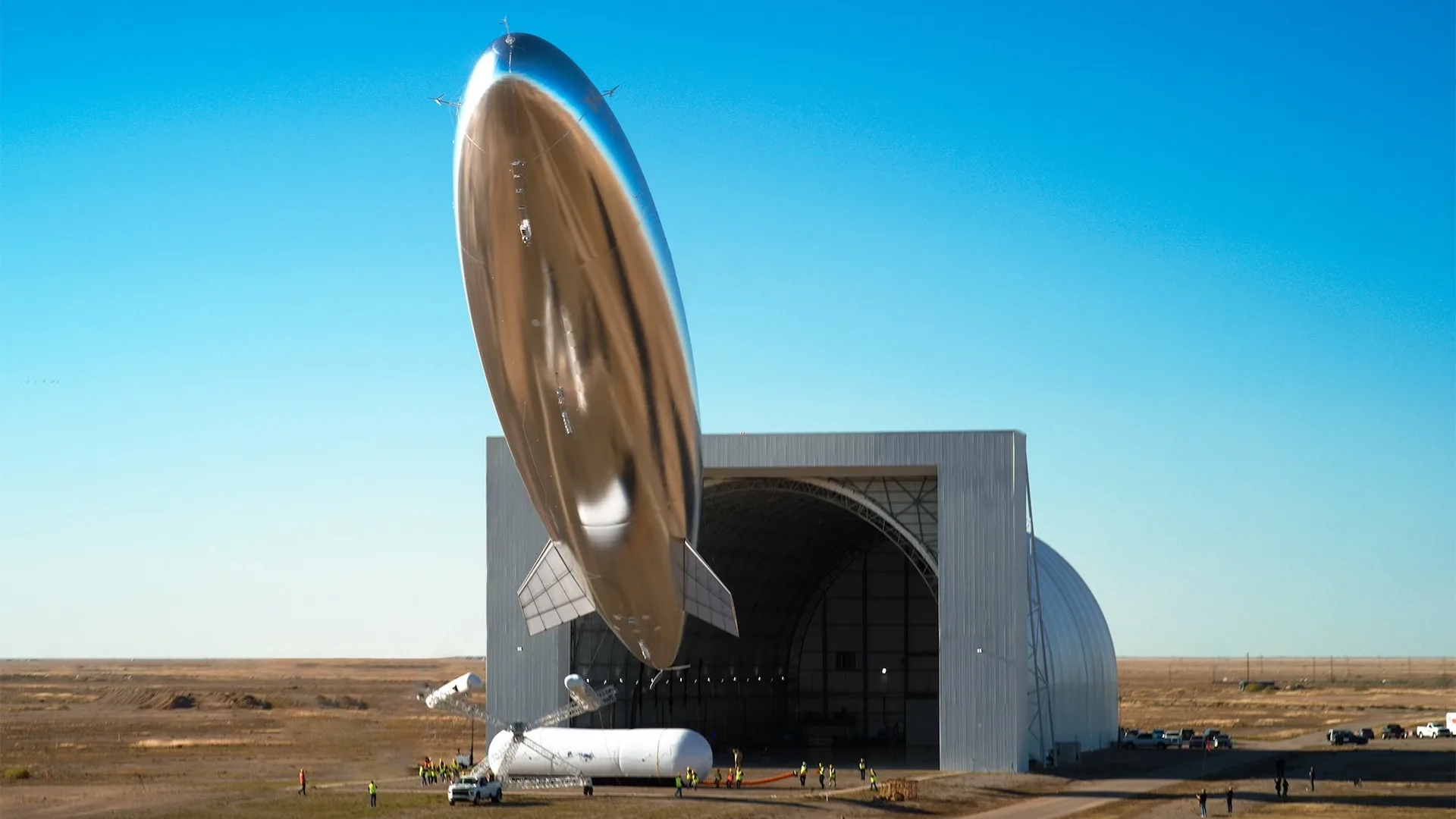
Sceye announced the completion of its Endurance Program with the SE2 HAPS, which traveled more than 6,400 miles from New Mexico to waters off Brazil. The mission, launched on March 25, 2026, set a record of more than 12 continuous days in the stratosphere. The achievement marks a significant operational advance for high-altitude platforms focused on telecommunications and environmental monitoring.
During the journey, SE2 remained for more than 88 hours over selected areas, including an extended station-keeping period off the Brazilian coast. The ability to hold position with a station-keeping search radius of just 1 km demonstrates precision in navigation and control. The end of the mission was a planned and controlled termination, confirming the maturity of operational procedures.
This flight provides highly valuable operational data on endurance, navigation, and safety in stratospheric environments. For Sceye, the test validates not only the prototype’s performance but also the hardware-software integration required for sustained commercial operations.
Closes the energy and pressure loop in a stable stratosphere.
A major technical milestone was closing the energy loop: SE2 operated through day and night cycles, drawing on solar power and using batteries at night. Maintaining a continuous power supply demonstrates the feasibility of long-duration flights without constant reliance on ground support. This reduces commercial and operational risks associated with power interruptions.
In parallel, SE2 closed the pressure loop, validating the design of the envelope manufactured entirely by the company. Pressure stability during daily thermal cycles is essential for structural integrity and for the operability of sensors and antennas in the stratosphere. Both validations reduce technical uncertainties prior to commercial scale-up.
The combination of both closures—energy and pressure—provides a robust proof of concept for the HAPS industry. This positions Sceye as a provider capable of delivering platforms that combine autonomy, resilience, and operational safety.
Sceye drives global connectivity and prepares tests in Japan.
Sceye also introduced SceyeCELL, an antenna designed as a “cell tower in the sky” to provide high-speed connectivity from the stratosphere. The company aims to extend coverage to underserved areas and provide emergency communications during disasters. The system is intended to complement terrestrial and satellite networks with intermediate latency and persistence.
With the SE2 operation completed, Sceye says it is ready for pre-commercial flights; the first trial is scheduled for the summer in Japan in collaboration with SoftBank. That pilot will seek to establish backhaul links to the core network and demonstrate commercial connectivity and emergency response services. The focus on international testing accelerates regulatory and commercial validation.
In summary, the 12-day, 6,400-mile flight represents a decisive step toward the operational deployment of commercial HAPS. By closing critical loops and demonstrating persistence and precision, Sceye reduces technical risks and advances the delivery of a new layer of aerial infrastructure to connect and protect communities.
Source and photo: https://sceye.com/