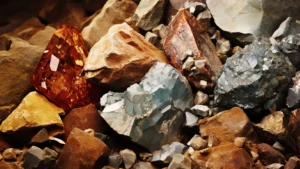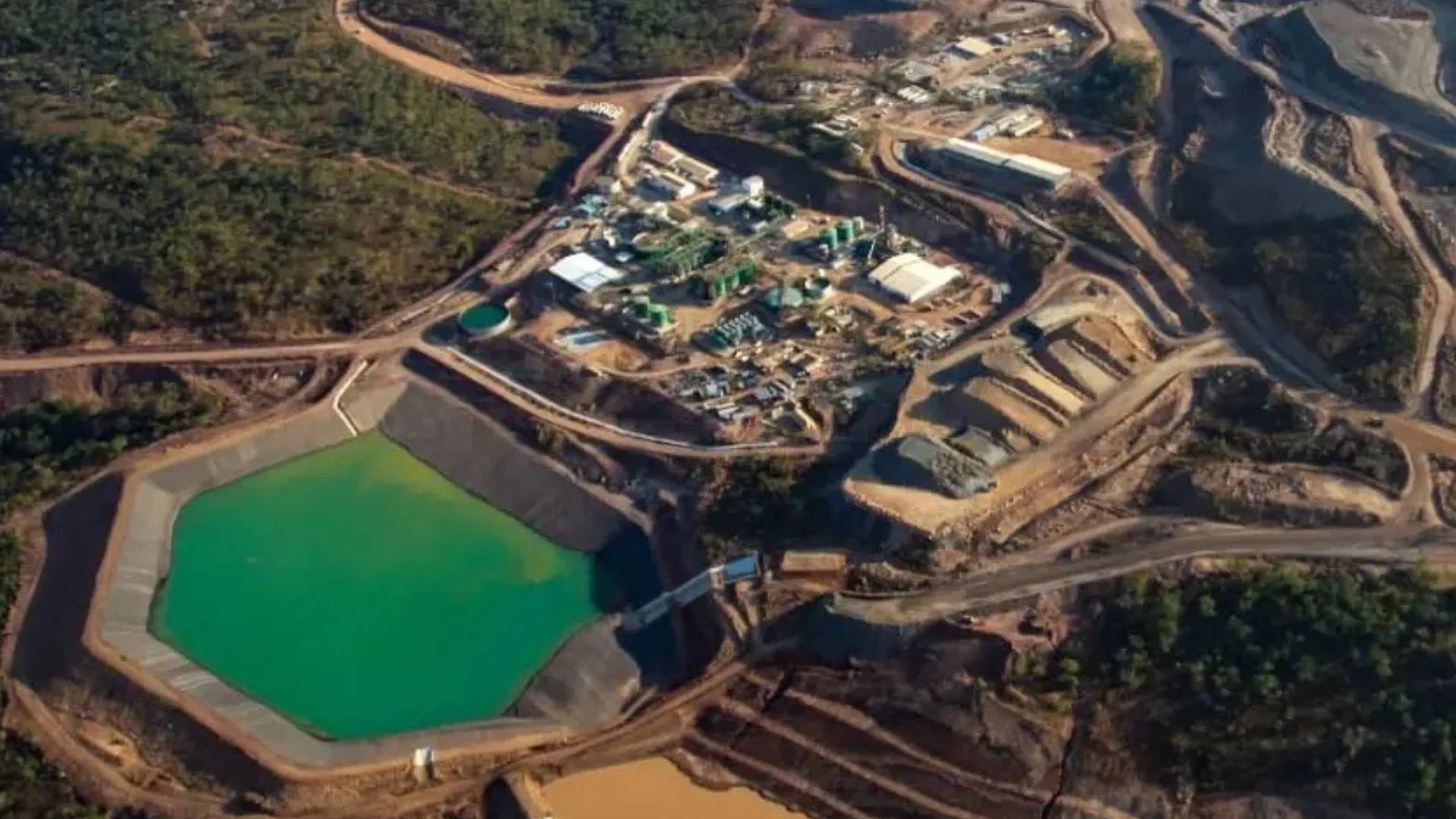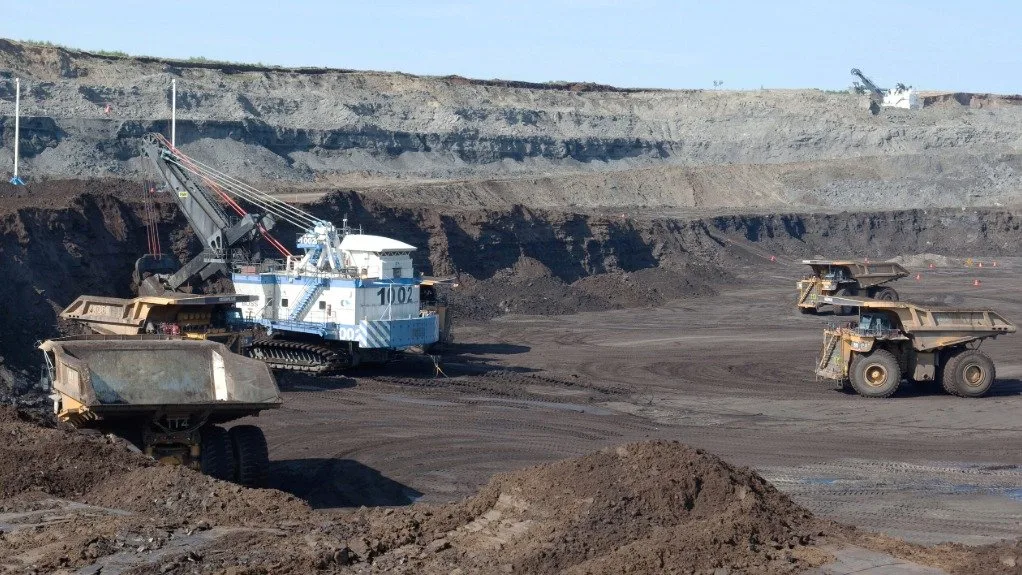
Saudi Arabia has identified approximately 110 million tonnes of ore containing concentrations of uranium in the Medina region, Energy Minister Prince Abdulaziz bin Salman announced during the International Atomic Energy Agency (IAEA) General Conference in Vienna. Studies conducted at the Jabal Sayid project have also detected elevated concentrations of rare earth elements, particularly heavy rare earths.
The figure carries fundamental technical precision: 110 million tonnes corresponds to mineralized material, not 110 million tonnes of contained uranium. The announcement does not yet specify a uranium grade, recoverable metal inventory, or economic production estimate. Therefore, the physical size of the resource alone does not determine how much uranium could be commercially extracted.
The distinction is essential for evaluating any mining project. The quantity of ore, its uranium concentration, mineralogy, recovery factors, processing costs, and available infrastructure will ultimately determine whether the resource can be transformed into economically viable production.
Jabal Sayid Opens a Second Mining Path
Riyadh’s interest extends beyond uranium. Geological investigations at Jabal Sayid also point to significant concentrations of heavy rare earths, placing the project within Saudi strategy to develop new mineral resources and reduce dependence on hydrocarbon exports as the primary revenue source.
The combination is particularly interesting from a processing perspective. A deposit containing multiple economically recoverable elements can support a co-product recovery strategy, provided mineralogy and metallurgy allow their separation at competitive costs.
Saudi Arabia is also exploring another uranium source: its own phosphate industry. The minister indicated that the Kingdom is studying uranium recovery associated with phosphoric acid produced during fertilizer manufacturing, while pilot work developed with France’s Orano has reportedly shown promising economic indicators, according to official Saudi information reported by the Jordan News Agency.
This opens a relevant industrial concept: uranium could partially become a co-product of an existing mining and chemical chain, rather than depending exclusively on a new dedicated mining operation.
From Ore to Nuclear Fuel Is a Long Chain
The discovery gains importance because Saudi Arabia is simultaneously developing its civil nuclear energy program. In July, Washington and Riyadh formalized a civil nuclear cooperation agreement establishing the framework for a long-term partnership and for U.S. companies to participate in Saudi nuclear projects.
But finding uranium mineralization does not mean immediately having nuclear fuel available.
Between both points lies a complete technological chain: mining extraction, ore processing, uranium concentration, conversion, enrichment, and fuel fabrication. Each stage requires specific facilities, technology, regulation, investment, and controls.
Therefore, the Medina announcement should be interpreted as a potential piece within a much larger industrial chain. The strategic interest for Riyadh would be advancing from the geological resource toward greater domestic participation in the fuel cycle, while simultaneously developing nuclear generation capacity.
The True Figure Is Yet to Be Determined
The data to follow now is not only the 110 million tonnes. For mining engineers and analysts, the decisive variables will be uranium grade, mineralization distribution, metallurgical recovery, and cost per unit of uranium produced.
This distinction avoids one of the most frequent errors when interpreting mineral resource announcements: confusing tonnes of rock or mineralization with tonnes of the element of interest.
It will also be necessary to determine what proportion of rare earths and uranium can be recovered simultaneously and whether that recovery can be integrated with existing industrial processes. The project economics could change substantially if a single circuit allows obtaining multiple marketable products.
Saudi Arabia, therefore, is not yet announcing large-scale uranium production. It is showing that it has a geological base that could support a new mineral and nuclear value chain, while continuing to explore additional sources and evaluate their economic utilization.
The Goal Is to Connect Mining and Energy
The strategy has a larger industrial dimension. Saudi Arabia seeks to make mining one of the pillars of economic diversification for its economy, while developing nuclear energy to expand and diversify its energy matrix.
Uranium could occupy a unique place within that strategy because it connects two sectors: the mineral resource and nuclear power generation. If subsequent studies demonstrate that Medina material can be processed in an economically viable manner, Riyadh would have the possibility of incorporating an additional domestic source into its future nuclear supply chain.
But critical stages remain. The resource will need to be characterized with greater precision, its recovery potential established, and the economic and regulatory viability of its exploitation determined.
SOURCE and PHOTO: https://oilprice.com/