The industrial energy transition does not rely exclusively on electrification, but on the technical viability of decarbonizing current machinery. The recent six-month pilot project in Spain—spearheaded by Repsol, Toyota, BMW, and Bosch—aims to demonstrate the operational efficiency of a fleet powered entirely by 100% renewable gasoline (Nexa 95). Beyond a 70% reduction in emissions, this industrial trial opens a critical field of study for materials engineering, combustion engine integrity, and real-time data auditing through IIoT (Industrial Internet of Things) platforms.
IIoT & Digital Traceability
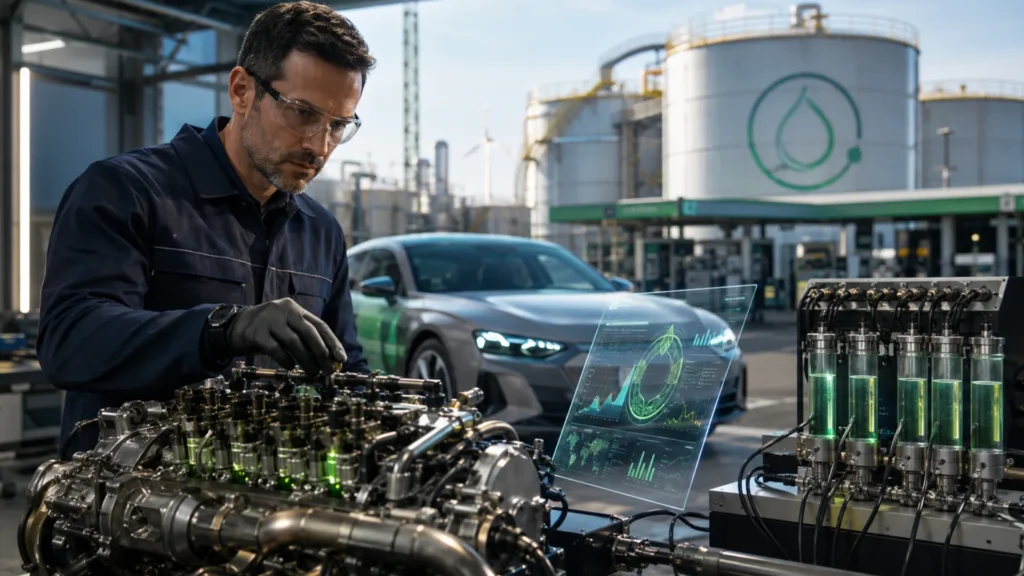
The main challenge in integrating synthetic fuels into global energy matrices is certifying the carbon life cycle. To overcome this technical barrier, the project incorporates the Digital Fuel Twin developed by Bosch. This traceability system, backed by advanced telemetry, cryptographically records fluid usage from the refining plant straight into the combustion chamber.
From an asset management perspective, this platform brings total transparency to the supply chain. By monitoring consumption and injection parameters in real time, reliability engineers obtain an immutable database. This is essential not only for European regulatory compliance but also for establishing predictive maintenance (PdM) protocols based on the exact volumetric efficiency of the engine under real operational loads.
Injector Mechanical Integrity
Replacing petroleum derivatives with gasolines synthesized from organic waste alters subtle physicochemical properties, such as lubricity and the distillation curve. For reliability specialists, the continuous use of these chemical drop-in fuels demands rigorous control over the equipment’s internal tolerances.
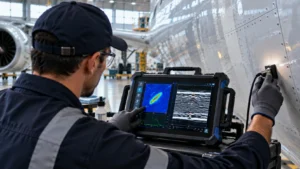
High-pressure pumps and fuel injectors in BMW and Toyota engines operate with microscopic friction margins. Upon completion of this pilot, the metallic and polymeric components must undergo rigorous Non-Destructive Testing (NDT) to evaluate cavitation wear, O-ring integrity, and rule out thermal stress cracking. Proving that 100% renewable gasoline does not accelerate material degradation is the project’s true engineering milestone.
Core Infrastructure Resilience
The deepest strategic value of this technology lies in the financial and mechanical protection of existing storage and distribution infrastructure. Implementing this renewable gasoline means leveraging the same terminals, pipelines, carbon steel tanks, and pumping systems that already operate worldwide, avoiding the risk of “stranded assets.”
For corrosion engineers, this eliminates the need to redesign pipelines for highly reactive or cryogenic fluids, as is the case with hydrogen. However, it mandates strict inspection routines to verify that the biological additives in the fuel do not foster Microbiologically Influenced Corrosion (MIC) at the bottom of the tanks. This trial confirms that the future of industrial mobility will require chemical solutions that protect global mechanical assets.
Source: Repsol