TPAC redefines industrial inspection with open platforms
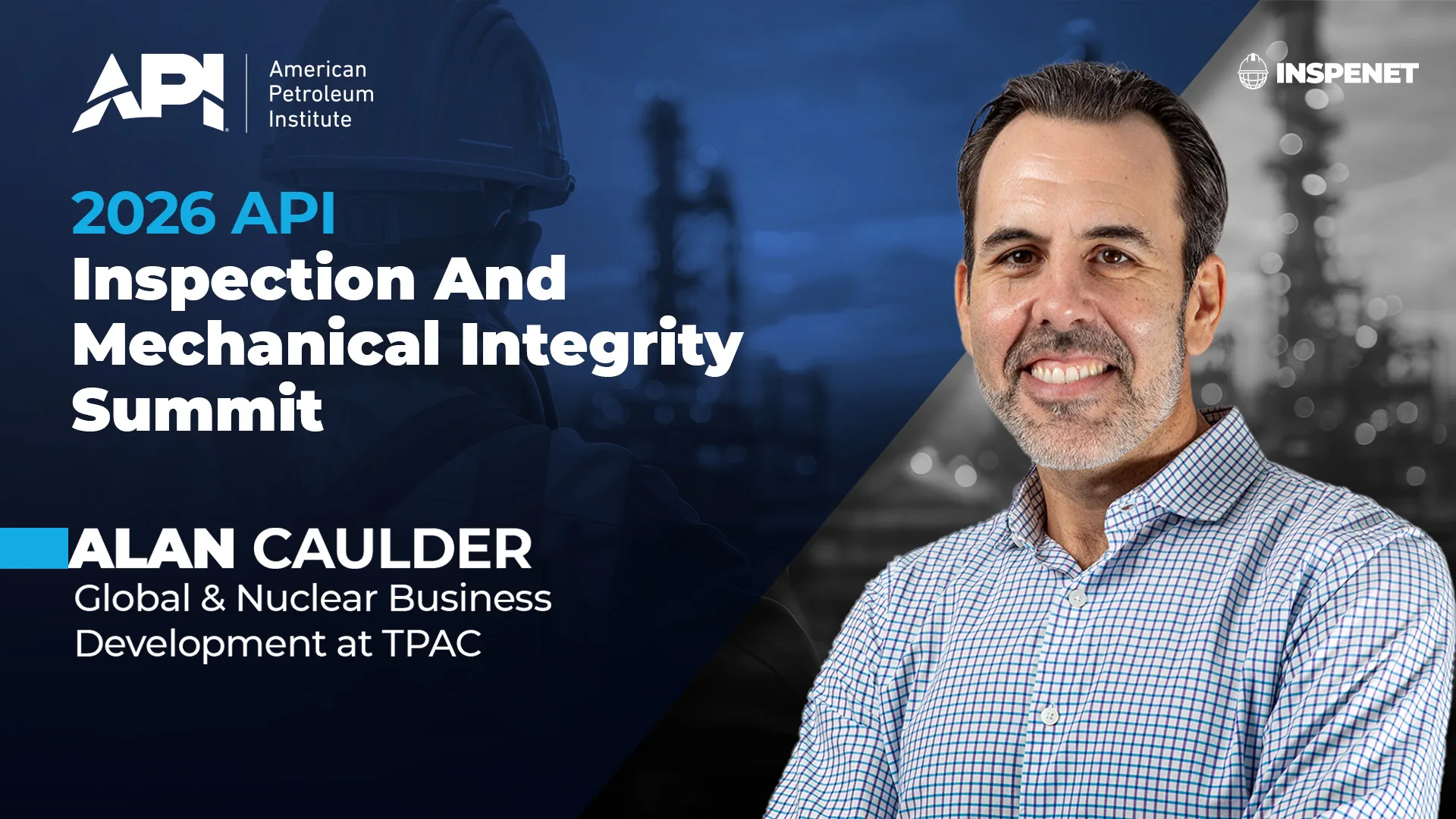
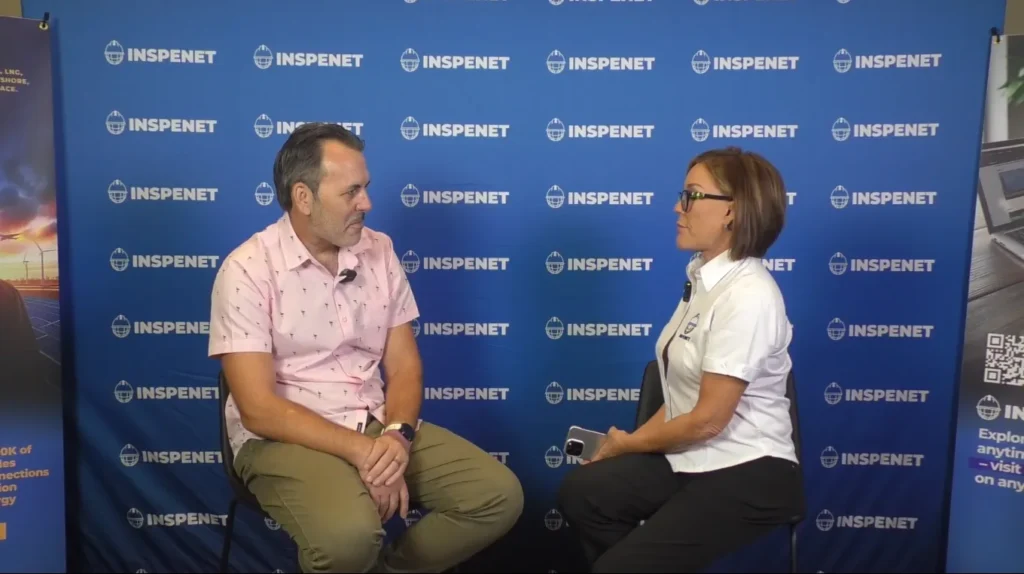
Industrial inspection is undergoing a transformation driven by automation, the integration of advanced technologies, and intelligent data analysis. In this context, companies are no longer simply looking for instruments with enhanced capabilities, but rather platforms that can adapt to specific applications and integrate with different inspection systems. This was one of the main conclusions shared by Alan Caulder, Global Business Development and Nuclear Sector at TPAC , during his participation in API Summit 2026 , where he explained how the company is responding to this evolution through an open architecture that offers greater flexibility to manufacturers, integrators, and end users.
A different philosophy for industrial inspection
non-destructive testing equipment is developed as closed systems with predefined functionalities, TPAC has built its proposal on a different concept: providing an open platform that allows the technology to be adapted to the needs of each application.
As Alan Caulder explained, this approach stems from the company's own evolution. Before establishing the TPAC brand, the organization primarily operated under the AOS brand , supplying ultrasonic electronics, acquisition cards, and development tools so other manufacturers could build their own inspection systems . Over time, the company decided to reach out to end users by offering its own solutions, while maintaining the flexibility that characterized its original model.
This transition allowed the company to expand its reach without abandoning an aspect that continues to differentiate it within the market: offering a technological base that can be customized by each client.
Instead of completely modifying the hardware for each project, TPAC supplies a range of electronic platforms on which manufacturers can develop specific solutions using their own software and processes. In this way, two companies can use the exact same ultrasound platform and obtain completely different systems to solve similar applications.
From Caulder's perspective, the balance between flexibility and compliance with standards such as API or ASME is achieved precisely by defining the scope of each component. The electronics provide a robust and stable platform, while adaptation to inspection codes is primarily handled through software used by the client or the company itself.
Technological integration becomes the biggest challenge
One of the most relevant aspects of the interview was the reflection on the real challenge of the new industrial inspection.
For years, much of the technological effort focused on improving the quality of data acquisition using phased array ultrasound , conventional techniques, or new imaging methods. However, the current challenge is no longer just obtaining high-quality information, but ensuring that all elements of a system work in a coordinated manner.
Modern platforms combine technologies such as:
- Conventional ultrasound.
- Phased Array.
- TFM (Total Focusing Method).
- Robotics.
- Encoders.
- High-resolution cameras.
- LiDAR.
- Machine vision systems.
- Analysis software.
Each of these components represents a complex system in itself; the difficulty arises when they all need to communicate in a synchronized manner to generate a reliable inspection .
Alan Caulder explained that much of the work done with startups and specialized manufacturers consists precisely of facilitating this integration. In many projects, the greatest complexity lies not in the ultrasonic technology itself , but in ensuring that a robot, a positioning system, a camera, and the data acquisition electronics exchange information correctly throughout the inspection.
The executive compared this scenario to the difficulty of getting devices developed under different architectures to communicate efficiently with each other. Once that initial stage is overcome, the projects can evolve into fully industrialized solutions.
A company present in multiple industrial sectors
TPAC's strategy is also characterized by strong market diversification.
Far from focusing on a single industry, the company supplies technology for applications related to nuclear energy, oil and gas, power generation, rail transport, aerospace, robotics, metallurgy, automotive, and research, among other sectors. This breadth reflects a philosophy developed since the company's founding: to develop solutions capable of adapting to different industrial needs rather than relying on a single market.
TPAC's corporate website also highlights this diversity of applications, including solutions for weld inspection , corrosion, field inspection, robotic inspection, inline applications and scientific research projects, as well as collaboration with universities, laboratories and technology centers.
According to Caulder, this strategy makes it possible to identify those customer profiles that really need flexible platforms, instead of competing solely in the market for standard instruments for general applications.
Automation: More data requires new tools
Another key message of the interview was the impact that automation is having on information generation.
The incorporation of robots into inspection processes multiplies the volume of available data. While an inspector can perform a limited number of manual measurements, an automated system is capable of acquiring thousands of records during a single operation.
This growth poses a new problem: analyzing all that information efficiently.
Alan Caulder explained that some clients even dedicated several specialists exclusively to manually reviewing large amounts of data generated by automated systems. Currently, the development of artificial intelligence-based tools is beginning to offer an alternative to streamline this process through algorithms capable of identifying potential issues before they are reviewed by an inspector.
However, the executive made it clear that automation does not eliminate the need for human knowledge.
Although algorithms can classify data or detect anomalies more quickly, final validation remains the inspector's responsibility. Especially in sectors where safety is a critical requirement, human oversight continues to be part of the decision-making process.
This perspective introduces an important nuance to the current debate on artificial intelligence. Rather than replacing specialists, AI appears as a tool designed to reduce analysis times and improve the efficiency of technical work.
Specialized platforms versus universal instruments
When analyzing the evolution of the market, Alan Caulder also raised an idea that contrasts with the traditional trend of the sector.
For many years, numerous manufacturers sought to develop equipment capable of performing any type of inspection with a single instrument. However, TPAC's head of international development believes the future points toward much more specialized platforms.
Each application has its own characteristics, different damage mechanisms, and specific data acquisition requirements. As a result, it is more efficient to design solutions geared toward specific tasks than to try to concentrate all functionalities in a single device.
This specialization also facilitates the use of artificial intelligence , since algorithms can be trained to identify specific types of discontinuities within a perfectly defined context.
From this perspective, industrial inspection would evolve towards platforms designed to solve specific problems through the integration of different inspection technologies.
The future will be multisensor
Far from thinking that a single technology will dominate the market, Caulder believes that future platforms will combine multiple inspection methods within the same system.
In certain applications it will be necessary to integrate ultrasound, radiography, eddy currents and other complementary techniques to obtain a complete evaluation of the inspected component.
This technological convergence will allow us to take advantage of the particular benefits of each method and build more robust solutions for automated applications.
The open architecture developed by TPAC is particularly well-suited for this type of project, as it facilitates the incorporation of new sensors and technologies without limiting the future growth of the platform.
The next decade will redefine industrial inspection
In his opinion, the degree of automation of inspection systems will continue to increase , and the use of artificial intelligence- based tools capable of configuring equipment, assisting the operator, and interpreting results through conversational interfaces will grow.
He even described internal developments that allow interaction with the systems using spoken commands to automatically configure an inspection based on the component's characteristics. Although these solutions are not yet part of the company's commercial offering, they reflect the direction in which technological development is heading.
Even so, he insisted that technical responsibility will continue to rest with qualified professionals, especially when decisions affect the integrity of critical assets.
An evolution driven by integration and flexibility
Alan Caulder's statements during API Summit 2026 show a vision in which industrial inspection stops focusing exclusively on instrument performance to focus on open platforms, technological integration and intelligent automation.
In this scenario, the ability to connect different sensors, manage large volumes of information, and adapt each system to specific applications becomes as important as the non-destructive testing technology itself.
TPAC 's proposal responds precisely to this evolution through a flexible architecture that allows manufacturers and integrators to develop specific solutions for multiple industrial sectors. At the same time, the company argues that the advancement of artificial intelligence and automation should be understood as supporting the inspector's work, not as replacing their technical judgment—a vision that encapsulates the balance between technological innovation and reliability that will define the next generation of inspection systems.
For more content about API Summit 2026, visit our LinkedIn profile.
Source: Inspenet.