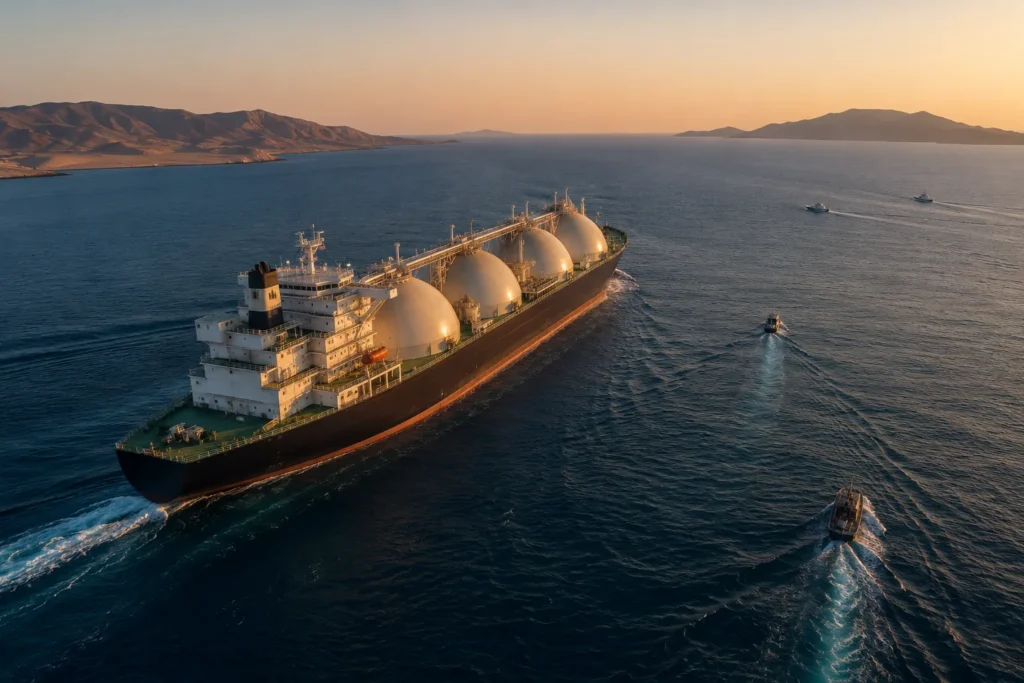
Qatar LNG exports maintain operational flow despite geopolitical uncertainty in the Gulf. On June 9, 2026, the LNG tanker Al Daayen, operated by QatarEnergy, transited the Strait of Hormuz en route to China, becoming the ninth Qatari cargo to depart the region since the crisis began. Maritime tracking data from LSEG Shipping, reported by Reuters, confirms the continuity of shipments to Asia amidst regional tensions.
Qatar LNG exports: the Al Daayen as an indicator of active flows
The LNG tanker Al Daayen operates under long-term contracts linked to QatarEnergy, the world’s largest individual LNG exporter with an installed capacity exceeding 77 million tons per year. Its transit through Hormuz on June 9 was not an isolated event: it is the ninth consecutive cargo to leave the Gulf since regional tensions began. Each departure confirms that Qatar LNG exports remain active and that the supply chain to Asia has not collapsed.
Vessel tracking via AIS (Automatic Identification System) allows LNG traders and buyers to monitor real-time flows from the Persian Gulf. LSEG Shipping data is the industry standard reference for this type of operational analysis.
Qatar LNG exports maintain flow despite Hormuz crisis
The previous day, June 8, the Iranian ambassador to Moscow, Kazem Jalali, had stated that Iran and Oman could implement differentiated transit fees for vessels based on cargo type. The proposal immediately generated uncertainty about the future cost of Qatar LNG exports and other energy flows from the Gulf. The Al Daayen’s transit in this context indicates that scheduled shipments were not halted by the controversy.
More than 11 million barrels per day continued to experience affected or restricted flows according to Reuters Open Interest on June 8, demonstrating that normalization is partial and not uniform for all cargo types. “The market tracks every vessel movement from the Gulf as if they were real-time macroeconomic indicators,” noted a Bloomberg analyst cited in LNG flow tracking coverage.
Impact of Qatar LNG exports on Asian buyers
China, India, Japan, and South Korea are the main destinations for Qatar LNG exports, and any interruption in Hormuz directly affects their seasonal energy balances. The Al Daayen’s destination—China—is significant: the country absorbs the largest volume of Qatari LNG under long-term contracts. The continuity of supply during the crisis reduces pressure on the Asian spot market, where prices react with high sensitivity to signals of restriction. In that regional market, U.S. LNG flows at 2026 lows had already reduced the available arbitrage capacity for buyers.
Qatar LNG exports and the diversification of global supply
The Gulf crisis accelerated discussions about LNG export projects outside the Middle East. The final investment decision for Browse LNG in Australia is one of the projects gaining significant strategic relevance as Asian buyers seek alternatives to Gulf LNG. However, the development time for new projects—between 5 and 7 years from FID to first exports—confirms that Qatar will remain a dominant supplier in the medium term.
“Qatar will maintain its position as an anchor of global LNG supply regardless of short-term regional tensions,” stated Energy Minister Saad Al-Kaabi in previous remarks to investors reported by Reuters. The departure of the ninth cargo since the crisis began is consistent with this official position.
Sources