Poland will select the technological and financial partner for its second nuclear power plant in 2027 and confirm the site location in 2028, announced Deputy Energy Minister Wojciech Wrochna on June 12, according to Reuters. The selection process involves three active candidates: the United States with Westinghouse, France with EDF, and Canada with AtkinsRealis’ CANDU technology. South Korea was excluded from the process after its potential partners did not respond to Warsaw’s official invitation.
Nuclear Power Plant in Poland: Private Financing Model as a Key Criterion
Wrochna emphasized that the second plant differs structurally from the first in terms of financing: “The premise of the second nuclear project is that we are moving away from the taxpayer-funded model.” The government expects the selected partner to provide the project’s capital structure, making the ability to arrange private financing a decisive factor. The preferred sites are Bełchatów and Konin, in the center of the country.
Canada formally submitted its proposal in February 2026, when Energy Minister Tim Hodgson traveled to Warsaw. “We are here to discuss nuclear energy as Poland moves forward with its second plant,” Hodgson stated, adding that Ottawa is prepared to offer financial backing alongside the technological proposal. Romania operates two CANDU reactors managed by AtkinsRealis, the only European reference for this technology in commercial operation.
Target 6–9 GW and First Plant Underway
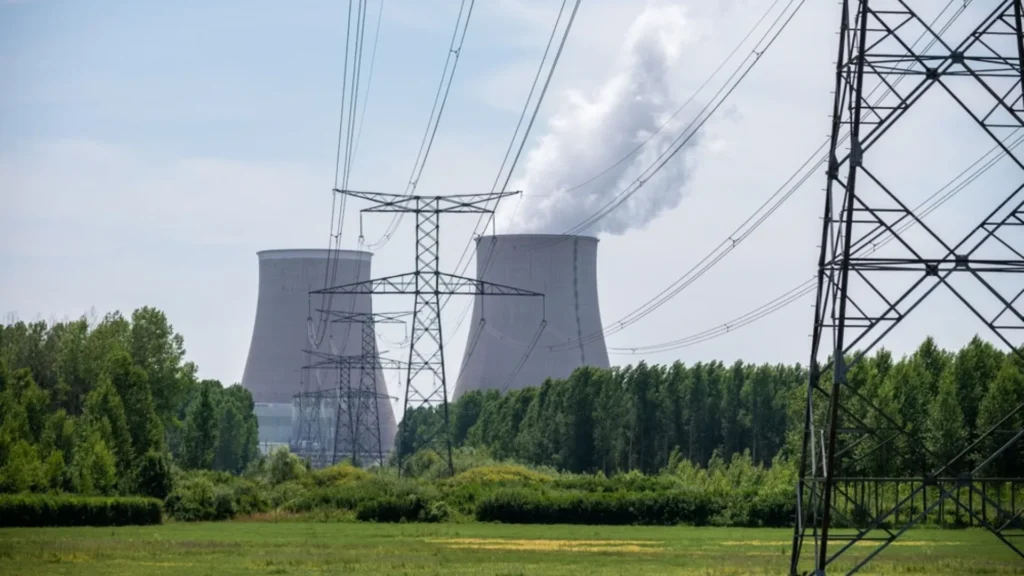
The first Polish nuclear power plant—three Westinghouse AP1000 reactors in Lubiatowo-Kopalino, Pomerania—will begin construction in 2028 and connect its first unit to the grid in 2036, with the remaining two units in 2037 and 2038. In March 2026, the state-owned company PEJ submitted the construction license application to the Atomic Energy Agency, which has 24 months to decide. The estimated cost exceeds $40 billion, with approximately one-third allocated to Polish companies.
The national goal is to achieve between 6 and 9 GW of nuclear power, enough to transform the generation balance of a country that still relies on coal for over 60% of its electricity. The asset management of a nuclear portfolio of this magnitude will require regulatory frameworks and technical capabilities that Poland is building in parallel with the first plant. Wrochna described the timeline as “feasible.”
Geopolitical Dimension of the Contract
The selection process for the second nuclear power plant has implications that extend beyond electricity generation. For the U.S., a second Westinghouse plant consolidates American technological dominance in Europe’s largest active nuclear program and strengthens security ties on NATO’s eastern flank. In 2025, France signed a bilateral treaty with Poland reinforcing cooperation in defense and nuclear energy, positioning EDF with political state backing. Westinghouse, for its part, has indicated that a second AP1000 plant would cost 15% less due to economies of scale from the first.
Energy Minister Milosz Motyka confirmed at the same conference that Poland maintains active dialogue with candidates from the U.S., France, and Canada. The 2027 decision on this nuclear power plant will define not only the technological provider but also the geometry of Polish energy alliances for the next five decades. For Central Europe, a 6 to 9 GW nuclear program in a single country redefines the regional balance and reduces dependence on gas imports during winter.
Sources: Reuters — Poland to Select Partner for Second Nuclear Plant by 2027, June 12, 2026 | Reuters — “Canada pitches CANDU nuclear technology for Poland’s second plant”, February 17, 2026