Geopolitical tension between the United States and Iran has once again impacted one of the world’s most sensitive energy corridors. Tanker traffic through the Strait of Hormuz fell on Sunday to its lowest level in five weeks, reflecting growing concern among maritime operators and energy companies regarding security in the region.
The Strait of Hormuz as energy infrastructure
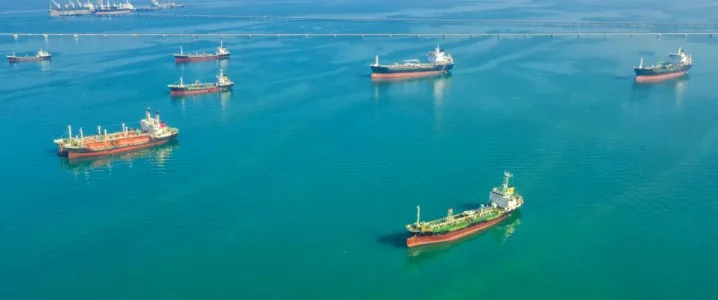
According to Kpler data cited by Reuters, only six oil tankers were tracked crossing the Strait of Hormuz during the day on Sunday, while initial reports on Monday showed a total absence of visible transit via AIS systems.
The decrease in traffic follows a new military escalation between the United States and Iran, which included U.S. strikes and subsequent Iranian retaliation against U.S. bases in the Middle East.
This situation transcends the geopolitical sphere and reveals a fundamental technical aspect of the modern energy industry: global supply stability depends directly on the operational continuity of strategic maritime corridors.
The return of “dark mode” navigation
The Strait of Hormuz handles nearly a quarter of the world’s maritime oil trade and a significant proportion of the liquefied natural gas exported from Qatar. Any disruption to this route immediately impacts international energy logistics, even without an official closure of the sea passage.
One of the most relevant elements observed during this new escalation is the return of “dark mode” operations, with vessels deactivating their AIS systems to avoid traceability during transit. The maritime intelligence firm Windward reported the detection of multiple vessels without active identification in the eastern approaches to the strait.
The engineering behind global energy transport
From a technical perspective, turning off AIS transponders increases operational complexity in maritime navigation, reduces monitoring capacity, and raises the risk for naval traffic management in one of the areas with the highest energy circulation on the planet.
The global energy market responds not only to actual supply disruptions but also to credible threats to logistical continuity. This perception of risk can quickly translate into higher maritime insurance costs, increased shipping rates, and volatility in international oil and LNG prices.
The current situation once again highlights that global energy infrastructure does not end at wells, platforms, or export terminals. It also depends on maritime systems, strategic corridors, and logistical networks whose operational stability is essential to guarantee the international energy supply.
Source: https://oilprice.com/